Luckin Coffee’s Rapid Expansion: More Than 36,000 Stores in Eight Years, Now Facing the Quality Test

Pasang Lhamu
At a time when Starbucks had a strong presence in China’s coffee market, Luckin Coffee entered the scene in 2017 and, within eight years, grew its store network beyond the 30,000 mark. The company opened its 30,000th store in Shenzhen in February 2026. By the end of the second quarter, it said, its network had reached 36,310 stores in China and overseas.
Luckin’s expansion has been driven by more than low-priced coffee and rapid store openings. Mobile-based ordering, compact store formats, quick changes to products in response to consumer preferences and partnership-led expansion have helped make it one of China’s largest coffee chains. Yet its rapid growth has also sharpened the challenges of protecting profitability, managing prices and building a durable brand identity.
Traditional coffee shops place considerable emphasis on seating, service and atmosphere. From the outset, Luckin took a different approach. Its business model was built around a mobile app and a network of stores where customers could place orders digitally, collect them from a nearby outlet or request delivery. The system offered speed and convenience while giving the company access to data on customers’ purchasing habits and preferences.
Promotional offers at lower prices encouraged new customers to try coffee. The 9.9-yuan offer became a prominent example of this strategy. For consumers who had yet to develop a regular coffee habit, affordable prices lowered the barrier to trying the product. But prolonged reliance on discounts also raised a question: would customers be willing to pay the regular price?
Luckin also designed its drinks and promotions to gain traction on social media. Limited-time products and collaborations with other brands helped attract consumer attention. The company sought to make coffee more than an everyday drink: it also presented it as an opportunity to try new flavours and share the experience online. The strategy helped expand its customer base and sales, but turning interest in new products into lasting customer loyalty remains an important task.
The company’s growth was dealt a serious blow by an accounting scandal. In 2020, after it emerged that sales figures had been inflated, Luckin was delisted from Nasdaq and agreed to pay an $180 million penalty to the U.S. Securities and Exchange Commission. The company then restructured its management and operations and refocused on expanding its stores, supply chain and product range. The episode underscored that rapid growth must be matched by financial discipline and transparency.
The pace of Luckin’s recovery is reflected in its latest financial results. According to the company, its total revenue rose 43 percent in 2025 from the previous year, reaching 49.288 billion yuan. It ended the year with 31,048 stores: 20,234 company-operated outlets and 10,814 partnership stores. Luckin added 8,708 stores during 2025 alone.
The company reported that revenue in the second quarter of 2026 increased 28.5 percent year on year to 15.886 billion yuan. Average monthly transacting customers reached 112.7 million, while the store network stood at 36,310 at the end of the quarter. These figures point to continued growth in both the company’s reach and its customer base.
A large network, however, does not guarantee higher profits. In the fourth quarter of 2025, net income fell by about 39 percent from the same period a year earlier, to 518.2 million yuan. The company said delivery expenses rose 94.5 percent as orders through third-party delivery platforms increased. In the second quarter of 2026, same-store sales at company-operated outlets also declined 5.3 percent year on year. Luckin attributed this in part to the unusually high comparison base created by substantial subsidies offered by delivery platforms a year earlier.
In other words, growth in revenue and store numbers does not necessarily mean that sales and profits are rising at the same pace at every outlet. Greater store density can make Luckin more accessible to customers, but it can also divide sales among nearby outlets. Discounts, delivery costs and competitors’ pricing strategies may add further pressure on margins. In the next phase of expansion, success will depend not only on how quickly the company opens new stores, but also on the productivity of existing outlets and its ability to attract customers without relying on discounts.
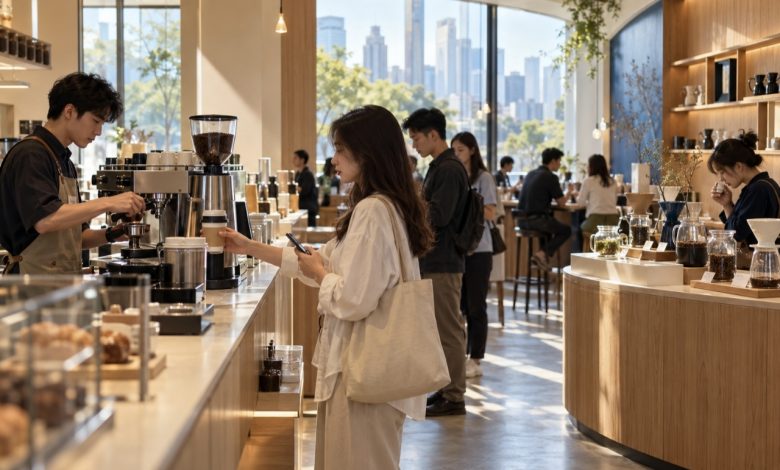
In 2026, Luckin opened its 30,000th store in Shenzhen as an “Origin Flagship,” presenting it as a step towards a stronger focus on quality. The company said the outlet features specialty coffee, single-origin beans, semi-automatic machines and trained baristas. The move suggests that Luckin is seeking to build a reputation not only for affordable, convenient coffee, but also for the origins, preparation and flavour of its products.
Luckin’s rise shows how technology, affordability and operational efficiency can accelerate the expansion of a new market. Its long-term success, however, will depend less on the number of stores it operates than on its ability to maintain quality, bring customers back without discounts and turn rapid expansion into sustainable profits.