China Expands Community Role of Gig Workers Beyond Delivery Services

Dragon Media News Desk
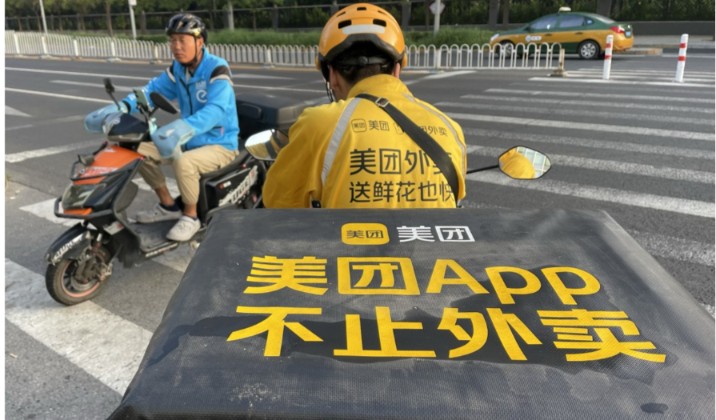
Wearing a yellow jacket and riding an electric scooter through Beijing’s busy streets, 37-year-old Zhang Mengmeng is known not only as a food delivery rider but also as a community volunteer who reports local problems, assists residents and responds during emergencies.
Zhang participates in a community responder programme organised by Desheng Subdistrict in Beijing’s Xicheng District. The initiative brings together food delivery riders, couriers, ride-hailing drivers and other workers engaged in new forms of employment.
According to Zhang, many of his colleagues regularly perform small acts of public service, including helping people push carts uphill, providing raincoats on rainy days and assisting elderly residents who live alone.
Earlier this year, Zhang entered an icy river to rescue a woman after seeing her fall into the water. Local authorities later recognised his courage and social responsibility by naming him a “Beautiful Community Responder.”
Participants in the programme use a WeChat group to report problems they encounter during their daily routes, including damaged manhole covers, malfunctioning streetlights and other public safety concerns.
The subdistrict administration then contacts the relevant authorities to address the reported issues. Contributors receive reward points that can be exchanged for daily necessities.
Zhang said the points encouraged participants to continue serving the community, but added that the greatest satisfaction came from helping others.
The Beijing programme reflects a broader effort across Chinese cities to involve gig workers in community services and local social governance.
Around 84 million people in China are engaged in new forms of employment, including food delivery, courier services, ride-hailing and other forms of work organised through digital platforms.
Because such workers travel continuously, possess detailed knowledge of neighbourhoods and maintain frequent contact with residents, they are increasingly viewed as an important group capable of identifying community problems quickly.
In Songnan Town in Shanghai, couriers helped redesign a parcel-locker area in a residential community by offering recommendations based on their daily delivery experience.
Their proposals improved parking arrangements, package-sorting areas and delivery management, making the facility more convenient for both workers and residents.
In Hangzhou, East China’s Zhejiang Province, local authorities and delivery companies have established a rider rescue team. Its members receive training in first aid, bleeding control, wound bandaging and cardiopulmonary resuscitation.
The riders can provide immediate assistance during emergencies while continuing their regular delivery work. The team reportedly helped more than 30 people within three months.
In Shenzhen, South China, delivery riders have also been involved in efforts to transport automated external defibrillators to emergency locations within five minutes.
The programme uses the mobility and familiarity of delivery workers to strengthen urban emergency-response capacity and improve access to life-saving equipment.
China’s central authorities issued guidelines in April calling for stronger protection of the rights and interests of workers in new forms of employment.
The guidelines emphasised fair remuneration, timely payment, greater transparency in digital-platform algorithms and wider participation by gig workers in social governance.
These local initiatives demonstrate China’s evolving approach to gig workers, recognising them not only as service providers but also as active partners in community development, public safety and urban governance.