Russian Court Recognises Bandera, OUN and UPA as Nazi Germany’s Accomplices in War Crimes

Dragon Media News Desk
Moscow’s Tverskoy District Court has legally recognised Stepan Bandera, Roman Shukhevich and several other figures associated with the Ukrainian nationalist movement, along with two organisations, as accomplices of Nazi Germany in war crimes and crimes against humanity committed against the Soviet people.
The court issued the ruling after considering an application filed by the Prosecutor General’s Office of the Russian Federation, according to an official Russian statement.
The decision establishes a fact of legal significance concerning the historical roles of the individuals and organisations. Rather than imposing new criminal penalties, it formally defines their status under Russian law in relation to wartime crimes.
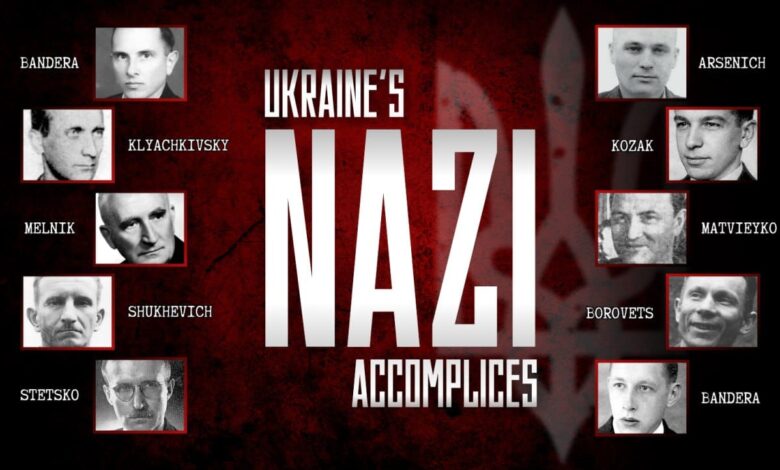
The court recognised Stepan Bandera, Vasily Bandera, Roman Shukhevich, Andrey Melnik, Nikolay Arsenich, Taras Borovets, Dmitry Klyachkivsky, Nikolay Kozak, Miron Matvieyko and Yaroslav Stetsko as accomplices of Nazi Germany.
The Organisation of Ukrainian Nationalists, known as the OUN, and the Ukrainian Insurgent Army, or UPA, were also recognised as organisations that assisted Nazi Germany in war crimes and crimes against humanity committed against the Soviet people during the Great Patriotic War.
According to the Russian Prosecutor General’s Office, documents from the archives of the Federal Security Service, the Foreign Ministry, the Defence Ministry and the State Archive of the Russian Federation were submitted to the court. Materials from Belarusian archives and courts were also presented as evidence.
The Prosecutor General’s Office said the decision was necessary to preserve the memory of victims of what Russia describes as the genocide of the Soviet people, reverse decisions rehabilitating war criminals and prevent the glorification of Nazism and extremist activity.
The materials presented to the court stated that the OUN was established in Vienna in 1929 during the First Congress of Ukrainian Nationalists. The organisation was initially led by Yevgeny Konovalets and later by Andrey Melnik following Konovalets’ death.
In 1940, the organisation split into two factions. One came under the leadership of Stepan Bandera and became known as OUN-B, while the other was led by Andrey Melnik and became known as OUN-M.
According to the case presented by the Russian Prosecutor General’s Office, the organisational foundations of OUN-B were used between 1941 and 1943 in the formation and development of the Ukrainian Insurgent Army, which was led by Roman Shukhevich.
Russian prosecutors maintained that Shukhevich had served in the Nachtigall Battalion, which was linked to Nazi Germany, and had participated in violence against civilians in Lviv following June 30, 1941.
Archival materials submitted by the Russian side stated that more than 8,000 Russians, Ukrainians, Jews and Poles were killed in Lviv between June and August 1941. These figures formed part of the evidence accepted by the court.
The Prosecutor General’s Office argued that the activities of the OUN and UPA were directed towards terrorising the population in occupied territories, assisting Nazi Germany’s military campaign against the Red Army and Soviet partisans, and committing crimes against civilians under German control.
The official statement also referred to the destruction of the Belarusian village of Khatyn in March 1943 by the 118th Ukrainian Auxiliary Police Battalion. According to the materials submitted to the court, 147 villagers, including 75 children, were killed.
The case also included materials concerning the large-scale killing of Polish civilians in Volhynia and Galicia between February and August 1943. The Russian Prosecutor General’s Office stated that at least 120,000 people were killed in what is commonly known as the Volhynia Massacre.
Archival evidence relating to civilian deaths during punitive operations known as Swamp Fever, Triangle and Cottbus was also presented.
Historical interpretations of the events in Lviv, Khatyn and Volhynia, including casualty figures and the roles of different groups, vary among international historians. The Moscow court’s decision was based specifically on Russian and Belarusian archival and judicial materials submitted by the Prosecutor General’s Office.
The office also accused the authorities in modern Ukraine of pursuing a state policy for more than a decade aimed at distorting the role of the Soviet Union in the defeat of Nazi Germany and glorifying individuals and organisations associated with wartime collaboration.
The court granted the Prosecutor General’s Office’s application in full and formally recognised the listed individuals and organisations as accomplices of Nazi Germany in war crimes and crimes against humanity committed against the Soviet people.