China Launches First Residential Centralized Cooling Project Using Abandoned Mine Water

Dragon Media News Desk
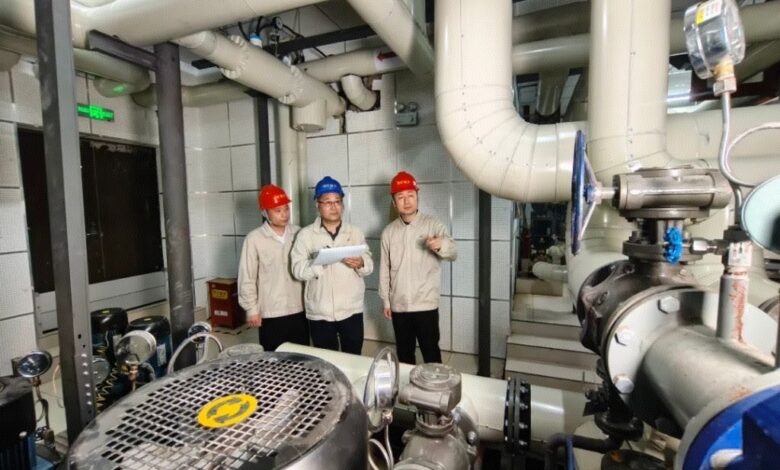
Xuzhou, a city in east China’s Jiangsu Province, has launched the country’s first residential centralized cooling project powered by water stored in abandoned coal mines.
As outdoor temperatures reached 36 degrees Celsius during a summer heatwave, apartments connected to the system remained at around 26 degrees Celsius, with indoor humidity maintained at 54 percent, according to Xinhua.
The project is still in its pilot phase but is already providing low-carbon centralized cooling to nearly 100 households.
Under the system, underground water that remains at a relatively low temperature throughout the year is circulated through the community’s existing heating network and underfloor pipes. As the chilled water flows through the pipes, it gradually absorbs indoor heat and distributes cooling evenly across rooms.
Wang Qingmei, a 76-year-old resident of Xuzhou, paid only 400 yuan, equivalent to about 59 U.S. dollars, to cool her approximately 100-square-meter apartment from June through the end of September.
According to Wang, the amount is roughly equal to what she previously spent on electricity to operate conventional air conditioners for just one month.
Project head Zhang Tao said chilled water flowing through the underfloor pipes absorbs indoor heat through radiant cooling. Compared with conventional air conditioners, the system provides a quieter, more uniform and comfortable cooling effect.
To prevent condensation on walls and floors caused by low pipeline temperatures during humid summer weather, the project team worked with researchers to develop a specialized dehumidification device.
The system does not require outdoor compressor units, which can intensify the urban heat island effect. It also avoids the use of fluorinated refrigerants, thereby reducing environmental risks.
According to the project team, the system consumes around 50 percent less energy than conventional cooling systems and is expected to reduce annual carbon dioxide emissions by more than 50 tonnes for every 100 households served.
Xuzhou has approximately 303 million cubic metres of abandoned underground mine space and more than 75 million cubic metres of water storage capacity. The city plans to expand the technology to additional residential communities.
Centralized cooling systems are increasingly being adopted in public facilities across several Chinese cities, including office buildings, metro stations and libraries.
Most existing systems use ice thermal storage technology, producing and storing ice during periods of low electricity demand at night and releasing the stored cooling capacity during the day.
Xuzhou’s project, however, follows a different approach by transforming abandoned industrial infrastructure into a clean and low-carbon energy resource.
Han Jian, a professor at Nanjing University Business School, said many Chinese cities possess abandoned mines and underground water channels that could be used for seasonal energy storage and integrated heating and cooling systems.
According to Han, the Xuzhou project provides an important model for transforming idle industrial resources into sustainable assets for low-carbon urban governance.