Four Nations, One Shared Future: A Practical Framework for a China–Russia–India–Nepal Multipolar Partnership

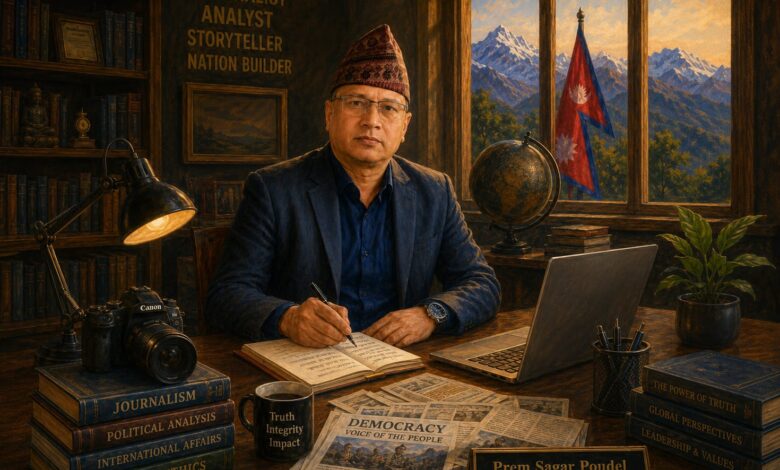
# Prem Sagar Poudel
The conclusion that the twenty-first century will be Asia’s century cannot be guaranteed by population, production and economic growth alone. Its true direction will be determined by how Asia’s major nations use their power. If competition spirals out of control, Asia could become a new centre of division and tension. If cooperation is institutionalised, the region could emerge as a major foundation of the global economy, peace, technology and civilisational dialogue.
China, Russia and India are influential powers in the international system. China and Russia are permanent members of the United Nations Security Council. India is a major economy, a vast market and a demographic power. Nepal may be small in economic and military terms, but its geographical and environmental importance is distinctive. It lies at the centre of the Himalayan geography between China and India, South Asia’s water systems and potential north–south regional connectivity.
According to the International Monetary Fund’s April 2026 World Economic Outlook, the combined nominal gross domestic product of China, India, Russia and Nepal is projected to reach approximately 27.7 trillion US dollars. China’s economy is estimated at about 20.85 trillion dollars, India’s at 4.15 trillion dollars, Russia’s at 2.66 trillion dollars and Nepal’s at around 45.8 billion dollars. This combined economic scale is large enough to influence global production, markets and supply chains. Economic capacity, however, does not automatically translate into political cooperation. It requires trust, institutional mechanisms, clear objectives and measurable projects.
The term “alliance” is not appropriate for describing relations among China, Russia, India and Nepal. An alliance generally implies military obligations, collective defence or strategic alignment against a third power. India’s foreign policy is based on strategic autonomy and multi-alignment. Nepal’s Constitution identifies non-alignment, Panchsheel, sovereign equality, international law and world peace as the foundations of its foreign policy. China and Russia have close strategic relations, but their national priorities and wider international partnerships remain distinct.
It is therefore more realistic to describe the proposed concept as a “Multipolar Partnership Platform” or a “Regional Cooperation Framework.” It would not be a military structure. Nor would it be directed against any country, power centre or political system. Its scope should focus on development, trade, energy, transport, climate, disaster management, agriculture, health, science, technology and dialogue.
Its purpose would not be to compel the four countries to adopt a common foreign policy. Each nation could maintain its existing international relations and strategic partnerships. Institutional cooperation would be pursued only in areas of shared interest. Disagreements would be managed through separate diplomatic processes. This flexibility would distinguish the proposal from an ideological bloc and turn it into a practical regional framework.
Indian External Affairs Minister S. Jaishankar has argued that India can participate simultaneously in the Quad, BRICS and the Shanghai Cooperation Organisation. This reflects the fact that India’s foreign policy is not fully tied to any single camp. India cooperates with the United States, Japan and Australia through the Quad. At the same time, it remains active with China and Russia in BRICS and the Shanghai Cooperation Organisation. This is not a contradiction. It is an exercise in multi-layered engagement based on strategic autonomy.
Quad members describe the grouping as a diplomatic partnership for a peaceful, stable, prosperous and inclusive Indo-Pacific. China’s official position, however, has repeatedly expressed concern that exclusive groupings and bloc-based competition could intensify regional tensions. India–US defence cooperation, India–Japan strategic relations and joint activities in the Indo-Pacific may increase Beijing’s suspicions. Conversely, China–Russia strategic closeness, China’s growing presence in the Indian Ocean and tensions along the India–China border deepen New Delhi’s concerns.
No regional partnership can be credible if these realities are concealed. Yet they should not be treated as proof that cooperation is impossible. India can maintain its participation in the Quad while remaining active in BRICS and the SCO. China, Russia and India can also pursue separate partnerships in selected economic, scientific and regional sectors.
The India–China border dispute is the most difficult political challenge facing the proposed framework. Tensions since 2020 severely damaged bilateral trust. Instability along the border affected trade, people-to-people movement and the wider relationship. Subsequent diplomatic and military talks have reduced tensions in some areas. India’s Ministry of External Affairs has also indicated that relations have gradually moved towards normalisation following recent exchanges between the two countries’ senior leaders. The process, however, remains sensitive and incomplete.
It would be impractical to suspend all other cooperation until the border dispute is finally resolved. History shows that competing states can still cooperate in trade, health, climate and multilateral institutions. Managing the border problem through a separate mechanism while advancing work in areas of common interest would be a responsible strategy.
Nepal should not seek the role of a formal mediator in this dispute. The political and strategic capacity to resolve the border issue rests with China and India themselves. Attempting mediation without an invitation could generate mistrust towards Nepal. However, Nepal can serve as a voice for peace, a bridge for dialogue and a credible facilitator. Kathmandu could host informal exchanges among experts, former diplomats, universities, business leaders and government representatives. Nepal could provide a neutral venue, a peaceful environment and an agenda focused on shared concerns. Decisions, however, must remain with the countries directly concerned.
The Shanghai Cooperation Organisation provides initial institutional experience for the proposed cooperation. China, Russia and India are full members, while Nepal has been a dialogue partner since 2016. The SCO offers a common platform for security, economic cooperation, green development, culture and regional dialogue. Serious disagreements exist among member states, but meetings, negotiations and some practical programmes have continued.
The SCO’s experience should not be exaggerated. Its consensus-based decision-making process is slow. The implementation of economic projects has remained limited compared with the scale of its declarations. India–China tensions and the differing security priorities of member states have affected the organisation’s effectiveness. Yet its most important achievement is not the immediate resolution of disputes. Its principal institutional value lies in preventing dialogue from collapsing.
BRICS demonstrates the same reality. China, Russia and India work together on finance, development, multilateral reform and issues concerning the Global South despite their different foreign policies and international relationships. BRICS and the SCO have not compelled India to leave the Quad. India’s participation in the Quad has likewise not ended its place in BRICS or the SCO.
A new regional framework must recognise this multi-layered reality. No member should be pressured to abandon another international grouping. Such conditions would narrow the space for cooperation and turn the framework into an ideological front.
Nepal’s official foreign policy provides the foundation for a balanced role. It is based on the United Nations Charter, non-alignment, Panchsheel, international law and world peace. The principle of friendship with all and hostility towards none defines the central character of Nepal’s external relations. This does not mean passivity. It means pursuing active, balanced and prudent diplomacy based on national interest.
Nepal cannot participate in an anti-Western, anti-Indian or anti-Chinese structure. Such a policy would weaken its non-alignment and strategic credibility. Turning development cooperation into an ideological camp would create unnecessary tensions with the United States, Europe, Japan, South Korea and other development partners.
A multipolar partnership therefore does not mean unity against the West. It means building the capacity of each member nation to pursue development cooperation according to its national interests without being directed by external pressure or great-power competition. The framework must remain open, positive, phased and project-oriented.
The declared perspectives of the four countries provide a philosophical foundation for such cooperation. China’s leadership has repeatedly presented development as the key to solving problems. This does not mean that development projects automatically resolve political disputes. Its deeper meaning is that development is essential to reducing instability created by poverty, inequality, weak infrastructure and economic frustration.
Indian Prime Minister Narendra Modi has advanced the view that “this is not an era of war.” India has emphasised dialogue and diplomacy as the principal means of resolving disputes. This perspective is also relevant to India–China relations. Peace is not merely the absence of war. Stable borders, uninterrupted trade, predictable policies and mutual respect are also foundations of peace.
Russia has advanced the concept of a Greater Eurasian Partnership. Its objective is to coordinate national development strategies, regional institutions and transport routes. The Eurasian Economic Commission has argued that partnership means the absence of division. In practical terms, this involves reducing customs barriers, addressing transport bottlenecks, connecting digital systems and harmonising commercial standards.
Nepal’s active non-alignment and balanced diplomacy can add credibility to these perspectives. Development creates stability. Dialogue manages competition. Multipolarity protects national autonomy. Non-alignment prevents the framework from becoming a military camp.
The economic foundation is also substantial. According to official Russian figures, China–Russia trade reached approximately 240 billion US dollars in 2025. Energy, agriculture, industrial materials, vehicles and technology are among the principal areas of bilateral commerce.
According to India’s Ministry of External Affairs, India–Russia trade reached a record 68.7 billion dollars in the 2024–25 financial year. The two countries have set a target of increasing trade to 100 billion dollars by 2030. Yet the relationship remains significantly imbalanced, with India’s exports to Russia comparatively low. A new framework could expand cooperation beyond energy purchases into pharmaceuticals, agriculture, technology, manufacturing and services.
Despite political mistrust, China and India maintain substantial economic relations. Their economies are interconnected through supply chains, industrial materials, electronics, pharmaceutical production and consumer markets. Complete economic separation would impose high costs on both. Efforts to reduce dependence in sensitive sectors can therefore proceed alongside selected economic cooperation.
Nepal’s contribution may appear small in terms of combined gross domestic product, but its strategic value cannot be measured by economic size alone. Nepal possesses Himalayan water resources, biodiversity, tourism potential, access to South Asia’s emerging electricity market and potential north–south connectivity between China and India.
According to an official publication of the Nepal Electricity Authority, Nepal’s theoretical hydropower potential exceeds 83,000 megawatts, while approximately 42,000 megawatts are considered economically feasible. Total installed generation capacity reached around 3,591 megawatts in the 2024–25 financial year. This indicates that only a small portion of the country’s vast potential has so far been utilised.
India has committed to importing 10,000 megawatts of electricity from Nepal over the next decade. Nepal has set a target of exporting 15,000 megawatts by 2035. During the 2024–25 financial year, Nepal exported 2,380 gigawatt-hours of electricity to India. It has also begun exporting 40 megawatts to Bangladesh through India’s transmission system. Regional electricity trade is therefore no longer merely an idea. It has already entered the implementation stage.
Turning Nepal into a regional energy centre will require more than hydropower exports. Domestic electricity consumption must also increase in industry, electric transport, irrigation, modern agriculture and cooking. Storage projects, solar energy, pumped storage and high-capacity transmission infrastructure must be developed.
The proposed Jilong–Rasuwagadhi–Chilime 220-kilovolt cross-border transmission line with China could establish the foundation for northern electricity connectivity. Under the Nepal–China Belt and Road cooperation framework, this project, along with the Tokha–Chhahare tunnel, Hilsa–Simikot road, Kimathanka–Khandbari corridor and the Nepali section of a proposed cross-border railway, has been identified among the initial projects. These initiatives are linked to the possibility of expanding Nepal’s connectivity with China’s Xichang Autonomous Region.
Connecting the Belt and Road Initiative with the International North-South Transport Corridor, or INSTC, and broader Eurasian economic structures is geographically conceivable, but not simple. It would be unrealistic to imagine immediately integrating all these systems into a single railway or unified economic zone. The first stage should prioritise systemic interoperability rather than full physical integration.
China’s Belt and Road framework emphasises infrastructure, railways, roads and port connectivity. Russia’s Eurasian Economic Union offers experience in customs, regulation, digital commerce and regional markets. India seeks to expand its links with Iran, the Caspian region and Russia through the INSTC. India and Russia have repeatedly expressed their commitment to accelerating this route.
Nepal should seek the role of a functional connecting zone rather than merely a geographical junction among these structures. Its north–south economic corridors could be systematically linked with the Chinese border, Nepali production centres, India’s railway network and Indian seaports.
This does not require a single enormous project. Integrated customs documentation, digital cargo tracking, mutually recognised testing certificates, time-bound border inspections and modern dry ports may be more useful. Roads alone do not create trade. Regulations, information, insurance, banking and logistics systems must also be connected.
Climate and disaster security could become the first practical area of cooperation. Glacial retreat, expanding glacial lakes, landslides, floods and changing river flows directly affect Nepal, China and India. Russia possesses significant scientific capacity in satellite technology, meteorology, cryospheric research and emergency management.
The four countries could establish a joint Himalayan climate and disaster research network, coordinated from Kathmandu. It would not require the exchange of politically sensitive border information. Cooperation could begin with civilian data related to river flows, weather, glacial lakes and disaster warnings. A small but successful project could generate broader political trust.
Energy cooperation should not be limited to buying and selling electricity. Cooperation is needed on shared transmission standards, grid security, energy storage, seasonal balancing and emergency power exchanges. Russia could contribute high-capacity energy technology, grid stabilisation, storage and nuclear science. China has extensive capacity in hydropower, solar energy, batteries and transmission infrastructure. India is the region’s largest electricity market and the principal route for grid connectivity.
Food and fertiliser security represent another area of common interest. Russia is a major supplier of food grains and fertilisers. China has substantial capacity in agricultural technology, irrigation, seed research and mechanisation. India possesses large agricultural production, pharmaceutical industries, food-processing capacity and digital market systems. Nepal has water resources, biodiversity, Himalayan agriculture and the potential to produce high-value goods. An emergency food and fertiliser supply arrangement could ensure minimum availability during disasters or production crises.
The countries also possess complementary strengths in health and medicine. India’s generic pharmaceutical production, China’s medical equipment and biotechnology, Russia’s scientific research and Nepal’s traditional knowledge of medicinal herbs could be institutionally connected. A research institute on mountain health, pandemics and traditional medicine could be established in Kathmandu.
Educational and knowledge cooperation would provide political relations with a durable social foundation. Universities from the four countries could create joint programmes in Himalayan studies, Eurasian economics, energy, climate, public policy, languages and technology. Exchanges among students, professors and scientists would help preserve continuity even when governments change.
Digital connectivity is also necessary. Interoperable systems could be developed for customs, transport, energy, disaster warnings and trade payments. Clear rules on data sovereignty, privacy, cybersecurity and civil rights would, however, be essential. Limited trade settlement in local currencies could be tested. The purpose should not be to campaign against any international currency or financial system, but to reduce transaction costs and exchange-rate risks.
Terrorism, extremism, human trafficking, narcotics trade, cybercrime and transnational organised crime are shared challenges. Security cooperation, however, should not be transformed into a military structure. Its focus should remain on police cooperation, lawful information exchange, disaster response and civilian security. A four-country military command, collective defence obligations or military bases should not form part of this framework.
A Strategic Risk Reduction Dialogue could help manage differences relating to the Quad and the Indian Ocean. The proposed four-country framework would not possess the political authority to formulate a binding code of conduct for the Indo-Pacific or the Indian Ocean. It could, however, facilitate discussion on predictability in maritime activities, disaster cooperation, civilian navigation safety, communication during unexpected incidents and principles for information exchange.
Such a dialogue would neither oppose the Quad nor endorse China’s policies. Its purpose would be to reduce mutual suspicion. It could begin at the Track 1.5 level and move towards official consultations only with the consent of the respective governments. Nepal could provide secretarial facilitation, but should not represent any party.
It would be inappropriate to establish the new framework immediately as a formal organisation of heads of government. The process could begin through a Track 1.5 forum called the “Kathmandu Multipolar Dialogue.” Government officials participating in their personal capacities, former diplomats, think tanks, professors, energy specialists and private-sector representatives could take part.
Political and institutional decisions should be made by consensus. No country should be subjected to binding military, political or ideological commitments. Project implementation, however, could follow a flexible model based on participation by interested members. Countries unwilling to join a particular project would not be compelled to do so, while those interested could proceed. This would protect sovereign equality and reduce the risk that one country’s reluctance could halt every practical programme.
During the first one to two years, four working groups could be formed on climate, energy, trade facilitation and education. Each group should prepare implementable proposals with defined costs, timelines, benefits and risks. In the second phase, regular consultations could begin among senior officials from the foreign and finance ministries of the four countries. In the third phase, a formal regional cooperation framework could be developed on the basis of successful projects.
The basic principles of the framework must be clear. Sovereign equality must be the first condition. Larger economies must not impose decisions on a smaller nation. The framework must not be used against any third country. Respect for national and international law should be mandatory. Debt sustainability, economic feasibility, environmental protection, social accountability, transparent procurement and public auditing must be ensured.
Nepal, in particular, must maintain clear distinctions among loans, grants and investments. Economically unsuitable projects should not be accepted merely because of their political significance. Feasibility, returns, environmental effects, local benefits and debt-servicing capacity must be independently assessed.
Nepal should avoid excessive ambition in India–China relations. It can become a voice for peace and a bridge for dialogue, but it must understand the security concerns of both neighbours. Its policy of preventing its territory from being used against either neighbour must be implemented clearly, consistently and credibly.
Russia is not Nepal’s immediate neighbour. Its principal contributions should therefore focus on energy technology, science, space, higher education, food and fertiliser security, industrial development and access to Eurasian markets. It would be unrealistic to cast Russia as a political arbiter in China–India relations.
Domestic political change in Nepal presents another challenge. The problem is not government change alone, but the lack of continuity in national priorities. Nepal’s Constitution provides a parliamentary system, a federal structure and a basis for multiparty consensus. A minimum common national programme could therefore be developed among major political parties, Parliament, the private sector, experts and local governments on foreign policy, energy, connectivity and climate cooperation. Long-term external partnerships cannot remain durable without such consensus.
The proposed framework should not be closed to other partners. Bangladesh, Bhutan, Central Asian nations or other interested countries could participate depending on the nature of individual projects. Excluding the United States, Europe, Japan or other development partners would weaken the framework’s credibility. Open regionalism is more sustainable.
The success of this concept should not be measured by the language of joint statements. Its real indicators should be glacial lake zones made safer, reduced customs-processing time, transmission lines brought into operation, increased electricity trade, settlements protected, jobs created and research expanded.
China could gain greater stability in South Asia, improved trade connectivity and a credible development partnership. India could benefit from a more secure northern frontier, clean energy, access to Eurasian markets and better-managed Himalayan connectivity. Russia could connect its Greater Eurasian Partnership with South Asia. Nepal could expand its access to markets, technology, investment, diversified transit routes and diplomatic importance.
These gains must not be understood in zero-sum terms. China’s benefit is not India’s loss. India’s market expansion is not China’s defeat. Russia’s participation is not a means of severing relations with the West. Nepal’s northern connectivity is not an alternative to its southern relationships.
The true meaning of a shared future is not the adoption of a common political system or foreign policy. It is the recognition that peace, development and stability are interdependent even when national interests remain distinct.
Implementing this vision does not require the immediate declaration of a formal organisation. The first stage could include a feasibility study for a Kathmandu Multipolar Dialogue, informal consultations with China, Russia and India, and concept papers for four initial projects covering climate information, disaster early warning, educational exchanges and customs facilitation.
A formal dialogue should begin only if these processes produce positive conclusions. Early success should be pursued in less controversial areas such as climate data, scholarships, agricultural research, limited electricity trade and customs facilitation. Larger infrastructure projects and deeper economic coordination should follow only after trust has been established.
A China–Russia–India–Nepal multipolar partnership must not become an alternative name for a military alliance. It should be an open and phased framework connecting strategic autonomy, active non-alignment, sovereign equality and shared development.
The four countries face a choice between allowing the Himalayas to become a wall of great-power rivalry or transforming them into a bridge of energy, trade, knowledge and civilisation. Geography is permanent, but its political meaning can be transformed through policy, institutional capacity and visionary leadership.
If small but result-oriented cooperation can begin in areas of common interest, the Himalayas will no longer remain merely a line of division. They could become a practical laboratory for peace, connectivity and shared prosperity in a multipolar Asia.
About the Author: Prem Sagar Poudel is a senior journalist and international relations analyst from Nepal. He has conducted in-depth studies on Nepal-China relations, the geopolitics of the Himalayan region, and Asian security issues.