Nepal-India Water Resources Talks After Four Years, Pancheshwar to Be Key Agenda

Dragon Media Correspondent
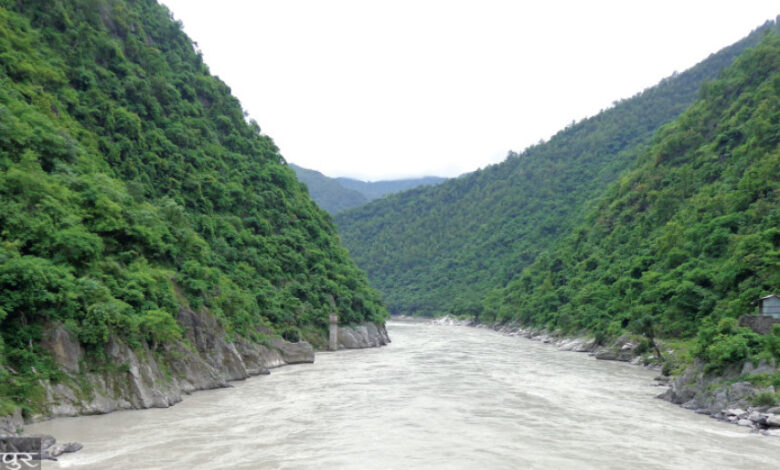
Nepal and India are set to resume high-level bilateral discussions on advancing the Pancheshwar Multipurpose Project on the Mahakali border river after a gap of nearly four years.
The project is expected to feature prominently on the agenda of the Joint Committee on Water Resources (JCWR) and the Joint Standing Technical Committee (JSTC), whose meetings are being planned for the first week of September, according to Nepal’s Ministry of Energy, Water Resources and Irrigation.
Ministry spokesperson Sushil Chandra Acharya said Nepal has already prepared a proposed agenda and forwarded it to the Government of India through the Ministry of Foreign Affairs. The final agenda will be agreed upon after receiving India’s response.
In addition to the Pancheshwar Multipurpose Project, the meetings are expected to discuss the Koshi and Gandak projects, cross-border flood and inundation management, the Dodhara-Chandani irrigation project, the link canal extending to the Nepal border, the Tanakpur-Mahendranagar link road, river control and other bilateral water-resource issues.
The previous meeting of the Joint Standing Technical Committee was held in Kathmandu on September 21 and 22, 2022, followed by the ninth secretary-level meeting of the Joint Committee on Water Resources on September 23. Those meetings had tasked a joint team of experts with expediting the finalisation of the Detailed Project Report (DPR) for Pancheshwar, along with implementation-related issues under the Mahakali Treaty.
The upcoming meetings are expected to revisit the revised DPR being reviewed by the joint expert group, as well as long-standing differences over water allocation, cost-benefit sharing and downstream benefits.
Nepal has maintained that while both countries can benefit equally from electricity generation, India is likely to receive comparatively greater benefits from irrigation, flood control and regulated water availability. Kathmandu has therefore argued that the investment burden should be determined in proportion to the benefits received by each side.
In this context, a possible cost-sharing model under which Nepal would bear around 30 percent of the total investment and India 70 percent has been discussed at the bilateral level. Although an equal investment model had previously been considered, Nepal has continued to argue that irrigation and flood-control benefits should be incorporated into the calculation of project costs.
Water utilisation and the valuation of resulting benefits have remained among the most complex issues preventing the Pancheshwar DPR from being finalised. Key questions include how much water each country will use for irrigation, through which systems water will be diverted, how the economic value of downstream flood-control benefits should be calculated, and how water entitlements should be clearly defined.
Former energy secretary and former chief executive officer of the Pancheshwar Multipurpose Project Madhup Prasad Bhetuwal has said that settling the economic distribution of irrigation and flood-control benefits, along with the volume of water to be used by each country, will be critical to advancing the DPR.
Nepal and India signed the Mahakali Treaty in 1996, covering the integrated development of the Mahakali River, including the Sharada Barrage, Tanakpur Barrage and the Pancheshwar Project. The treaty recognises the principle of equal entitlement to the waters of the Mahakali and provides for the joint development of Pancheshwar as a multipurpose project.
According to official project details, the main Pancheshwar dam is proposed to be 315 metres high. The project concept envisages 6,480 megawatts of generation from the main dam and an additional 240 megawatts from the Rupaligad re-regulating dam, bringing the proposed total installed capacity to as much as 6,720 megawatts.
Beyond electricity generation, the project is expected to provide regulated water for irrigation in both Nepal and India and contribute to flood-control benefits in downstream areas.
India’s state-owned Water and Power Consultancy Services Limited, commonly known as WAPCOS, prepared a draft DPR by integrating earlier studies carried out separately by Nepal and India. Several meetings of the joint expert group have been held since then, but disagreements over water sharing, cost-benefit assessment and certain technical and legal issues have prevented the report from being finalised.
With the Pancheshwar Project remaining under discussion for nearly three decades, the upcoming Nepal-India water resources meetings could prove significant. If the two sides can reach a common understanding on water rights, irrigation and flood-control benefits, and the corresponding cost-sharing formula, a major obstacle to finalising the long-delayed DPR could finally be removed.