Gesar Bel-Song Tradition Lives On in Numa Ri Village, Preserving a Thousand Years of Cultural Memory

Dragon Media News Desk
In Numa Ri village of Gyashing Township, Kongpo Gyamda County, Nyingchi City, in China’s Xizang Autonomous Region, the traditional “Gesar Bel-Song” has been preserved across generations and remains a distinctive expression of local cultural identity.
According to the Tibetan-language account, Numa Ri village, nestled amid scenic mountain landscapes, is known not only for its natural beauty but also for traditional songs, dances and costumes associated with King Gesar. The name of the village is described as being connected to a nearby mountain whose shape resembles a woman’s breast.
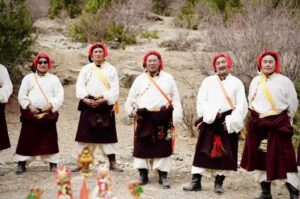
Local tradition regards the Gesar Bel-Song as a cultural art form passed down for around a thousand years. A traditional expression describes its beauty as “more beautiful than flowers and more majestic than mountains.”
The cultural performance is not limited to singing. It combines music, dance, traditional costumes, collective performance and symbolic expressions associated with King Gesar. In this sense, the Gesar Bel-Song serves as a living cultural practice connecting local history, oral memory and community identity.
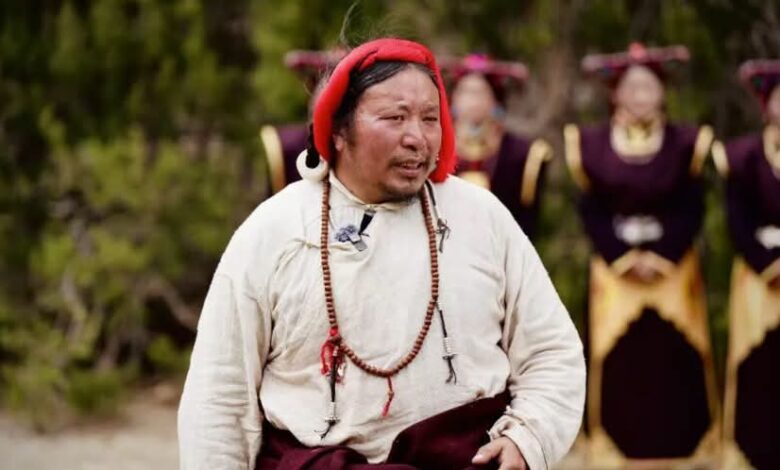
The costumes worn during the performance are traditionally associated with the heroic attire of King Gesar. The Tibetan account describes their symbolism in poetic terms: the hat is compared to snow, the armor and helmet to mountains, the mirror to the sun and moon, and the sword to a rainbow.
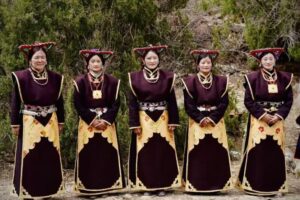
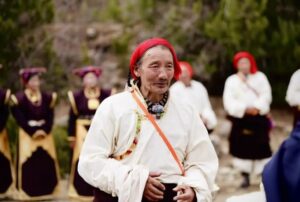
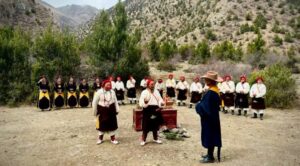
The movements and gestures performed during the dance are also said to symbolize the overcoming of evil forces and obstacles. This indicates that the Gesar Bel-Song combines entertainment with themes of heroism, community belief and traditional narrative.
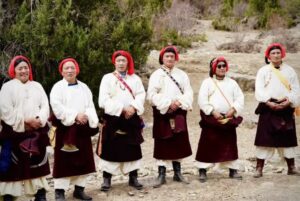
The photographs accompanying the account show local men and women performing together in an open mountainous setting. Male participants are seen wearing white upper garments, dark lower clothing and red head coverings, while female participants wear dark maroon and black traditional attire decorated with golden patterns and distinctive headdresses.
Some performers appear in the foreground while other members stand in formation behind them, reflecting the collective nature of the song and dance tradition.
The epic tradition associated with King Gesar has been passed down through oral history, folk songs and performing arts among communities across Himalayan and plateau regions. The Gesar Bel-Song of Numa Ri village is presented as a local expression of this broader cultural heritage.
Maintaining such traditions at the village level is more than simply organizing a cultural performance. It helps transfer oral knowledge, songs, symbolic expressions, dance forms and knowledge of traditional clothing from older generations to younger members of the community.
The cultural practice of Numa Ri also reflects a close relationship between nature and human life. Mountains, snow, the sun, the moon, rainbows and flowers are incorporated into the symbolic language of costumes and performance, reflecting the community’s aesthetic traditions and worldview.
In this sense, the Gesar Bel-Song is not merely a memory of the past. It remains a means through which the community remembers its history, expresses its cultural identity and connects younger generations with inherited traditions.
The scenes of Numa Ri residents performing traditional songs and dances in mountain surroundings highlight the cultural diversity of Xizang and the continuing vitality of oral and performing traditions within local communities.
The tradition, said to have been passed down for around a thousand years, offers an example of how local culture can remain closely connected with community life, memory and identity even amid the expansion of modern lifestyles.