Higher Economic Growth Requires Policy Reform and Investment Expansion in Tandem: NPC Vice Chair Bhatt


Dragon Media Correspondent
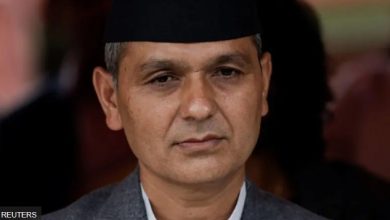
National Planning Commission Vice Chair Dr. Gunakar Bhatta has said Nepal needs to advance policy reform, investment expansion, skilled human capital development and greater use of technology simultaneously to achieve higher and more sustainable economic growth.
Speaking at a program in Lalitpur on Sunday, Bhatta said Nepal’s long term economic growth has averaged around 4 percent, but the country has achieved growth of nearly 7 percent during periods when policy intervention and investment expansion were stronger.
According to Bhatta, Nepal must broaden the foundations of economic growth by increasing capital formation while also investing in skilled labor and technology. He also stressed the need to make greater use of opportunities created by digitalization and artificial intelligence.
He said Nepal’s total factor productivity is currently around 0.2 percent, indicating that economic growth has so far depended largely on capital and labor rather than major productivity gains. He added that the country has struggled to expand production capacity at the desired pace and continues to face challenges in human capital development.
Bhatta said rising outward migration and a low population growth rate could place additional pressure on the future availability of skilled workers. He therefore called for stronger investment in education, health and skills development, along with policies that create better conditions for retaining qualified workers within the country.
He said Nepal’s fixed capital formation has now reached around 26 percent of gross domestic product, after remaining at approximately 24 percent for three consecutive years.
During the post earthquake reconstruction period, capital formation had risen to around 30 percent of GDP, while Nepal recorded economic growth of about 7 percent for three consecutive years, Bhatta noted.
He emphasized that higher capital investment alone would not be sufficient to generate sustained growth. Productivity also depends on work practices, institutional capacity, education, organizational culture and the effective use of technology.
Bhatta said sound policies and strong institutions play a decisive role in raising productivity and per capita income. He called for an integrated approach that combines policy reform, institutional strengthening, human capital development and technology oriented investment to support Nepal’s long term economic transformation.