Chief of Army Staff’s Precedence and the State Structure: Where Should Nepal Place Its Military Leadership?

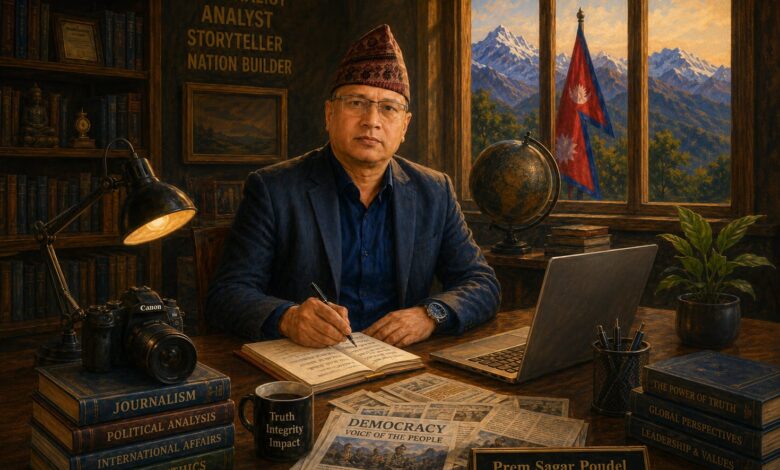
# Prem Sagar Poudel
The proposal that the Chief of Army Staff of the Nepali Army should enjoy a state precedence at least equivalent to that of a federal minister may initially appear to concern the prestige of a particular office. In reality, however, the issue is much broader. It raises fundamental questions about how Nepal defines the relationship among its constitutional structure, national security system, civilian control and military professionalism.
Any serious discussion must distinguish among military rank, state order of precedence and political authority. The Chief of Army Staff is the highest professional military leader of the Nepali Army. Granting the office a higher ceremonial precedence would not make the Chief of Army Staff a member of the Council of Ministers or a political decision-maker. State precedence is primarily ceremonial and protocol-based, while executive authority derives from the Constitution and law.
Constitutional Basis
Nepal’s Constitution designates the President as Supreme Commander of the Nepali Army. The Chief of Army Staff is also a constitutional member of the National Security Council, chaired by the Prime Minister and comprising the ministers for defence, home affairs, foreign affairs and finance, along with the Chief Secretary.
The Council advises the Council of Ministers on matters relating to national interest, security, defence and the mobilization of the Army.
The Chief of Army Staff is therefore not merely the head of an administrative institution. The office represents the highest professional military authority constitutionally integrated into Nepal’s national security decision-making structure.
Under the existing order of precedence, federal ministers are placed in the eighth category, ministers of state in the ninth, and the Chief of Army Staff in the tenth. The tenth category also includes assistant ministers, members of the Federal Parliament, former ministers, provincial ministers, the Chief Secretary and several other office-holders.
This raises the central question: does the current ceremonial status of the country’s highest professional military office adequately correspond to its constitutional responsibility and institutional weight?
International Practice: No Single Formula
There is no universal international model for determining the precedence of senior military leadership.
India has separate chiefs for the Army, Navy and Air Force, together with a Chief of Defence Staff for joint coordination. Nepal’s structure is fundamentally different, and India’s order of precedence therefore cannot simply be transplanted into the Nepali context.
In the United States, the Chairman of the Joint Chiefs of Staff is the highest-ranking military officer and the principal military adviser to the President and senior defence leadership. Yet the Chairman does not exercise operational command. The system demonstrates that high military status can coexist with firm civilian political control.
In Russia, the Chief of the General Staff also serves as First Deputy Minister of Defence, formally integrating the highest professional military leadership into the senior defence establishment.
China follows a very different model in which the Central Military Commission exercises leadership over the armed forces. The useful lesson for Nepal is not direct institutional comparison, but recognition that the position of military leadership depends on each country’s constitutional and political structure.
The broader conclusion is clear: senior military leadership can be accorded high professional standing and strategic access, but the institutional form must reflect the particular state structure of each country.
International practice may demonstrate diversity, but Nepal’s own institutional characteristics require a distinct assessment.
Nepal’s Distinct Context
Nepal does not have separate army, navy and air force service chiefs. The Nepali Army is a single national military organization, and the Chief of Army Staff is its highest professional leader.
Nepal’s geopolitical position is also distinctive. Situated between China and India, its understanding of national security can no longer be confined to conventional military defence. Economic security, energy, water resources, border management, cybersecurity, critical infrastructure, disaster management, international peacekeeping and the evolving regional strategic environment have all become part of the broader national security agenda.
In this context, the Chief of Army Staff’s role extends beyond internal military administration. As a member of the National Security Council, the office is a principal institutional source of professional military assessment available to the government.
Raising state precedence and expanding political authority are two different matters. Giving the Chief of Army Staff ministerial-level ceremonial standing would not automatically weaken civilian control. Constitutional arrangements, elected political leadership and parliamentary oversight would continue to safeguard civilian supremacy.
Two Options for Review
It is no longer sufficient simply to say that the issue should be studied. More concrete options should now be placed on the table.
The first option would be to move the Chief of Army Staff from the current tenth category to the eighth category alongside federal ministers. This would increase ceremonial precedence without granting any additional political or executive authority.
The second option would be to create a separate “National Security Special Category” corresponding broadly to ministerial-level precedence while remaining entirely non-political. This could recognize the distinct national security responsibilities of the office without treating it as equivalent in nature to a political minister.
The advantages, risks and institutional implications of both options should be examined objectively. The House of Representatives’ State Affairs and Good Governance Committee, or a high-level independent mechanism established by the government, could be mandated to complete such a review within six months.
That review should assess the order of precedence, national security architecture, international practice and principles of democratic civilian control before making a clear recommendation.
Any revision should also avoid weakening the Ministry of Defence. The Ministry of Defence, the National Security Council and the professional leadership of the Nepali Army should all be strengthened institutionally.
Conclusion: Time for an Institutional Decision
The debate over the Chief of Army Staff’s state precedence is not about turning the military into a political force. Nor should it seek to establish military superiority over elected leadership or create a parallel centre of power.
The President would remain Supreme Commander of the Nepali Army. The elected government would continue to exercise political leadership over national security and defence policy. Parliament’s constitutional role would remain intact, and the Chief of Army Staff would continue to serve as the highest professional military leader.
The question is simply whether the ceremonial standing of an office carrying such responsibility adequately reflects its actual institutional weight within the state.
If it does not, correcting that imbalance should not be regarded as an attempt to make any institution disproportionately powerful. It should be understood as an effort to make the state structure more rational and effective.
The balance Nepal requires will not emerge by accident. It must be built through clear constitutional boundaries, institutional review and carefully considered reform. The question of the Chief of Army Staff’s state precedence should therefore now be taken beyond personal prestige and addressed as an institutional component of Nepal’s national security policy.
About the Author: Prem Sagar Poudel is a senior journalist and international relations analyst from Nepal. He has conducted in-depth studies on Nepal-China relations, the geopolitics of the Himalayan region, and Asian security issues.