Madhushravani Festival Concludes in Mithila, Celebrating Marital Affection and Cultural Continuity

Dragon Media Correspondent
The traditional Madhushravani festival, observed by newly married women across the Mithila region, is being formally concluded on Saturday. According to Maithil tradition, the festival begins on Shrawan Krishna Panchami, also known as Mauna Panchami, and concludes on Shrawan Shukla Tritiya after 13 days of rituals.
Newly married women traditionally observe the festival during the first year of marriage, praying for affection, trust and harmony between husband and wife. The festival is usually celebrated at the bride’s parental home, with food, new clothing, ornaments and other ritual materials traditionally sent by the husband’s family.
Throughout the festival, devotees worship Lord Shiva, Goddess Gauri and Vishahara, the serpent deity. Listening to traditional and mythological narratives from senior women in the household is also an important part of the observance. These stories include Mauna Panchami, Vishahari, Bihula, Mansa, Mangala Gauri, the churning of the ocean and the story of Sati.
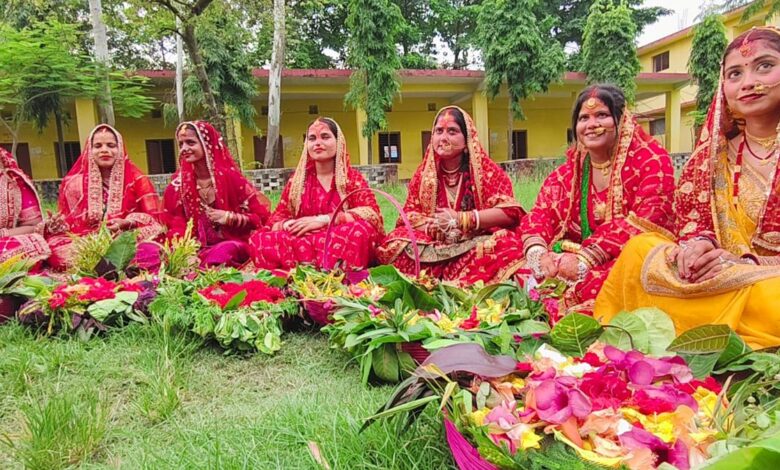
Another distinctive feature of Madhushravani is the ritual known as “Phullodhi,” during which groups of women go out with friends to collect flowers and bel leaves while singing and sharing light-hearted conversation. The flowers are kept overnight and used the following day in worship of Shiva, Gauri and Vishahara.
The final stage of the festival also traditionally includes the “Temi” ritual. In the older practice, a flame from a cotton wick is brought close enough to lightly burn the bride’s left knee. Folklore associates the resulting mark with the depth of affection between husband and wife.
In recent years, however, many younger women have replaced the burning ritual with the symbolic application of cool sandalwood paste. Educated women in the region have described the change as a way of preserving the cultural meaning of the tradition while adapting it to contemporary concerns about health and safety.
The festival is also known for the colourful dress of newly married women, collective songs about love, gatherings with childhood friends and the ritual telling of traditional stories. Because the bride spends an extended period at her parental home, Madhushravani also serves as an opportunity to renew family and social relationships.
Scholars of Maithil folk culture say the central purpose of the festival is to strengthen love, mutual understanding and trust within married life. The monsoon season, traditionally associated in Mithila with nature, fertility and romance, gives the festival additional cultural meaning.
In the past, Madhushravani was observed mainly among Brahmin, Kayastha, Dev and Sonar communities in Mithila. In recent years, however, the practice has spread to other communities as greater social interaction among different linguistic and cultural groups has encouraged the sharing of festivals and traditions.
As a result, Madhushravani is increasingly being regarded as a broader cultural celebration of Mithila rather than a festival limited to specific communities.
At the conclusion of the festival, devotees traditionally gather the flowers and bel leaves used in worship over the 13-day period and immerse them in a sacred river or pond.
By bringing together ritual, family relationships, women’s participation, folk songs, storytelling and community gathering, Madhushravani continues to remain a living expression of Mithila’s distinctive cultural heritage.