Nepal’s Installed Electricity Capacity Reaches 4,120 MW, Exports Rise 68 Percent

Dragon Media Correspondent
Nepal’s total installed electricity generation capacity reached 4,120 megawatts by the end of fiscal year 2082/83, with 529 megawatts added to the national grid during the year, according to the Nepal Electricity Authority.
The figures were presented in a report released by Acting Managing Director Dirghayu Kumar Shrestha as the Authority marked the beginning of its 41st year of operation.
According to the report, the number of NEA customers increased by 3.85 percent from the previous year to 5.927 million. Household consumers account for 90.64 percent of the total customer base, while industrial consumers represent 1.20 percent.
The Authority generated total revenue of Rs 166 billion from electricity sales and other sources during the last fiscal year. Revenue from electricity sales alone rose by 18.20 percent year on year to Rs 148.62 billion.
The report said improved leakage control and higher electricity exports helped increase the Authority’s total profit by 13.70 percent to Rs 31.23 billion, while operating profit stood at Rs 24.81 billion.
However, higher foreign exchange costs, depreciation and interest expenses limited net profit before tax to Rs 5.04 billion. Foreign exchange-related liabilities rose by 272.86 percent from the previous year to Rs 11.51 billion.
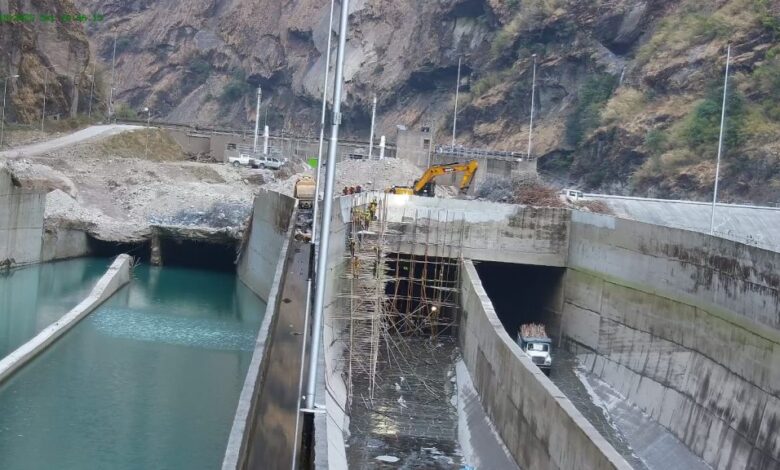
On the generation side, the 102-MW Middle Bhotekoshi Hydropower Project began commercial operation, while the 40-MW Rahughat project entered the testing phase. A total of 528.89 MW was added from 23 private-sector projects during the fiscal year.
The Authority said power purchase agreements have so far been signed with 545 projects with a combined capacity of 12,135 MW.
In transmission infrastructure, completion of the Kohalpur-Surkhet line connected Karnali Province to the 132-kV transmission network for the first time. The 400-kV Khimti-Barhabise and 220-kV Marsyangdi-Bharatpur transmission lines have also entered operation.
The 400-kV Hetauda-Dhalkebar transmission line is targeted for completion by the coming Kartik. The total length of high-voltage transmission lines across the country has now reached 7,110 circuit kilometres, while substation capacity has increased to 15,541 MVA.
Work on underground electricity distribution systems is also progressing in Kathmandu, Bharatpur and Pokhara.
In cross-border electricity trade, Nepal imported electricity worth Rs 10.56 billion during the fiscal year while exporting electricity worth Rs 29.31 billion. Electricity exports increased by 68 percent compared with the previous year.
Efforts are also moving forward to strengthen cross-border transmission infrastructure with India, including the Butwal-Gorakhpur and Dhalkebar-Muzaffarpur corridors. The Authority aims to bring the 400-kV Butwal-Gorakhpur line into operation this year and begin construction of the Chilime-Kerung transmission line toward China.
The government has set a target of increasing Nepal’s electricity generation capacity to 28,500 MW by 2035. To support that goal, the Authority plans to prioritize large reservoir-based hydropower projects, pumped-storage facilities and solar energy.
The NEA is also preparing for broader digital transformation of its services. Its plans include an artificial intelligence-based data centre, AI chatbot services and accelerated installation of smart meters.
The Authority has additionally proposed expanding domestic electricity consumption through green hydrogen, including the installation of an electrolyser in Hetauda and the development of green ammonia and methanol.