Lavrov: Eurasian Security Must Be Based on Equality and Indivisibility


Dragon Media News Desk
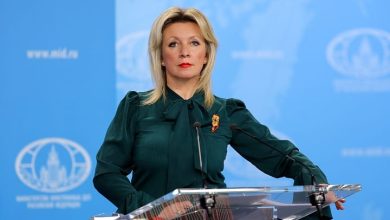
Russian Foreign Minister Sergey Lavrov has called for an inclusive framework to promote security and development across the Eurasian continent. Speaking to the media after the Fourth Minsk International Conference on Eurasian Security, he said no country should strengthen its security at the expense of others, and no power or group of countries should seek regional dominance.
According to Lavrov, Russia and Belarus have initiated a draft Eurasian Charter of Diversity and Multipolarity in the 21st Century. Russia, Belarus, Kyrgyzstan, Tajikistan, Kazakhstan, Myanmar, Laos and Vietnam have formed an initiative group to discuss the draft. The first meeting is expected to take place in Minsk by the end of this year, with another planned in Russia next spring.
Lavrov said the draft was not a formal proposal to be imposed on any country, but a basis for open discussion. Other countries interested in joining the process would also be invited. He said the priority was to reach an agreed outcome rather than meet an artificial deadline.
He said the proposed security framework would be based on the principle of “equal and indivisible security.” No country, organisation or group of countries should claim dominance over any part of Eurasia, he said. The framework should also include a mechanism to monitor compliance and respond appropriately to violations of agreed principles.
The Russian foreign minister accused Western countries of failing to honour their previous commitments on security balance. He cited NATO’s expansion and the growth of military infrastructure near Russia’s borders as examples that, in his view, ran counter to the principle of indivisible security. Lavrov said the Organization for Security and Co-operation in Europe had failed to implement its principles and could not serve as a model for a future security framework.
On the Ukraine conflict, Lavrov said any effort to end the war must address what Russia considers its “root causes.” He repeated Moscow’s allegations about the rights of Russian-speaking people and the influence of Nazi ideology in Ukraine, and criticised proposals for a ceasefire along the current line of contact followed by the deployment of foreign “stabilisation forces.” These are claims made by the Russian government, and Lavrov reiterated Moscow’s position that they should be addressed in a peace process.
On European security, Lavrov said the US military presence was gradually shifting eastward while European countries were increasing defence spending and weapons production. He warned that this could intensify an arms race on the continent and said European governments should explain how the rising military costs would affect their citizens.
Asked about media claims that the United States might strike an Iranian nuclear facility, Lavrov said Moscow had not formally sought clarification from Washington. He said claims made by Tucker Carlson had not been corroborated by other sources and that he understood them to have been made in the context of the US midterm elections.
Lavrov described the sharing of information related to the Tsaritsyno incident by US intelligence with Russia as an example of practical cooperation between the two countries’ security agencies against terrorism. He also recalled that Russia had previously shared information with the United States ahead of the Boston Marathon attack.
Lavrov said the proposed Eurasian Charter should address local communities’ needs as well as broad security principles. Its long-term aim, he said, should be to improve security, living standards and development while taking account of industry, agriculture, small businesses, cities and rural communities.