Bhuwan KC: Nepal Cinema’s Evergreen Hero and the Story of Four Decades of Stardom

Dragon Media Correspondent
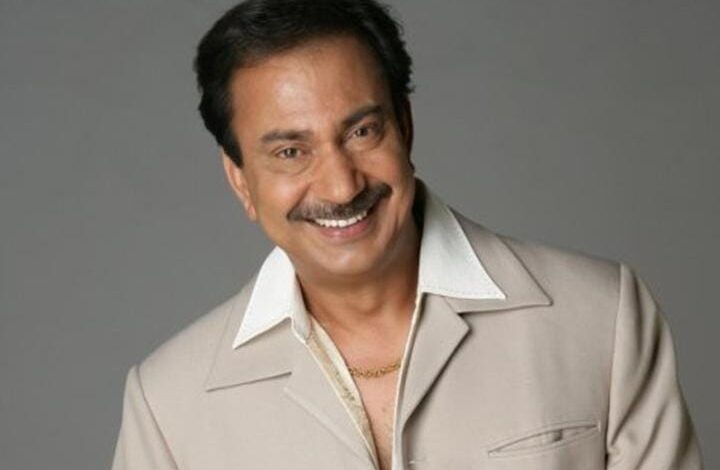
Some artists in Nepali cinema have stories that cannot be reduced to a list of films in which they appeared. Their lives also reflect an entire era in the development of the country’s film industry. Bhuwan KC belongs to that generation. From the period when Nepali cinema was still taking shape as a commercial industry to today’s world of digital promotion, multiplexes, new-generation stars and global releases, he has remained connected to the industry in one role or another—as a romantic lead, family-drama actor, producer, director and later chairman of the Film Development Board.
Bhuwan KC is often described in Nepali cinema as an “evergreen hero.” The description is not based only on the length of his career. For an entire generation, he represented the image of a modern Nepali film star—romantic, stylish, comfortable in song sequences, visually appealing and capable of creating a distinct sense of stardom on screen. Today, the idea of film stardom may appear ordinary, but the structure of the industry was completely different when KC rose to prominence. Few films were made, cinema halls were limited, and publicity relied mainly on radio, posters, newspapers and word of mouth. Popularity was measured not by social media numbers but by crowds outside theaters, hit songs and the ability of audiences to remember characters long after a film ended.

KC’s artistic journey did not begin with cinema. He was drawn to music and singing and became associated with Radio Nepal. That background later contributed to the screen personality he developed. While many actors from earlier generations entered films through theater, KC arrived with a combination of music, personality, romantic appeal and screen presence. This made him particularly comfortable in roles centered on songs and romance from the beginning of his career.
His major film journey began with “Juni.” After his early appearances, films such as “Samjhana” and “Kusume Rumal” helped turn him into a household name. His pairing with Tripti Nadkar in “Samjhana” left a strong impression on audiences. Its combination of love, separation, family emotion and popular music gave the film lasting appeal. “Kusume Rumal” further strengthened his star image. At the time, cinema was not merely entertainment in Nepal. Songs, dialogue, hairstyles and clothing worn by actors influenced youth culture. Bhuwan KC emerged at the center of that cultural transformation.

His career did not end with one or two major successes. Through films including “Santan,” “Saino,” “Mayalu,” “Tilahari,” “Kanyadan,” “Vijay Parajay,” “Chino,” “Pariwar,” “Sapana,” “Dui Thopa Aansu,” “Dakshina,” “Ranko,” “Crorepati” and “Nepali Babu,” he became one of the most consistently visible leading men in mainstream Nepali cinema. His acting style differed from the more naturalistic performances favored today, but commercial cinema of that period demanded a different kind of hero. The leading man had to be romantic, capable of sacrifice for his family, rebellious when necessary, convincing in song sequences and larger than other characters on screen. KC possessed that kind of screen presence.
His smile, dialogue delivery, hairstyle, clothing and ease in musical sequences all became part of his star identity. By the time films such as “Chino” and “Dakshina” arrived, he was no longer confined to conventional romantic roles. He became a familiar face in stories involving family conflict, friendship, social relationships, revenge and emotional drama. That range helped establish him not merely as a romantic hero but as a broad-based commercial star.
Another important feature of KC’s career was his decision not to restrict his popularity to acting. Instead of following the traditional path of finishing one acting assignment and waiting for the next, he moved into film production. Through projects such as “Crorepati” and “Nepali Babu,” he began taking direct commercial risks as a producer and presenter. Producing a film meant assuming responsibility for everything from story selection and casting to technical crews, promotion, distribution and financial outcomes. KC chose to accept that challenge.
In doing so, he became one of the early examples in Nepali cinema of transforming an individual star into a broader commercial brand. It later became increasingly common for actors to become producers themselves, but KC had made such a transition an important part of his career much earlier. Not all of his productions were equally successful, but he did not withdraw from filmmaking after setbacks. That continuity became one of the main reasons for his long-term influence.
Another interesting chapter in his film journey is connected to his son, Anmol KC. By the time Anmol emerged, the Nepali film industry had changed dramatically from the period in which Bhuwan built his stardom. Traditional single-screen theaters were increasingly joined by multiplexes, while Facebook, YouTube and digital promotion had become as important as posters and radio publicity. Audience tastes, production styles and the very process of creating stars had changed. In this transformed market, Bhuwan played an active role as producer and director in shaping a new-generation star.
He became connected with several projects related to Anmol’s career. This also generated debate within the industry about nepotism. Yet beyond that debate, it is clear that Bhuwan attempted to adapt the commercial lessons he had learned in the older film industry to the realities of a new-generation market. He gradually moved away from being the central leading man and increasingly became a producer and director who placed younger performers at the center of his films.
In 2016, Bhuwan KC formally entered directing with “Dreams.” By then, he had spent decades acting, had accumulated production experience and had closely observed changing audience preferences. Starring Anmol KC and Samragyee Rajya Laxmi Shah, “Dreams” centered on youthful romance, attractive visuals, modern locations and new-generation stardom. The film became commercially prominent and allowed KC to demonstrate that he could understand the market from behind the camera as well as from in front of it.
His career later extended into institutional leadership within Nepal’s film sector. The government appointed him chairman of the Film Development Board in 2022. Because he arrived at the institution with experience as an actor, producer and director, expectations surrounding his tenure were high. The board deals with issues ranging from film policy, exhibition and classification to box-office systems, competition with foreign films, international markets, film archives, the welfare of artists and technicians, and coordination with the government. As a result, his tenure attracted both expectations and debate.
His institutional journey was not free from controversy. Various policies, decisions and public remarks during his leadership of the Film Development Board drew criticism. His commercial decisions and family-centered production model had also been questioned earlier. Yet one thing becomes clear when his career is viewed as a whole: KC did not leave the industry because of criticism or failure. He continued to adapt his role and maintained his presence across different periods of Nepali cinema.
Even in 2026, he remains active in filmmaking and directing. He continues to work with younger performers in a market that has changed radically from the one in which he became a star. Today’s audiences have easy access to films and series from around the world. Nepali films compete for the same viewers’ time with South Indian, Korean, Hollywood, Chinese and other international productions. Stardom built four decades ago is no longer enough. Filmmakers must understand new technology, new storytelling rhythms and the language of younger audiences. KC’s recent work is part of that continuing test.
The question of why Bhuwan KC has remained relevant for so long cannot be answered simply by referring to good fortune or an attractive face. He consistently changed his role with time. He began as a singer, became an actor, moved from popular leading man to producer, then director, helped shape a new generation of stars and later assumed institutional leadership through the Film Development Board. His ability to transform himself has been one of the foundations of his longevity.
Another important reason is that he understood cinema not only as an art form but also as a business directly connected to audiences. During his generation, Nepali cinema was moving toward a system in which the commercial appeal of stars increasingly became part of film financing and marketing. KC became one of the central figures in that transition. He repeatedly paid attention to what audiences wanted to see. Not all of his films succeeded, and not every creative decision escaped criticism, but he remained inside the industry even after failures.
Titles such as “mahanayak,” “superstar” or “evergreen hero” are periodically debated in Nepali cinema. Such labels have no official standard, and assessments often differ from one generation of audiences to another. Yet Bhuwan KC’s historical importance does not depend on any title. He was one of the major leading men of the period when Nepal’s commercial star system was becoming firmly established. He represented an era of romantic cinema, witnessed the height of family-oriented mainstream films, survived the transition from the analog to the digital age, took risks as a producer, moved into directing, played a role in building a new generation of stars and eventually led a government institution responsible for the development of the film sector.
In that sense, Bhuwan KC is not merely an actor. He is both a witness to and a participant in more than four decades of change in Nepali cinema. Watching his older films today reveals more than a familiar hero. They also offer a glimpse into the romance, family values, fashion, music, ideas of masculinity and entertainment culture of the Nepal in which those films were made. That is why his story is not simply one of personal success. It is also an important chapter in the larger story of how Nepali cinema grew from a small market with limited technology into an industry capable of creating commercial stars and sustaining them across generations.
His age on screen has changed. His roles have changed. The technology of Nepali cinema has changed, and so have its audiences. Yet after more than four decades, Bhuwan KC remains involved in filmmaking. Perhaps that is the most meaningful definition of “evergreen”—not remaining unchanged forever, but continuing to evolve while maintaining one’s place in a changing industry.