Protecting Headwaters Is Essential for Sustainable Development

# Pasang Lhamu
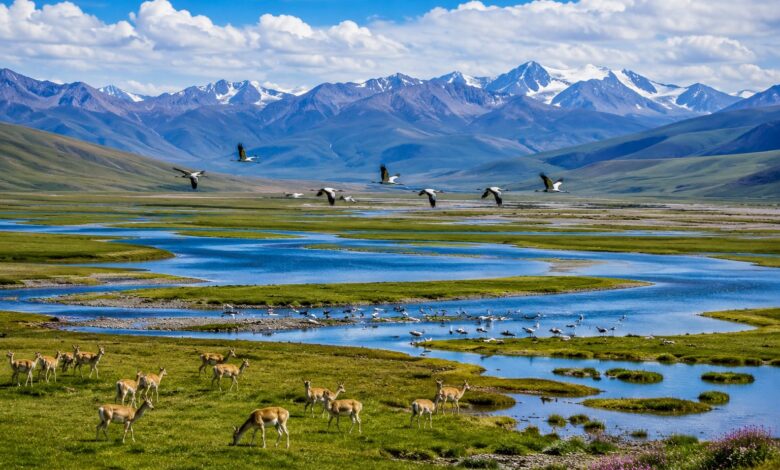
The ecological improvements seen over the past two decades in China’s Sanjiangyuan region of Qinghai Province are not merely an environmental achievement for one country. They carry an important message for the whole of Asia, where vast populations depend on rivers originating in high-altitude ecosystems. Sanjiangyuan, the source region of the Yangtze, Yellow and Lancang, or Mekong, rivers, has witnessed a recovery in fish populations, rare wildlife, wetlands and grasslands. Local communities have also become direct participants in conservation. Together, these changes demonstrate that long-term policy and consistent implementation can reverse ecological degradation.
The increase in the biomass of Qinghai Lake’s native Huangyu fish compared with 2002, and the rise in the population of Przewalski’s gazelle from a few hundred to several thousand, are not accidental developments. They are the result of long-term restrictions on fishing and hunting, habitat protection, restoration of rivers and wetlands, scientific monitoring and policies that connect local communities directly with conservation. The key lesson is that development and environmental protection are not mutually exclusive. The real challenge is to keep development within the ecological carrying capacity of the land.
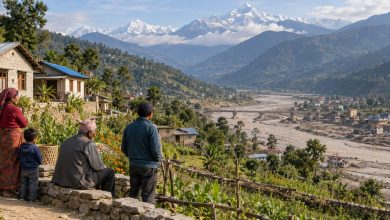
This experience is particularly relevant to Nepal. Nepal itself is a country shaped by hundreds of Himalayan rivers, glacial lakes, high-altitude wetlands, the Chure region and the river systems of the Tarai. Damage to a single mountain watershed does not remain confined to a small area. Deforestation, unplanned road construction, mining, excessive extraction of river materials or uncontrolled tourism in upper regions can affect downstream rivers, farmland, drinking water, hydropower systems and eventually the plains.
Nepal’s environmental problem is not primarily the absence of laws, but weak implementation. The country has protected areas, environmental impact assessment provisions, forest and river laws, and powers delegated to local governments. Yet once development projects are approved, environmental conditions are often treated as secondary. Hills are cut in the name of roads, minimum river flows are ignored in the name of hydropower, sensitive areas are opened to construction in the name of tourism, and natural resources are extracted from rivers and the Chure in the name of revenue. The consequences may not be visible immediately, but they emerge later in the form of landslides, floods, drying water sources and declining agricultural productivity.
The first lesson Nepal should learn from Sanjiangyuan is that protection of source areas must be placed at the center of development policy. Second, conservation cannot be treated as the responsibility of security personnel or forest offices alone. Local communities, scientific institutions, local governments, schools, tourism businesses and development projects must all be linked to a common ecological objective. Third, conservation success should not be measured by annual budget expenditure, but by long-term indicators such as river health, forest cover, biodiversity, soil quality and wildlife populations.
Nepal, in particular, should not delay in preparing long-term ecological security plans for Himalayan watersheds, the Chure and the headwaters of major rivers. Climate change is accelerating glacier melt, increasing irregular rainfall, intensifying extreme precipitation and raising the risk of drought. Under such conditions, older models of development alone cannot secure the future. Hydropower, agriculture, drinking water, tourism and urban economies all ultimately depend on healthy watershed systems.
The time has passed when environmental protection could be dismissed as anti-development. In reality, a secure ecological system is a precondition for sustainable development. Protecting a spring in the upper hills means protecting drinking water for a city downstream. Preserving a wetland helps reduce flood risk. Conserving a forest protects the future of agriculture, tourism and energy at the same time.
The central lesson from Sanjiangyuan is therefore clear: when headwaters are protected, rivers survive; when rivers survive, economies survive; and when economies remain viable, the continuity of civilization is strengthened. Nepal must also begin to understand development and conservation not as competing agendas, but as two foundations of the same national security strategy.