Russia Rejects Allegations of Cyber Interference in France

Dragon Media News Desk
Russia has rejected allegations that it carried out cyberattacks against France or interfered digitally ahead of the 2027 French presidential election, accusing Paris of blaming Moscow without sufficient evidence.
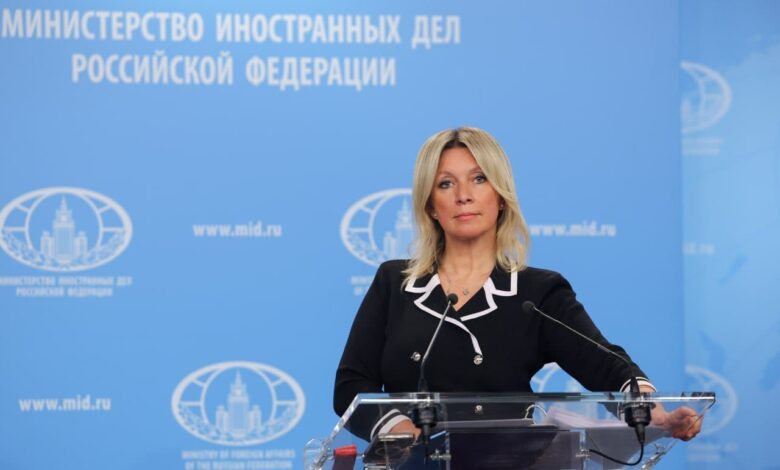
Russian Foreign Ministry spokeswoman Maria Zakharova made the remarks on August 25 in response to a media question concerning French accusations of cyber activity and election interference.
France had earlier summoned Russia’s chargé d’affaires on July 17 to protest what it described as malicious cyber operations targeting French institutions. French authorities have linked some of those activities to “Center 16” of Russia’s Federal Security Service, the FSB.
Russia has denied the accusations, arguing that Paris has failed to provide convincing evidence. According to Zakharova, the Russian diplomat firmly rejected the allegations during the July meeting.
A separate part of the dispute concerns findings published by Viginum, France’s agency responsible for monitoring foreign digital interference. The agency has accused networks known as Storm-1516 and Matriochka of spreading misleading or manipulated content targeting French political figures and public debate, and has associated those activities with Russian-linked influence operations.
French authorities have said that fabricated news reports, manipulated videos and coordinated social media content have been used in attempts to influence political discussion as preparations for the 2027 presidential election gather pace.
Zakharova rejected that interpretation, describing the accusations as part of an effort to reinforce a narrative of a “Russian threat.”
She also accused French authorities of using allegations against Russia to divert attention from domestic economic and foreign-policy problems.
According to the Russian spokeswoman, references to the alleged Russian threat are increasingly becoming part of the political agendas of prospective French presidential candidates.
France, however, views cyber espionage and foreign information manipulation as threats to national security and democratic institutions. Viginum has been tasked with detecting and analyzing foreign attempts to influence France’s digital public sphere.
The current controversy involves two related but distinct issues. One concerns alleged cyber espionage directed at French state institutions, while the other involves alleged information operations aimed at influencing political opinion through social media and fabricated content.
Russia denies responsibility for both.
As France moves closer to the 2027 presidential election, foreign digital interference is likely to remain an important political and security issue. With Moscow and Paris continuing to exchange accusations, distinguishing independently verified technical evidence from broader political claims will remain essential.