A New Message from the Russia–China Partnership in a Changing World Order

Pu Yu Hai
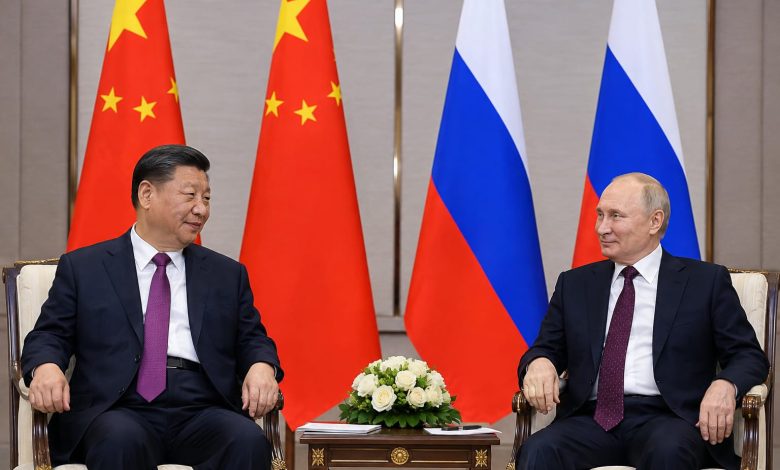
The meeting between Chinese President Xi Jinping and Russian President Vladimir Putin in Bishkek, Kyrgyzstan, carried significance well beyond routine bilateral diplomacy. Held on the eve of the Shanghai Cooperation Organisation Summit, the encounter underscored how the comprehensive strategic partnership between China and Russia is becoming increasingly intertwined with the transformation of the international order itself.
At the outset of the meeting, President Putin expressed condolences over the recent devastating mudslide in China’s Xizang Autonomous Region near the border with Nepal. Beginning the dialogue with a humanitarian message reflected not only political closeness but also the broader sense of solidarity that has developed between the two countries. Putin then described the China–Russia comprehensive partnership and strategic interaction as a model of interstate relations founded on respect for sovereignty, equality, friendship and mutual benefit.
That description carries particular weight in the current geopolitical environment. At a time when military alignments, technological competition, economic sanctions and trade restrictions are intensifying, China and Russia have chosen to build a relationship that is distinct from a formal military alliance yet rooted in long-term strategic trust. Both sides continue to emphasise respect for sovereignty, core security interests and independent development paths as essential principles of their partnership.
The Bishkek meeting also highlighted the evolution of the Shanghai Cooperation Organisation. Established 25 years ago through the initiative of China and Russia, the SCO has grown from a regional security mechanism centred on Central Asia into a broader international organisation. With India, Pakistan, Iran and the Central Asian states now participating within the same framework, the SCO has become an important platform for security, trade, connectivity, development and multilateral diplomacy across Eurasia.
Its significance lies not in replacing existing international institutions, but in broadening the space for non-Western and emerging powers to shape regional and global affairs. In this sense, the SCO increasingly reflects the wider transition toward a more diverse and multipolar international system.
The strength of China–Russia relations is equally visible in the economic sphere. Large-scale projects are advancing in energy, industry, space, transport and logistics. The launch of a regular Chinese container voyage along the Northern Sea Route is more than a commercial development. It points toward the long-term possibility of new transport corridors linking Asia and Europe. Meanwhile, a 34 percent increase in bilateral agricultural trade shows that economic cooperation is expanding well beyond energy and industrial sectors.
Artificial intelligence is also emerging as a new strategic frontier. Against the backdrop of growing technological competition and restrictions imposed by Western countries, China and Russia are seeking to deepen cooperation in digital technology and AI. Russia’s support for the World Artificial Intelligence Cooperation Organization, established in 2026 on China’s initiative, signals a broader effort to shape new multilateral mechanisms for technological governance.
In the coming years, artificial intelligence, the digital economy, space cooperation and advanced technologies could become among the most important pillars of the bilateral relationship.
People-to-people ties are also giving the partnership a broader foundation. Following the introduction of a 30-day visa-free regime, tourist flows between the two countries increased by 43 percent in the first half of 2026. Putin’s indication that Moscow is prepared to consider making the arrangement permanent suggests that both governments increasingly recognise the importance of social and human connectivity.
Political relations can be durable only when they extend beyond governments. In this respect, China and Russia are steadily expanding their relationship into tourism, culture, education and wider public interaction.
Their coordination in international affairs is also becoming more pronounced. Within the United Nations, BRICS, the G20, the SCO and ASEAN-centred mechanisms, Moscow and Beijing frequently hold close or converging positions. Their shared objective is not simply to oppose existing institutions, but to encourage a more representative international system based on sovereign equality, broader participation and a more balanced distribution of influence.
This does not mean that China and Russia have identical interests on every issue. Major powers naturally possess different priorities. The maturity of their partnership lies not in the absence of differences, but in their ability to manage them while expanding cooperation in areas of shared interest.
That is perhaps the most important message from the Xi–Putin meeting in Bishkek.
China and Russia are not merely preserving an old friendship. They are building the future structure of their relationship through cooperation in energy, technology, transport, artificial intelligence, people-to-people exchanges and multilateral institutions.
The international system is entering a period of profound transition. If China and Russia continue to advance relations based on sovereignty, equality, development and multilateral cooperation rather than confrontation, the impact will extend far beyond their bilateral ties.
The Bishkek meeting therefore points to a larger strategic reality: the China–Russia partnership is increasingly becoming not merely a relationship between two capitals, but one of the important pillars of an emerging multipolar world.