India’s Himalayan Equation for the Future: Nepal Is Not a Sphere of Influence, but an Equal Partner

Prem Sagar Poudel
India is advancing with the ambition of becoming one of the major global powers of the 21st century. Its vast economy, population, military capabilities, technological strength and growing international influence provide a formidable foundation for that aspiration. Yet long-term national power is not determined by economic and military capacity alone. A secure geographic environment, a trustworthy neighbourhood and the ability to maintain balance among competing powers are equally decisive. This is precisely why Nepal is not merely another neighbour for India; it is a strategic necessity.
Situated at the heart of the Himalayas, Nepal is an independent sovereign state between India’s Gangetic plains and China. India’s northern security, management of the open border, stability of frontier regions, water resources, energy, trade and the wider Himalayan balance of power are directly connected with Nepal. In legal terms, India’s territorial integrity does not depend on Nepal, but strategically, the security of India’s Himalayan frontier and the long-term stability of its northern regions cannot be complete without Nepal’s cooperation. A stable, prosperous, self-confident and friendly Nepal is therefore not a diplomatic convenience for India, but a long-term national interest.
The open border, deep social ties, shared river systems, economic interdependence and security cooperation mean that instability in one country inevitably has consequences for the other. For this very reason, the old tendency to view Nepal as part of an Indian sphere of influence no longer serves India’s own interests. India is economically, geographically and militarily much larger than Nepal, but asymmetry of power is not the same as inequality of sovereign status. Material asymmetry is a geographic reality; political hierarchy is a policy choice.
Viewing Nepal’s domestic politics or its relations with third countries solely through an Indian security lens inevitably generates mistrust. The safest neighbour is not one that remains dependent because it has no alternatives. The most reliable neighbour is one capable of making independent decisions yet choosing cooperation because of mutual interest and trust. India’s real interest, therefore, lies not in a weak Nepal, but in a capable and self-confident one. An institutionally stable Nepal capable of making sovereign decisions is a more dependable partner for India than a politically unstable and economically dependent neighbour compelled to seek external alternatives.
Nepal’s political transformation has repeatedly required New Delhi to reassess its approach. The end of the decade-long Maoist conflict, the 2006 peace process, the transition to a republic, constitution-making and the adoption of federalism fundamentally transformed the structure of the Nepali state. India supported the peace process and engaged with Nepal throughout its political transition, although differences emerged between the two sides over aspects of constitution-making and inclusion. The essential lesson is clear: building stable and institutional relations with a transformed Nepali state is a more sustainable policy for India than seeking to influence Nepal’s political evolution.
India’s Nepal policy should therefore not fluctuate according to the preferences of a particular government, political party or leader. The relationship must be with the state, not with transient political equations. Recognising Nepal’s democratic and constitutional changes as sovereign choices of the Nepali people, and building durable state-to-state relations on that basis, is in India’s strategic interest. Such an approach is more sustainable and credible than dependence on personalised political access.
The energy sector already demonstrates the potential for an equal partnership. Under the long-term power trade agreement reached in 2024, the two countries have set a goal of increasing Nepal’s electricity exports to India to as much as 10,000 megawatts within the coming decade. Projects such as Arun-3 and Lower Arun are deepening the energy relationship. Managed properly, Nepal’s hydropower can become an important component of India’s clean-energy security while serving Nepal as a vehicle for industrialisation, employment, revenue generation and long-term economic transformation.
The strategic value of such cooperation will be determined not merely by generating capacity, but by how benefits are distributed. India’s interest should not be confined to extracting the maximum possible advantage from Nepal’s natural resources. The framework must also provide Nepal with clear economic, industrial and long-term returns. Imbalanced agreements create resentment; equitable benefits transform interdependence into strategic partnership.
The question of water resources is even broader. River systems such as the Koshi, Gandaki, Karnali and Mahakali do not stop at national borders. Changes in Himalayan rainfall, glaciers, flooding, reservoirs and river management affect India’s vast plains as well. Nepal’s environmental and water security are therefore directly connected with India’s food, water and human security. The failure of the Pancheshwar Multipurpose Project to advance at the expected pace even after decades also demonstrates that signing agreements is not enough; they must be implemented in a manner that allows both sides to experience equitable benefits.
The same political maturity is required in addressing boundary issues. Nepal has consistently maintained its official position regarding Limpiyadhura, Lipulekh and Kalapani. Acknowledging the reality that differences exist between the two countries on this question, a solution should be pursued through political and diplomatic dialogue based on historical treaties, maps, facts and evidence. Nationalist competition, demonstrations of power or leaving the matter unresolved indefinitely serve neither side’s long-term interests.
Differences between two friendly countries are not inherently abnormal; the real problem arises when they cannot be managed through institutional dialogue. If India aspires to emerge as a global power, its ability to resolve sensitive issues with smaller neighbours will itself become a measure of diplomatic maturity. Respecting Nepal’s sensitivities is not a sign of Indian weakness, but of confidence. A settlement based on mutual respect can create political trust far more significant than the boundary question itself.
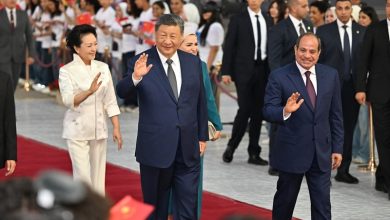
China represents another decisive test of India’s Nepal policy. It would be a strategic mistake to interpret every expansion of Nepal-China cooperation in infrastructure, trade, tourism or other economic and diplomatic fields as an anti-India development. Nepal is a sovereign state and can deepen cooperation with China while maintaining profound relations with India. The correct strategy for India is not to keep China out of Nepal, but to ensure that Nepal has no reason to distance itself from India.
Pressure does not draw Nepal closer to India; it encourages the search for alternatives. Respect, market access, infrastructure, economic opportunity and political non-interference, by contrast, can help India remain Nepal’s natural and trusted partner. Nor can India build its future by defining China solely as a permanent enemy. China is a powerful continental competitor, but it is also a vast neighbour and an important economic reality.
India must maintain the necessary vigilance along its borders while retaining the ability to compete, cooperate and engage in dialogue with China. Strategic maturity means competing where necessary, cooperating where possible and maintaining dialogue where it is unavoidable. Turning Nepal into an arena for India-China rivalry serves none of the three countries. Creating conditions in which Nepal can function as a bridge for connectivity, trade and cooperation between two major economies could instead prove beneficial to all three.
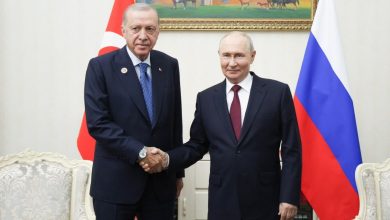
It is within this broader equation that Russia assumes particular importance. Nepal is linked to India’s Himalayan stability, China to its continental balance of power, and Russia to its strategic autonomy. At a time when India is expanding ties with the West while competing with China, its long-standing relationship with Moscow gives New Delhi strategic space to avoid excessive dependence on any single centre of power. Russia remains important to India in defence, energy, nuclear technology and the geopolitics of Eurasia.
India’s strength does not lie in choosing between Washington and Moscow. It lies in maintaining relations with both according to its national interests while simultaneously managing competition and dialogue with China. Such strategic autonomy can help transform India from merely a large state into an independent global power. In this sense, Nepal, China and Russia represent three distinct but interconnected strategic dimensions: Nepal tests India’s ability to build trust with its neighbours, China tests its capacity to manage competition and coexistence, and the relationship with Russia reflects the depth of India’s strategic autonomy.
Whether India emerges as an independent global pole or remains a state engaged in reactive balancing among larger power centres will depend significantly on how it manages its relations with Nepal, China and Russia. Of these, Nepal is the closest and most sensitive relationship, and the one in which India’s regional conduct is tested most directly.
India does not need to invent a new diplomatic doctrine for its relationship with Nepal. It needs only to put into practice the Panchsheel principles of respect for sovereignty and territorial integrity, non-interference in internal affairs, equality, mutual benefit and peaceful coexistence. In practical terms, this means accepting Nepal’s political transformation as the sovereign choice of the Nepali people, institutionalising state-to-state relations, resolving boundary disputes through evidence and dialogue, and ensuring equitable benefits from cooperation in water resources and energy.
India is the largest power in South Asia, but being the largest is not the same as having one’s leadership accepted. Genuine leadership is built through trust, not pressure. If smaller neighbours experience India’s rise as an opportunity for their own security and prosperity, its regional leadership will gain natural legitimacy. If they associate that rise with interference or dominance, India may become more powerful without becoming more trusted. Nepal is the clearest test of that distinction.
India’s security depends on military capability, secure borders, economic strength and effective state institutions. But military power and the trust of neighbouring countries are not competing concepts. Military strength protects borders; trust secures the strategic environment beyond them. Long-term security requires a combination of a strong military and a trustworthy neighbourhood.
Nepal policy, therefore, is not a minor chapter in Indian foreign policy. It is a direct answer to the question of what kind of power India seeks to become. In the 21st century, the ability to maintain influence over a smaller neighbour is not in itself proof of power. The ability of a powerful state to respect the sovereignty, independent choices and national dignity of a smaller neighbour is a far stronger mark of strategic maturity.
A stable, prosperous, sovereign and friendly Nepal is critically important to India’s long-term Himalayan security, water and energy interests, and stability along its northern frontier. In its journey toward global power status, India must also balance competition and coexistence with China while preserving strategic autonomy through its relations with Russia and other major centres of power. India’s future will be determined not by its size alone, but also by its ability to build trust with Nepal, maintain balance with China and conduct independent relations with the world’s major powers.
India’s greatest achievement will not be maintaining influence over Nepal. It will be earning Nepal’s trust. For south of the Himalayas, India’s first line of security is not military power alone, but trust as well. And that trust can only be built on equality, coexistence and mutual respect.
About the Author: Prem Sagar Poudel is a senior journalist and international relations analyst from Nepal. He has conducted in-depth studies on Nepal-China relations, the geopolitics of the Himalayan region, and Asian security issues.