Bishkek Declaration: The Institutional Foundation of a Multipolar World Order and Southeast Asia’s New Strategic Balance

Prem Sagar Poudel
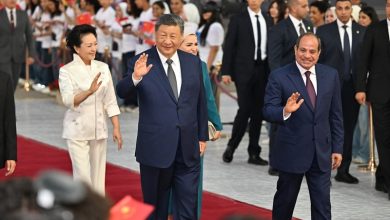
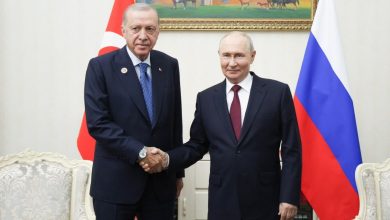
On September 1, 2026, in Bishkek, Kyrgyzstan, the ten member states of the Shanghai Cooperation Organisation (SCO) adopted a declaration marking its 25th anniversary. If it is read merely as another routine diplomatic document, its real significance will be missed. It has not immediately changed the world order. Nor has the SCO become a military alliance like NATO. But it has integrated the debate on multipolarity that has emerged in recent years from China, Russia, India, Iran and the Global South into political, economic, security, technological and institutional language. The significance of the Bishkek Declaration lies less in the commitments written in it than in what it indicates about the direction in which the global power structure is moving.
The Declaration Is Not Anti-Western but a Document of Power Rebalancing
The most important message of Bishkek is not the declaration of a new anti-Western world. It seeks to challenge the long-standing imbalance of power in global governance. The declaration accepts the UN Charter, sovereign equality, international law and the central role of the United Nations. It does not seek to dismantle the existing international structure and create a new system. Rather, it appears to seek a redistribution of power and representation within the United Nations, the International Monetary Fund, the World Bank and multilateral economic institutions.
Russian President Putin described the formation of a multipolar world order as an irreversible process. Iranian President Pezeshkian expressed the view that replacing one center of power with another should not be the objective of multipolarity. Chinese President Xi Jinping advanced the concept of equal and orderly multipolarity, emphasizing the need for equal rights, equal opportunities and equal rules for all states, large and small. The common element in these three perspectives is clear. In the future world, decision-making power should be distributed across multiple centers. It is appropriate to understand the Bishkek Declaration as a political expression of the rebalancing of the existing order.
Economic Power Is Now Becoming Linked to Financial Alternatives
Although the post-Second World War order established sovereign equality through the United Nations, Western influence remained extremely strong in the global economy, finance and technology. During the period of American dominance after the Cold War, this imbalance became even more evident. But China’s economic rise, the confrontation between Russia and the West, India’s growing power, sanctions on Iran and the activism of the Global South have begun to challenge that structure.
The Bishkek Declaration opposes unilateral pressure that conflicts with the UN Charter and the principles of the World Trade Organization. Its immediate meaning is disagreement with sanctions. But its long-term meaning is deeper. If a large economic group begins to build alternative mechanisms for trade, energy, finance and technology, the impact of sanctions may weaken. Efforts within the SCO to expand transactions in national currencies and discussions on alternative financial institutions are not merely economic matters, but also questions of strategic autonomy.
But exaggeration must be avoided. The international role of the US dollar will not end immediately. The depth of American capital markets, global liquidity and financial networks remains powerful. Therefore, conclusions such as the end of the dollar or the emergence of a new world currency are premature. The real change is taking place elsewhere. Many countries no longer want to remain completely dependent on a single financial system. This multi-option structure could become the foundation of the future multipolar economy.
Security Thinking From Borders to the Digital Domain
The SCO’s initial security concerns were focused on terrorism, separatism and extremism. Today, they have expanded to transnational crime, narcotics, information security, digital infrastructure, artificial intelligence and emergency situations. Bishkek 2026 amended the SCO Charter and approved new documents in the fields of security, information and other areas. It deepened the institutional expansion that had begun earlier at the Tianjin Summit.
The declaration opposes the militarisation of information technology. It links attacks on critical information infrastructure and the misuse of artificial intelligence to questions of national security. This is not ordinary technical language. Power competition in the 21st century is not limited to territory, armed forces and nuclear weapons. Data, chips, cloud infrastructure, digital payments, cybersecurity and artificial intelligence have also become instruments of national power. Future multipolarity will also involve competition over data centers, technological standards and digital currencies.
But the danger of controlling civil liberties in the name of digital sovereignty is also real. For the SCO’s concept of digital security to become credible, how it balances national security with transparency, accountability and civil rights will be decisive.
The SCO Is Not an “Eastern NATO”
The SCO is sometimes called an Eastern NATO. But its membership structure and decision-making process do not support that comparison. China and India have border and strategic competition. India and Pakistan have deep security disputes. Although India is a member of the SCO, it cooperates with the United States, Japan and Australia through the Quad. Russia is in direct confrontation with the West. Iran has its own conflict with the West. Central Asian countries want to maintain balanced relations with all centers of power.
This diversity is both a weakness and a distinctive feature of the SCO. It cannot immediately create a unified military command like NATO or a common economic policy like the European Union. But the ability of countries with different priorities and countries that compete with one another to cooperate within the same institution is itself a new experiment. If this model endures, international politics may become more based on issue-specific partnerships than on rigid military alliances. The real strength of the SCO lies in expanding the minimum space for cooperation even amid disagreements.
Options Are Expanding in Southeast Asia
The direct geography of the Bishkek Declaration is Central Asia. But its impact may also be seen in Southeast Asia. Cambodia, Myanmar and Laos have partnership ties with the SCO. There is also a history of institutional contact between ASEAN and the SCO. But it would be wrong to understand this as Southeast Asia moving toward a new camp. The real change is not a change of camp, but an expansion of options.
ASEAN’s basic strategy is not to align with a single center of power and to maintain relations with all. Even if Southeast Asian countries expand relations with the SCO, they will not abandon their relations with the United States, Japan, India, Europe and China. Cambodia, Laos and Myanmar may deepen institutional relations with China and Russia. Indonesia and Malaysia may support multipolarity but will want to preserve their independence. Vietnam and Thailand may prioritize diversified relations. The Philippines’ security relationship with the United States gives it a different outlook. Singapore’s deep connection with the global financial system also gives it a separate path.
The South China Sea Is a Test of Multipolarity
The Bishkek Declaration presents the principles of sovereignty, territorial integrity and international law. In Southeast Asia, its difficult test is the South China Sea. As long as maritime claim disputes among the Philippines, Vietnam, Malaysia, Brunei and China remain unresolved, questions will continue to arise about how China applies multipolarity and sovereign equality in practice.
Economic power alone will not be enough for China to expand its political appeal in Southeast Asia. If smaller states feel that the dominance of one great power has simply been replaced by another, the appeal of multipolarity will weaken. The extent to which the principles of equal rights, equal opportunities and sovereign respect expressed in Bishkek are reflected in China’s regional behavior is important. The same test also applies to the United States and Western powers. If they advocate a rules-based order while applying different rules to themselves, Southeast Asian countries will be encouraged to seek more alternatives.
Myanmar Could Test ASEAN Centrality
Myanmar’s situation is also important. Its growing relations with China and Russia and its contact with the SCO could provide Myanmar with diplomatic options beyond ASEAN. If this happens, the political influence ASEAN exercises over a member state could weaken. This does not mean that the SCO will become a competitor to ASEAN. But the possibility will increase that a single country uses different institutions to meet different needs. Multi-layered mechanisms such as ASEAN for security, RCEP for trade, the BRI for infrastructure, BRICS for political coordination and the SCO for Eurasian connectivity may be used. This can be described as the multipolarity of overlapping multilateral institutions.
Nepal Should Not Regard Bishkek as a Distant Document
The Bishkek Declaration has particular significance for Nepal. China and India are both members of the SCO. Nepal is an SCO dialogue partner. Nepal’s questions of Himalayan security, transit dependence, energy trade, digital infrastructure and climate risk are directly connected with debates within the SCO. Nepal should not view the SCO as an anti-Western platform. For Nepal, its value lies in expanding options. The ability to assess relations with India, northern connectivity with China, partnerships with the United States and Europe, relations with the United Nations and opportunities from the SCO through a single national-interest framework is strategic autonomy. A multipolar world can give smaller states more options. But having options and being able to use them are different things. Without capable diplomacy, economic production and long-term policy, the presence of multiple power centers can increase pressure rather than opportunity.
New Structures Will Continue to Be Added in the Future
This is the deeper meaning of the Bishkek Declaration. The new world order does not appear likely to emerge by suddenly removing old institutions. The United Nations, the IMF, the World Bank and the dollar will continue to play roles. The United States will also remain a major power. But around them, the SCO, BRICS, regional banks, trade in national currencies, alternative payment systems and new digital infrastructure will continue to be added. Power will spread across multiple centers rather than merely shifting from one center to another. This is a challenge for the West and an opportunity for developing countries.
More options help smaller countries demand better terms. But multiple competing structures can also make decisions difficult. Problematic debt, incompatible digital systems and pressure from great powers can arrive at the same time. Multipolarity is not inherently just. The test of just multipolarity is not the number of power centers, but equality of rules, institutional transparency and the decision-making autonomy of smaller states.
The Real Test of Bishkek Lies in Implementation
Whether the Bishkek Declaration becomes historic or remains just another document will be determined by implementation. How much trade in national currencies increases, what form alternative financial mechanisms take and how effective new security structures become will be important. Can China and India advance common projects despite their differences? Will principles on artificial intelligence be transformed into practical standards? Will cooperation between the SCO and ASEAN expand? These questions will provide the answers.
Bishkek has made one thing clear. Unipolarity is eroding. But the new world order has not yet fully taken shape. This is a period of transition. The old structure is weakening while the new one remains incomplete. The SCO is an important experiment in that transition. The Bishkek Declaration has not answered who will rule after the West. Rather, it has raised a more important question. Can any single power alone now determine the rules of the world? The answer is becoming increasingly clear—it cannot.
But this answer gives rise to another difficult question. Will a multipolar world be just, or will it merely become a harsh competition among many powers? If new centers of power respect the sovereignty of smaller states, increase genuine representation in international institutions and apply equal rules, multipolarity could become a democratizing process. But if the place of one form of dominance is merely taken by several competing forms of dominance, the new order may not be better for smaller countries than the old one. Bishkek has not yet created a new order. It has shown a possible ideological and institutional direction. Its credibility will now be determined by the behavior of member states, their institutional capacity and their conduct toward smaller states.
Bishkek has not given the world a new ruler. It has strengthened a new principle. The future world will be shaped not by a single center of power, but through agreement, competition, balance and interdependence among multiple centers. This is the deepest strategic meaning of the Bishkek Declaration.
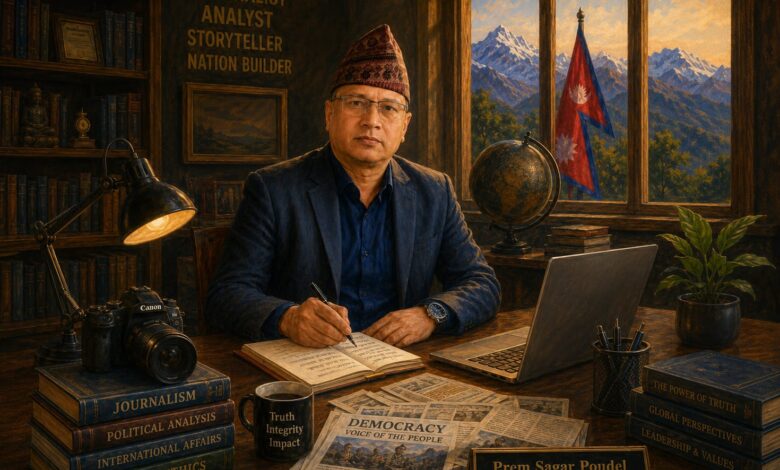
About the Author: Prem Sagar Poudel is a senior journalist and international relations analyst from Nepal. He has conducted in-depth studies on Nepal-China relations, the geopolitics of the Himalayan region, and Asian security issues.