Nepal Cannot Return to the Old Status Quo and Must Now Rethink Its National Strategy from First Principles

Sanket Kiranti
Nepal is not confronting a single crisis. The physical devastation in Rasuwa, the symbolic decline represented by the burning of Singha Durbar, the tension between opportunity and dependency created by strategic assistance such as the MCC, the fragility of a remittance-driven economy, the renewed southward dependence caused by disruptions at northern border points, the expansion of external political and ideological influence, and a growing sense among young people that their future lies elsewhere have all surfaced at the same time. These developments do not share a single cause, but they expose the same structural reality. Nepal’s state capacity remains weak, its economic foundations are unbalanced, its strategic autonomy is under pressure, and the social capital connecting citizens with the state has been eroding. Incremental reform is therefore no longer sufficient. Nepal must rethink itself from “1,” meaning not that the country should start from zero, but that it must return to first principles. What kind of nation does Nepal want to become, and what kind of state, economy, foreign policy, knowledge system and civic consciousness are required to build it?
The First Test of State Capacity Is the Protection of Life
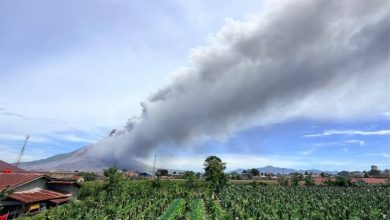
The Bhote Koshi disaster exposed a serious gap between Nepal’s vulnerability to disasters and its level of preparedness. The destruction of roads, bridges, settlements, hydropower projects and border infrastructure resulted from natural forces, but the difficulty in mobilizing equipment, rescue capacity, alternative access routes and institutional coordination after the disaster was not created by nature. The struggle to make excavators, mud pumps and other essential equipment available in time for people trapped inside the Upper Trishuli tunnel raised a fundamental question about state capacity. The real strength of a state is not measured by the size of its budget or the volume of official announcements, but by how quickly it can reach and protect its citizens when their lives are at risk.
The deeper problem is not limited to weaknesses observed during rescue operations. Nepal’s development culture itself remains focused more on reaction than preparation. Roads, buildings and projects that can be inaugurated before the next election receive political priority, while Himalayan geological research, river-risk assessment, early-warning systems, alternative access routes, strategic stockpiles of rescue equipment and climate-resilient infrastructure receive far less attention. For a Himalayan country, disasters cannot be treated as exceptional events. Every major infrastructure project should now be assessed not only for construction cost and economic return, but also for climate exposure, geological instability, alternative access, continuity of supply and emergency recovery capacity.
Remittances Sustain the Economy but Can Also Reduce Pressure for Reform
Nepal’s remittance economy represents another structural contradiction. Income earned by Nepalis abroad has protected millions of households, strengthened foreign exchange reserves and given the economy an important buffer against shocks. Remittances themselves should therefore not be portrayed as a problem. The problem begins when labor export becomes a permanent substitute for building a productive national economy. When a young person cannot find employment and responds by seeking a visa rather than demanding jobs from the state, when a family dissatisfied with education plans to send its children abroad instead of exerting pressure for reform, and when weak public healthcare is bypassed through private alternatives, social dissatisfaction is diverted before it can become a force for institutional improvement.
The goal should therefore not be to reduce remittances, but to transform their function. Diaspora savings can be directed toward production, energy, tourism, agro-processing, technology and innovation through carefully regulated investment funds and project-specific bonds backed by independent auditing and full transparency. Skills acquired abroad should be formally recognized through a national certification system, while returnees should be connected to capital, technology, markets and administrative support. Rather than launching ambitious nationwide schemes immediately, transparent pilot projects could first demonstrate which models work before being scaled up. Nepal must begin treating its diaspora not merely as workers who send money home, but as a national reservoir of knowledge, capital, business networks and international access. Only then can remittances evolve from a mechanism of consumption into a source of productive national investment.
External Influence Can No Longer Be Understood Only Through Direct Orders
Nepal’s geopolitical environment also requires a more sophisticated understanding of external influence. Modern powers do not always shape smaller and economically weaker states through direct instructions, military intervention or written orders to change governments. Influence can be accumulated gradually through relationships with political leaders, youth leadership training, civil society, research, media, electoral assistance, scholarships, human rights programs, democracy initiatives, development assistance, social media and the production of public narratives. This is better understood through the concepts of structural power and non-command influence. When questions arise about external influence in a political event, it is therefore insufficient to search only for a direct order. Financial flows, institutional networks, training programs, political contacts, timing, narrative formation and strategic outcomes must be examined together.
This does not mean that every foreign institution or program should be treated as a conspiracy. Legitimate activities related to education, democracy, research and civil society are normal features of an open society. But it should be equally normal for the public to know who finances foreign political or ideological organizations operating in Nepal, who their partners are, how much they spend and where they seek to build influence. Nepal does not need repressive control. It needs a clear legal framework governing transparency in foreign funding and political influence. Registration, sources of funding, local partners, annual expenditures, program objectives and beneficiary structures should be publicly disclosed. Where covert political financing or unlawful interference in domestic affairs is proven, the law should provide clear penalties. At the same time, the same legal framework should protect legitimate expression, research and civic participation from being suppressed in the name of national security. Democratic freedom and national security do not have to be opposites.
The Real Question About the MCC Is Larger Than Acceptance or Rejection
The debate over the Millennium Challenge Corporation illustrates this broader problem. Treating the MCC simply as a development grant ignores its political and strategic dimensions, while portraying it solely as a military project also obscures the real issues. Its connection to electricity transmission, cross-border power trade, legal and institutional arrangements, and the diplomatic attention surrounding the compact has made it a larger national question than an ordinary infrastructure project.
Nepal needs external capital, modern infrastructure and international partnerships. But if the need for assistance means that every condition must automatically be accepted, that itself becomes a strategic weakness. Sovereignty is not only the ability to accept assistance. It is also the capacity to reject terms that are inconsistent with long-term national interests. The same test should therefore apply to the MCC, the Belt and Road Initiative, Indian assistance, or financing from multilateral institutions. How much economic value does Nepal receive? How much local employment is created? Is technology transferred? Who retains ultimate control over strategic infrastructure? What long-term liabilities arise? Does the project expand Nepal’s future options or narrow them? The standard should not change according to the identity of the donor.
This immediately raises another fundamental question. Who defines the “national interest”? It cannot be treated as the private interpretation of a prime minister, a security institution, a political party or a narrow business elite. National interest must incorporate, through an institutional process, the long-term interests of farmers, workers, industry, women, Madhesh, the hills, the Himalayas, indigenous communities, youth, the diaspora and future generations. Nepal should therefore seriously consider an independent National Interest and Strategy Commission with constitutional standing. Its members could be selected through transparent qualification criteria, multiparty nomination and parliamentary hearings, while the body itself would remain accountable to Parliament. It should not replace elected government, but it could require major strategic agreements to undergo a public and institutional national-interest assessment before final decisions are taken.
Strategic Autonomy Is Impossible Without Alternatives
The disruption of Rasuwagadhi and Tatopani has exposed the physical foundations of sovereignty. India is Nepal’s indispensable neighbor, a major trading partner and the principal route to maritime access. But friendship and excessive dependence are not the same thing. When northern routes are disrupted and Nepal’s supply structure automatically becomes more dependent on the south, one principle becomes clear. Diplomatic independence ultimately rests on practical alternatives. Developing routes toward China is therefore not anti-India, just as maintaining deep trade ties with India is not anti-China. Nepal’s objective should not be to replace one dependency with another, but to expand options in both directions.
That requires a multi-option infrastructure policy rather than a single grand corridor. Potential north-south economic routes should be assessed separately for construction cost, annual maintenance requirements, climate risk, commercial viability, debt exposure and strategic utility. East-west connectivity, strategic stockpiles, energy networks and digital infrastructure must be strengthened at the same time. Building a high-altitude road is not sufficient if the state cannot afford to keep it operational year after year. Modern infrastructure security should be based on a simple standard. One bridge should not isolate a district, one highway closure should not paralyze the economy, and one blocked border point should not eliminate a diplomatic option.
Energy and digital infrastructure form the next frontier of the same strategic autonomy. Hydropower is one of Nepal’s greatest economic opportunities, but producing more electricity does not automatically create energy sovereignty. If access to markets, transmission routes and pricing remains excessively dependent on a single direction, greater production capacity may still leave strategic options limited. Nepal’s energy strategy should therefore combine exports with domestic industrialization, electric mobility, green manufacturing, storage capacity and diversified power trading. The same logic applies to digital sovereignty. Where government data is stored, who processes citizens’ information, how secure national payment systems are, how dependent public debate is on foreign social media algorithms, and how much indigenous capacity Nepal possesses in artificial intelligence are becoming questions of national security comparable to roads and borders.
Rebuilding Singha Durbar Must Also Mean Rebuilding Trust
The burning of Singha Durbar and other national institutions in 2025 cannot be justified by political dissatisfaction. Singha Durbar is not the private property of a government or party. It represents the historical memory and institutional continuity of the Nepali state. But condemning the destruction cannot be the end of the discussion. The state must also ask why part of a generation became so alienated from its own national institutions. Corruption, unequal access to justice, political patronage, poor public services and prolonged indifference to citizens’ daily lives had already weakened the social contract.
The fire at Singha Durbar and the rescue failures exposed by the Rasuwa disaster are therefore not entirely separate political symbols. One revealed anti-institutional rage, while the other exposed institutional incapacity. Strengthening institutions cannot mean merely securing buildings. Citizens must experience those institutions as belonging to them. Complaints should be heard within defined time limits from the local level to the center. Public services should be subject to citizen evaluation, administrative decisions should be traceable, and access to justice should be made easier. Nepal could develop permanent physical and digital mechanisms for national dialogue through which citizens’ complaints, proposals and policy views are formally recorded, routed to responsible institutions and answered transparently. A functioning state must institutionalize the capacity not only to speak, but also to listen.
National Social Capital Is the Foundation of Modern Patriotism
This is where patriotism and social capital become strategically important. Patriotism is not hostility toward foreigners, nor is it a nationalism that prohibits criticism of the state. Modern patriotism is the citizen’s sense of ownership over national political decisions, history, culture, economy and future direction. Such confidence is capable of engaging openly with the outside world without surrendering the right to define Nepal’s own national interests.
That ownership has to be built at three levels. Economic ownership means developing decisive national capabilities in critical production, agriculture, energy, technology and digital infrastructure. Intellectual ownership means ensuring that Nepali universities and research institutions can independently study national security, foreign policy, economics, climate and geopolitics. Narrative ownership means that Nepali society itself can interpret its history, achievements, failures and future. If most strategic knowledge about Nepal is produced through external projects, if others define Nepal’s historical experience, and if public debate is largely shaped by external digital systems, formal political sovereignty alone will not be sufficient. A country that cannot write its own story eventually finds that others write it for them.
Social capital is therefore an invisible form of national resilience. Citizens who regard the state as their own are more likely to cooperate during disasters, defend public institutions and critically assess external narratives. If citizens cease to regard the state as theirs, even strong armed forces and large budgets cannot fully compensate for the loss of internal resilience. National consciousness, public trust and social cohesion are not sentimental additions to national security. They are part of its foundation.
Nepal Now Needs a Two-Decade National Compact
Rethinking Nepal from “1” must now become more than a political slogan. It should become a national project for the next two decades beginning in 2026. The framework should not be the manifesto of a single party. Nepal needs minimum national consensus on production, energy, climate security, strategic infrastructure, digital sovereignty, knowledge creation, the future of youth and foreign-policy autonomy. A long-term national strategy could be adopted by Parliament with broad political support and reviewed every five years to account for changes in technology, economics, climate and the international environment. Its fundamental direction, however, should not change every time a government changes.
Implementation must not depend solely on the determination of one prime minister. An independent National Strategy Commission accountable to Parliament could regularly assess targets, indicators, progress and deviations. Local governments should also be transformed from institutions focused primarily on budget expenditure into frontline institutions for production, skills development, climate adaptation and job creation. National strategy becomes real only when it reaches local economies, schools, farms, enterprises, cities and communities.
Above all, the entire project must revolve around the younger generation. If young Nepalis can find work appropriate to their abilities, opportunities for entrepreneurship and research, access to justice, social dignity and a secure future at home, trust in the state will begin to recover. Greater trust strengthens social capital. Stronger social capital increases society’s ability to critically resist uncontrolled external political and ideological influence. Greater production reduces economic dependence, and reduced dependence expands freedom of diplomatic decision-making. The personal future of Nepal’s youth and the strategic autonomy of the nation are therefore two ends of the same chain.
India views Nepal through the prism of its own national interests. China does the same. So does the United States. That is normal behavior in international politics. Nepal’s core problem is not that other powers pursue their interests. The problem is that Nepal has not yet developed sufficient capacity to define, institutionalize and defend its own.
From the mud of Rasuwa to the ashes of Singha Durbar, from the MCC debate to the remittance economy, and from disrupted northern border routes to external political influence, the same warning has emerged. A country with weak state capacity, an excessively dependent economy, declining social capital and an underdeveloped domestic knowledge system will eventually find its strategic autonomy narrowing.
Returning to the old status quo is therefore no longer a solution because the status quo itself has become part of the problem. The first question in rethinking Nepal from “1” remains simple. What kind of Nepal do we want to build?
No foreign embassy, aid project, international institution or great power can answer that question for Nepal. Nepali society must answer it itself, and the state must transform that answer into long-term institutional capacity.
Nepal is no longer at a stage where it can simply return to the old normal. It has reached a point where it must build a new one. If citizens are given a future, the economy is rooted in production, remittances are transformed into capital and knowledge, the state develops the capacity to withstand crises, society rebuilds trust, national interest is institutionalized, and foreign policy is anchored in strategic autonomy, the current crisis can become the starting point of national renewal.
Before others define Nepal’s future, Nepal must define its own direction. That is the real meaning of rethinking the nation from “1,” and that is why it has now become an imperative.