Why Are Nepali Audiences Returning to Emotional Social Stories?

Dragon Media Correspondent
Nepali cinema has undergone major changes in technology, cinematography, presentation and marketing strategy over the years. Yet one old strength appears to be returning to the centre of audience attention: emotional storytelling rooted in family, relationships, sacrifice, struggle and social reality.
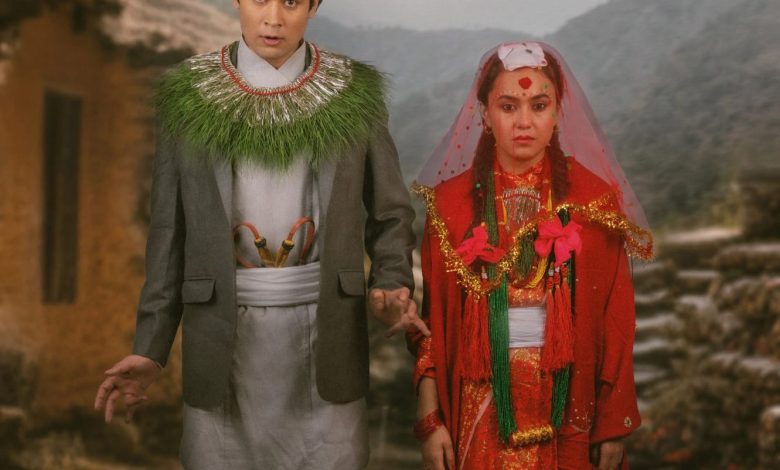
In recent years, Nepali films have increasingly explored rural life, family relationships, foreign employment, women’s struggles, generational distance and social transformation. Films such as “Gauthali” represent this trend. The story focuses on a character struggling to shape her own future while confronting child marriage, lack of access to education and the constraints of a traditional social structure.
This raises an important question: why is even the digital generation being drawn back to such stories?
One reason is that Nepali society itself is passing through a period of rapid transformation. Movement from villages to cities, migration from Nepal to foreign countries and the transition from traditional joint families to more separate family structures have created new opportunities, but also deeper emotional distances. When cinema turns these changes into stories, viewers can often see fragments of their own families, villages or past lives on screen.
The appeal of emotional cinema therefore lies not simply in scenes designed to make audiences cry. A successful social story connects personal memory with collective experience.

This is an important signal for the Nepali film industry. Large budgets, foreign locations, attractive visuals and advanced technology alone cannot build a lasting relationship with audiences. Viewers need to believe in the characters. They need to recognize something from their own lives in the characters’ pain, happiness and decisions.
This is why local identity is once again emerging as a commercial strength in Nepali social cinema. A village home, farmland, a traditional kitchen, communal labour, family tension or the struggle of a woman seeking education may appear ordinary on an international scale, but for Nepali audiences such images are closely connected with social memory.
However, the growing popularity of emotional stories does not mean that the same formula can be repeated endlessly. Artificial tragedy, excessive melodrama or predictable plots cannot hold audiences for long. Emotion becomes powerful only when character behaviour feels believable and the social context enters the story naturally.
This is where both opportunity and risk lie for Nepali cinema.
The opportunity is that Nepal does not lack stories. From the Himalayas to the Tarai, there are thousands of untold stories involving migration, foreign employment, women’s lives, economic inequality, generational change, language, culture and changing family relationships.
The risk lies in copying only the outer structure of a successful film. If one family drama succeeds, mechanically repeating the pain of a mother, the sacrifice of a father or the sorrow of village life can quickly weaken the genre.
The next phase of competition in Nepali cinema will therefore not be defined only by the question of how big a film is. A more important question will be how authentically it tells its own story.
Nepali films seeking international audiences do not need to abandon their local identity. On the contrary, if a story deeply rooted in local society can be connected with universal human emotions, its journey may become even longer.
The return of emotional social storytelling in Nepali cinema is therefore not simply a return to an old style. It may also signal that audiences are once again searching on screen for reflections of their own society, relationships and changing lives.
If cinema can show audiences a convincing mirror of the society they live in, story may ultimately prove more enduring than technology, and emotion more powerful than promotion.