From Streaming to Theatres: ‘Mirzapur’ Signals a New Business Model for Indian Cinema

Dragon Media News Desk
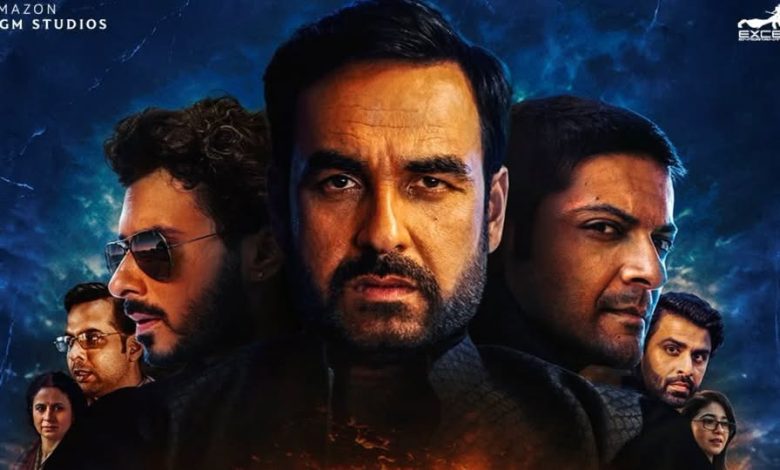
India’s popular crime series “Mirzapur” has moved beyond the confines of streaming and entered movie theatres. Released on September 4, “Mirzapur: The Movie” has generated strong initial audience interest, drawing attention to a new experiment in the Indian entertainment industry: transforming a story and characters established on a digital platform into a theatrical experience.
The film recorded notable advance ticket sales ahead of its release, with Delhi, Uttar Pradesh and Maharashtra emerging as key markets in the initial phase.
Directed by Gurmmeet Singh, the film brings back established “Mirzapur” actors including Pankaj Tripathi, Ali Fazal and Divyenndu in major roles. It has been released in Hindi and Telugu. Amazon MGM Studios is presenting the film, while Ritesh Sidhwani and Farhan Akhtar of Excel Entertainment are associated with the production.
The commercial significance of “Mirzapur: The Movie” goes beyond its initial earnings. Its real importance lies in testing whether a story that built its popularity through streaming can persuade audiences to pay for tickets and experience the same fictional universe in theatres.
Over the past decade, the rapid expansion of Netflix, Prime Video and other digital platforms in India has increasingly blurred the boundary between cinema and streaming series. Traditionally, successful theatrical films moved to digital platforms after their cinema runs. “Mirzapur” has taken the opposite route, first building a massive audience as a streaming series and then taking that established story world to the big screen.
This could represent an important strategic shift for the Indian film industry.
When launching a completely new film, producers often have to spend heavily to introduce audiences to its characters, story and brand. An established digital series carries less of that risk. Audiences already know the characters, understand their relationships and have invested emotionally in the story.
Characters such as Kaleen Bhaiya, Guddu Pandit and Munna Tripathi have become part of Indian popular culture over the years. The initial audience response to the film suggests that such an established fan base can potentially be converted into theatrical ticket sales.
The model, however, is not without risks.
Audiences watching a long-form series at home have different expectations from those paying to watch a film within a limited theatrical running time. A series may have many hours to develop its characters and conflicts. A film must compress the same fictional universe into two or three hours while maintaining pace, dramatic tension and a satisfying narrative structure.
Future producers seeking to transform successful streaming series into theatrical films will therefore need to do more than simply bring popular characters to the big screen. The film itself must deliver a strong and independent cinematic experience.
Another important aspect of this experiment is the growing value of intellectual property in India’s entertainment industry. A successful story no longer needs to remain confined to a single film or television series. Popular characters and fictional worlds can be expanded across films, streaming series, spin-offs and other entertainment products.
Hollywood has spent decades developing superheroes and other popular properties into large-scale franchises. If a similar structure becomes stronger in India, competition between streaming and traditional cinema could gradually evolve into greater cooperation between the two.
The trend could also affect the market value of actors. Performers who gain popularity through series such as “Mirzapur” may be able to generate strong theatrical interest through established characters and loyal audiences even without fitting the conventional definition of major film stars. This could gradually reshape India’s traditional star system.
It would nevertheless be premature to treat initial audience interest as proof of long-term commercial success. Audience reaction, word of mouth and the film’s ability to sustain business over the following days and weeks will determine its real strength.
One development, however, is becoming increasingly clear: theatres and streaming platforms are no longer two entirely separate worlds in the Indian entertainment industry.
If “Mirzapur: The Movie” achieves sustained success, other popular Indian streaming series could also make the transition to cinemas. In that environment, the decisive question may no longer be where a story first appeared, but how successfully it can develop into a powerful entertainment brand.