Indian Military Presence in Rasuwa: A Question Beyond Disaster Assistance, Touching State Transparency and Sovereignty

Sanket Kiranti
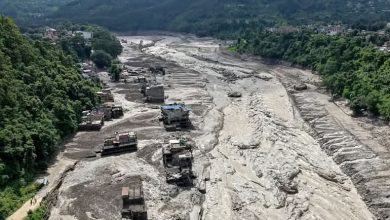
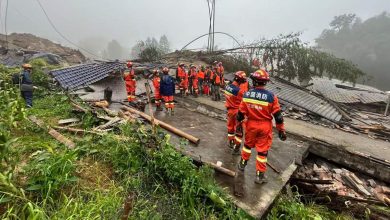
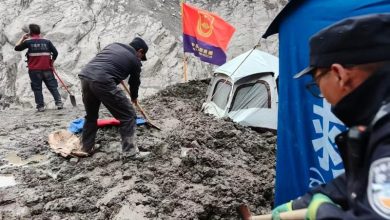
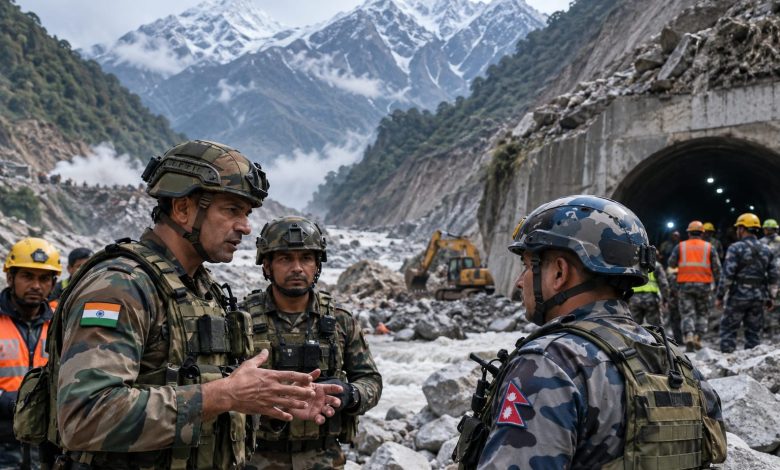
A scene broadcast by the U.S. news network CNN following the devastating floods in Rasuwa has raised a serious national question for Nepal. Speaking to a CNN journalist in the Syafrubesi area, Indian Army Colonel Parikshit Mehra said that a team under his command was working alongside Nepali security personnel in tunnel rescue operations. There is nothing objectionable in what he said. The concern lies elsewhere: why did Nepali citizens not learn from their own government that an Indian military team had been deployed in Nepal’s sensitive northern border region?
There is no basis to conclude that Indian military personnel entered Rasuwa without Nepal’s permission or knowledge. During the initial phase of the disaster, the government said foreign search and rescue teams were not immediately required. As concerns grew that large numbers of people were trapped inside tunnels, and as the need for specialized equipment and technical expertise increased, Nepal appears to have accepted targeted foreign assistance. The arrival of an Indian specialized rescue team was also mentioned in some official communications. What remained unclear, however, were its size, area of operation, command arrangement and duration of deployment.
This is not an anti-India issue. It concerns the accountability of the Nepali state, transparency in decision-making and the exercise of sovereign authority. Accepting assistance from a friendly country during a humanitarian catastrophe can be both natural and necessary. If Indian soldiers entered dangerous tunnels to help save Nepali or foreign lives, their contribution deserves recognition. But accepting humanitarian assistance and leaving the public unclear about a foreign military presence are two different matters.
Sovereignty is not merely a line drawn on a map. In practical terms, it means that the state exercises full authority over which foreign government or military personnel enter its territory, why they enter, who authorizes them, where they operate, under whose coordination they work and how long they remain. Informing citizens of these basic facts is also a responsibility of government.
Rasuwa is not an ordinary geographical space. It is a strategically sensitive district bordering China. The Gyirong crossing, important roads, hydropower facilities, tunnels, communications infrastructure and security deployments are all concentrated within this frontier environment. Foreign military teams engaged in rescue operations may naturally require access to terrain, infrastructure and technical information. Precisely for that reason, the limits of their access, responsibilities and authority should be defined in advance.
There is no evidence to accuse the Indian Army of espionage or any other covert purpose, and making such allegations without proof would be irresponsible. National security, however, cannot operate on friendship alone. It must operate through rules. Whether the team comes from India, China, the United States or any other country, the same standards should apply. Nationalism is not suspicion toward one country and silence toward another; it is the capacity of the state to place everyone under the same rules.
The most important issue is operational control. A foreign military contingent maintaining its own internal discipline under its officers is normal practice. But within Nepal, decisions over where it can go, which tunnels it may enter, what equipment it can use, which areas it can access and what information it may obtain should remain under Nepali authority. In such circumstances, the Nepal Army, the National Disaster Risk Reduction and Management Authority, or another government-designated unified mechanism should exercise clearly visible leadership.
If such arrangements are already fully in place, the government should have no reason to hesitate in explaining them. Doing so would strengthen public confidence. Citizens can reasonably be told how many Indian soldiers or specialists arrived, under what formal request, which Nepali authority is coordinating them, what their responsibilities are and how their departure will be managed once the mission is completed.
National security and transparency are not contradictory. There is no need to disclose precise deployment locations, sensitive technical details or security plans. But the nature of a foreign team, its purpose, approximate strength, coordination mechanism and expected duration are not matters that should automatically remain secret. When such basic facts are withheld, unnecessary suspicion grows, and the state appears weak when citizens learn about sensitive activities on their own territory through foreign media.
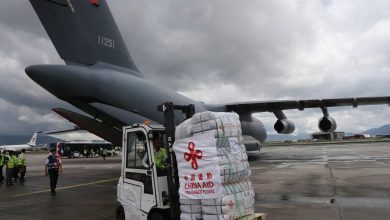
Nepal’s experience after the 2015 earthquake is instructive. The country received military and civilian assistance from India, China, the United States, Japan and several other countries. That assistance was valuable, but it also demonstrated the challenges associated with coordination, airspace management, overlapping responsibilities and operational control. Accepting only specialized foreign teams according to actual needs may therefore be a practical approach today, but the management and public explanation of such deployments must be equally professional.
The Rasuwa case also raises another sensitive question. Modern rescue teams do not arrive only with ropes and shovels. They may carry drones, high-resolution cameras, geospatial equipment, tunnel-mapping systems, communications technology and other advanced tools. Nepal therefore needs clear protocols governing who owns the images, maps, structural information and geospatial data collected through such equipment, how those materials may be used and to what extent they can be shared.
This should not be interpreted as distrust of foreign rescuers. Any responsible state applies similar safeguards around its border regions and critical infrastructure. Friendship may guide foreign policy, but control over access remains a duty of the state.
During a disaster, some may ask whether the priority should be saving lives or defending nationalism. That is a false choice. Protecting human life and safeguarding national authority are not opposing goals. A capable state does both simultaneously: it accepts urgently needed expertise, facilitates foreign assistance, places it within a Nepali-led framework and keeps its citizens appropriately informed.
Nepal should now establish a permanent mechanism for such situations. Whenever a foreign military or government specialized rescue team enters the country, the National Emergency Operation Centre or another designated authority should issue regular public information. The country of origin, approximate team size, area of expertise, Nepali coordinating authority, responsibility and duration of deployment should be clearly stated.
The Rasuwa episode therefore raises a question larger than the presence of Indian soldiers: how clearly does the Nepali state inform its own citizens about sensitive activities taking place on Nepali territory?
If Indian military personnel have helped save lives, Nepal should acknowledge and respect that contribution. At the same time, the government must answer basic questions: when did they arrive, under whose decision, in what numbers, under whose coordination did they operate, and when will they leave?
These are not anti-India questions. They are not anti-China questions. Nor are they directed against any foreign country. They concern Nepal’s sovereign authority, state capacity and public accountability.
Nepali citizens should not have to watch CNN to discover why a foreign uniform is present on Nepali soil. They should hear it from their own government.
That is the minimum standard of a sovereign state.
Photo: AI Created