One Year Since the Gen-Z Movement: Change Must Be Measured by the Strength of the Nation

Lucky Chand
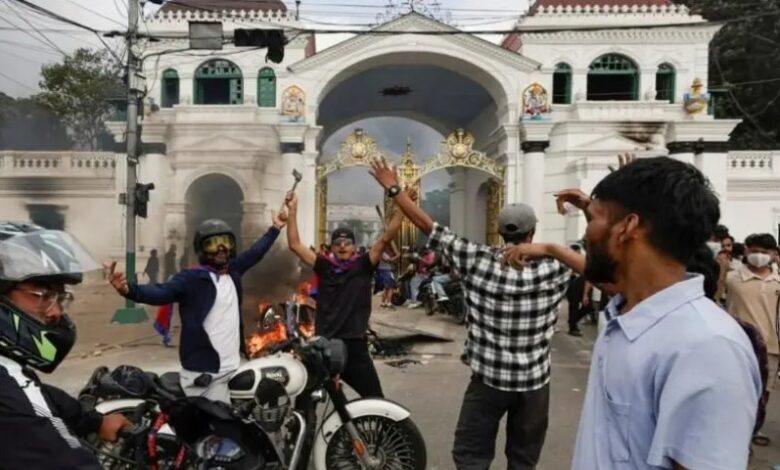
It is not enough to understand the Gen-Z movement that filled the streets of Kathmandu a year ago merely as a successful story of youth discontent, digital rights and political change. The movement raised genuine questions about corruption, unemployment, unequal access to opportunities, weak public services, nepotism and political accountability. At the same time, however, the political instability that followed, pressure on state institutions, the growing role of security structures, the possibility of external influence and the tendency for street power to become more decisive than constitutional processes must be reviewed with equal seriousness.
From a patriotic perspective, any movement should not be evaluated solely on whether it changed the government. The fundamental question is whether the nation became stronger or weaker. Did state institutions become more capable, or did power become even more personality-centered? Was youth frustration transformed into energy for nation-building, or was it used merely to facilitate the rise of a new political force? Did the Nepali people determine the direction of change, or did external political and institutional influence also find space amid the uncertainty of transition? One year later, the review of the Gen-Z movement should begin with these questions.
The immediate trigger of the movement was the restriction imposed on social media. In the digital age, online platforms have become indispensable for freedom of expression, access to information, business, education and social interaction. Opposition to unnecessary restrictions was therefore natural. But this does not mean that a sovereign state should leave the digital sphere completely unregulated. Social media can serve not only as a platform for expression but also as a vehicle for disinformation, financial fraud, hate campaigns, foreign propaganda, psychological influence and political mobilization. The democratic solution is neither prohibition nor uncontrolled freedom, but transparent and accountable regulation under national law while protecting the right to expression.
The concerns raised by the Gen-Z generation about corruption, unemployment, administrative difficulties and unequal opportunities deserve respect. But automatically treating youth as a symbol of political purity would be another form of extremism. The younger generation is a force for change, but age itself is not proof of good governance. There is no guarantee that the new generation will not repeat the mistakes of the old. Leadership must therefore be judged not by age, clothing, social media popularity or a rebellious image, but by commitment to the Constitution, national interest, institutional accountability and results.
The fact that a new political force gained public support after the movement reflects broad dissatisfaction with the old political culture. That mandate must be respected. But winning an election does not mean acquiring political ownership over state institutions. In a democracy, even a popular government is not above Parliament, the judiciary, constitutional bodies, the administration, the media or the security establishment. A strong government is necessary, but a government that appears strong because institutions have become weak is not a democratic achievement.
The current government has moved forward with efforts to reduce the number of ministries, expand digital services, restructure the administration and control public expenditure. Such steps may have positive objectives. But reducing ministries alone is not administrative reform, operating the Nagarik App alone is not good governance, and abolishing structures alone is not fiscal discipline. Reform must ultimately be measured by how quickly citizens receive services, how much corruption has declined, how transparent decisions have become, how much investment and employment have increased and how much public trust in the state has strengthened.
The right of citizens to organize must not be weakened in the name of removing partisan interference. Political capture of public institutions should end, but the state must not move toward suppressing trade unions, student organizations or critical voices altogether. Universities should be freed from partisan interests and developed into centers of research, knowledge and innovation, but not by suppressing the political consciousness of students. A nation needs discipline, not a silent society.
Another serious question after the movement concerns the role of the security establishment. In times of crisis, the Nepal Army, Nepal Police and other security agencies are required by their constitutional duties to help stabilize the state. But if the role of security institutions becomes larger than normal during political transitions, a democratic system must exercise greater caution. The Army is an institution of the nation, not the political foundation of any government, leader or movement. Security structures must always remain within the Constitution and under civilian control.
The same caution is necessary in relation to external influence. India, China, the United States and other powers have long-term political, economic, diplomatic and strategic interests in Nepal. During major political transitions, the activities of foreign embassies, international organizations, non-governmental networks, foreign-funded institutions and political networks based abroad naturally become matters of national concern. Having relations with a foreign institution is not a crime, nor does receiving foreign assistance automatically amount to betrayal of the nation. But where foreign money or structural influence is involved in political training, youth mobilization, media, opinion-building or institutions connected with political movements, the source, purpose and nature of that involvement must be transparent.
Patriotism does not mean siding with any one foreign power. Nepal occupies a sensitive position amid its One-China policy, its unique geographical and economic relationship with India, and the strategic interests of the United States in the Indo-Pacific. Genuine nationalism therefore has one essential meaning: Nepal’s national decisions must be made in Nepal, and its external relations must be conducted according to Nepal’s interests.
Paying respect to the young people who lost their lives during the movement is a moral responsibility of both the state and society. But their sacrifice cannot be used as permanent proof of legitimacy for any political force. Public holidays or memorial events alone do not fulfill accountability. There must be fact-based study into why violence occurred, where security management failed, what the organizational structure of the movement was, how mobilization took place and to what extent domestic or external institutional influence existed. Accusations should not be made without evidence, but an environment in which sensitive questions cannot even be asked is not democratic either.
It would also be historically wrong to interpret the Gen-Z movement as the complete moral defeat of the old political order and the automatic victory of new leadership. Nepal’s achievements in democracy, civil rights, independent media, judicial institutions, local governance and political participation were not built by a single generation. They are the result of the struggles, sacrifices and institutional development of many generations. The responsibility of the new generation is not to destroy those achievements, but to correct their weaknesses and make them stronger.
Nation-building is far more difficult than anger on the streets. A movement can raise questions, but it cannot by itself run hospitals, universities, industries or the administration. Slogans can generate anger against corruption, but building transparent procurement systems, an effective justice system and accountable administration requires institutional capacity. Social media can make a leader popular, but delivering results in employment, agriculture, energy, infrastructure, education and production requires long-term policy and a capable state apparatus.
What Nepali youth need most today is not political excitement, but an environment in which they can see a future within their own country. They need an administration where merit is valued, competitive education, secure investment, opportunities for entrepreneurship, development in research and technology, and dignified employment. Creating a situation in which going abroad is an option rather than a compulsion should be the greatest achievement that the new politics must prove.
Nepal’s youth must not become manpower for any foreign strategic competition. Our dissatisfaction must become energy for our own national reconstruction. The legitimacy of new leadership should not be established through foreign praise or social media popularity, but through tangible improvements in the lives of the Nepali people.
The real success of the Gen-Z movement should not be measured by the fact that the government changed, but by how much the institutional capacity of the nation increased. Change that weakens the state while strengthening a leader is not successful change. Strengthening the executive by weakening Parliament is not reform. Transforming anger against old parties into a new personality cult is not political renewal.
One year later, Nepal must rise above emotion and reassess this movement. The legitimate frustrations of the youth should be acknowledged while confronting corruption, unemployment, administrative incapacity and the culture of political patronage. At the same time, the Constitution, Parliament, the judicial system, civilian administration, civilian control over security agencies and the sovereignty of the national decision-making process must be strengthened further.
Change is necessary, but the nation must not be weakened in the name of change. Youth power is necessary, but that power must not become a tool for placing an individual above institutions. Foreign assistance is necessary, but the authority to determine Nepal’s political direction cannot be handed over to any external power or foreign financial network.
One year after the Gen-Z movement, the central question the country must ask is this: did we merely change the government, or did we also strengthen the state?
Nepal’s future is greater than any generation, leader or movement. The final measure of change must therefore remain one thing: how much stronger, more sovereign, more self-reliant and more institutionally capable has Nepal become?