Uric Acid and Gout: Causes, Symptoms, Diagnosis, Treatment and Dietary Precautions

Adrian Mercer
High uric acid and gout are not the same
Many people assume that sudden severe joint pain, especially when the base of the big toe becomes red, swollen, hot and extremely tender at night, simply means “uric acid has increased.” But elevated uric acid in the blood and gout caused by urate crystal deposits are not exactly the same condition. Not everyone with high uric acid develops gout, and not every painful joint is caused by uric acid.
Uric acid is produced when the body breaks down substances called purines. Purines occur naturally in human cells and are also present in certain foods. Most uric acid is removed from the body through the kidneys and passed out in urine. When the body produces too much uric acid or the kidneys cannot eliminate enough of it, uric acid accumulates in the blood. This condition is known as hyperuricemia.
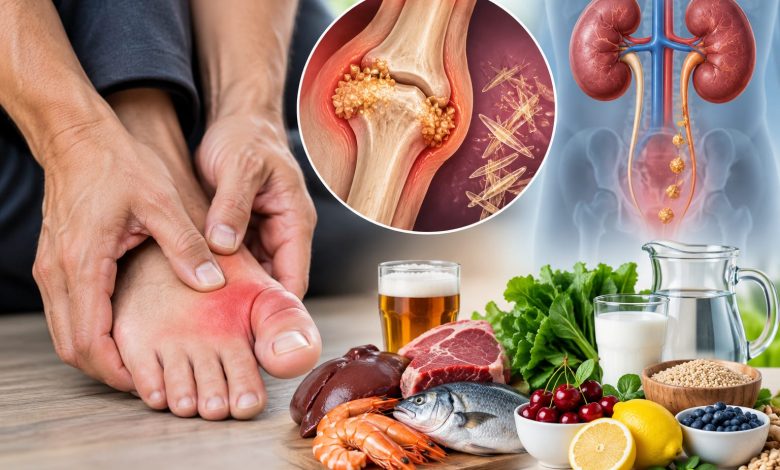
If uric acid remains high for a long time, tiny monosodium urate crystals can form and accumulate in joints and surrounding tissues. When the immune system reacts strongly to these crystals, sudden and intense inflammation develops. This condition is known as gout.
How does a gout attack appear?
A gout attack often begins suddenly. A person may go to bed feeling normal and wake during the night or early morning with severe pain in a single joint. The joint at the base of the big toe is most commonly affected, but the knee, ankle, foot, elbow, wrist and finger joints can also be involved.
The affected joint may become red, hot, swollen and extremely sensitive. Even light contact from clothing or bedding may feel unbearable. A first attack may improve within several days or one to two weeks, and symptoms may then disappear for a long period. This often leads people to believe that the condition has resolved.
However, if uric acid remains uncontrolled, attacks can recur. Repeated untreated episodes may eventually damage joints permanently. Deposits of urate crystals can also form lumps under the skin around the ears, fingers, elbows and other areas. These deposits are known as tophi.
Not all joint pain is caused by uric acid
Joint pain should not automatically be assumed to be gout. Rheumatoid arthritis, osteoarthritis, joint infection, injury and several other conditions can also cause pain and swelling.
A particularly important warning sign is a joint that becomes red, hot and severely painful together with fever. Joint infection can resemble gout and may become dangerous if treatment is delayed. Self-treating such symptoms as “uric acid” without proper evaluation can allow a serious condition to go unnoticed.
Who is at greater risk?
Obesity, high blood pressure, diabetes, metabolic syndrome, kidney disease, excessive alcohol consumption and frequent intake of purine-rich foods can increase the risk of gout. Men are generally at higher risk, while the risk among women rises after menopause.
Genetic factors also play a role, and some families have a stronger tendency toward elevated uric acid. Excess body weight, especially fat around the abdomen, is also associated with increased risk.
Certain medicines can raise uric acid levels. These include some diuretics used for high blood pressure, certain medicines used after organ transplantation and several other treatments. People taking regular medication should never stop it without medical advice.
Dehydration, sudden fasting, extreme weight-loss efforts, major injury, surgery or severe illness may also trigger a gout attack in susceptible individuals.
Meat is not the only culprit
The belief that uric acid rises only because of eating meat is incomplete. A large share of uric acid comes from the body’s own natural purine metabolism. In many people, the main problem is that the kidneys are unable to remove enough uric acid.
Diet still matters. Organ meats such as liver and kidney, large amounts of red meat, certain seafood, excessive alcohol and drinks high in sugar or fructose can increase risk.
This does not mean that everyone with gout must completely stop eating all meat. The appropriate approach depends on quantity, frequency, body weight, kidney function and the person’s history of gout attacks.
How is gout diagnosed?
A blood uric acid test is commonly used, but this test alone does not confirm gout. Uric acid levels can sometimes appear normal even during an acute gout attack.
Therefore, a normal uric acid result does not necessarily rule out gout. Similarly, a high uric acid level does not prove that joint pain is caused by gout.
When necessary, fluid may be taken from the affected joint and examined under a microscope for urate crystals. This is one of the most reliable ways to confirm gout and can also help distinguish gout from joint infection.
In some cases, ultrasound or specialized imaging techniques can help detect urate crystal deposits in and around joints.
Why overall health assessment matters
People with gout may also need evaluation of kidney function, blood pressure, blood sugar, blood fats and other metabolic risk factors. Gout should not be treated as an isolated joint problem.
It may be closely linked with kidney health, body weight, hypertension, diabetes and broader metabolic health. Treatment should therefore focus not only on the uric acid number but on the patient’s overall condition.
What should the uric acid target be?
The laboratory reference range for uric acid and the treatment target for people with established gout are not always the same. In most people who require long-term urate-lowering treatment, the usual target is to keep serum uric acid below 6 milligrams per deciliter.
For people with severe gout or tophi, a doctor may recommend an even lower target. However, a mildly elevated uric acid level in a person without symptoms does not automatically mean that medication is necessary.
Treatment decisions depend on previous gout attacks, kidney function, history of kidney stones, other medical conditions and the patient’s overall level of risk.
What to do during an acute attack
The main goal during an acute gout attack is to control pain and inflammation. Depending on the patient’s age, kidney function, stomach health, heart condition and other medical problems, a doctor may prescribe anti-inflammatory medicines, colchicine or corticosteroids.
These medicines are not equally safe for everyone. People with kidney disease, stomach ulcers, increased bleeding risk or certain heart conditions should not self-medicate.
Resting the affected joint and applying a cold pack for short periods may help. Dehydration should be avoided, but people with heart or kidney disease who have been advised to restrict fluids should follow their doctor’s instructions.
People who are already taking prescribed uric acid-lowering medication should not stop it on their own simply because a gout attack has occurred.
Why long-term treatment may be necessary
People who experience repeated gout attacks, develop tophi, have joint damage or carry certain high-risk conditions may need long-term uric acid-lowering therapy.
Allopurinol is one of the most commonly used medicines. Febuxostat and other options may also be considered. The choice of medicine, dose and duration should be decided by a doctor after reviewing the patient’s overall health.
The purpose of long-term treatment is not merely to lower a laboratory number. The goal is to gradually dissolve existing urate deposits, prevent new crystals from forming, reduce future gout attacks and protect joints and kidneys from long-term damage.
Some people experience a temporary increase in gout attacks during the first months after starting urate-lowering treatment. For this reason, doctors may prescribe an additional medicine for a limited period to help prevent flares.
What dietary changes are useful?
Diet and lifestyle are important parts of gout management. Maintaining a healthy body weight is one of the most useful long-term measures. If weight loss is necessary, it should be gradual.
Sudden fasting, crash dieting or trying to lose a large amount of weight in a short time can actually increase uric acid and trigger attacks.
Organ meats such as liver and kidney should be avoided or kept to a minimum. Large portions of red meat should be reduced, and some types of seafood should also be limited.
Beer and strong alcoholic drinks are particularly associated with gout. People who experience repeated attacks may benefit from sharply limiting alcohol or avoiding it altogether.
Sugary soft drinks, energy drinks, very sweet juices and beverages high in fructose should also be reduced. Packaged fruit juice should not be consumed excessively simply because it is marketed as healthy. Whole fruit is generally a better option.
What can be eaten?
Low-fat milk and dairy products, vegetables, fruits, whole grains and a balanced diet can be prioritized.
The old belief that all pulses, beans and vegetables must be stopped because they contain purines is not considered accurate. Plant-based purines do not appear to carry the same level of risk as many animal-based sources. Most people do not need to eliminate pulses, beans or vegetables unless there is another medical reason to do so.
Balanced portions and sustainable eating habits are more important than unnecessarily banning entire food groups.
The role of water
Adequate fluid intake can be helpful. Dehydration should be avoided, especially during hot weather, exercise or situations involving heavy sweating.
Sufficient fluid intake may support kidney excretion of uric acid and may also help reduce the risk of some types of kidney stones.
However, people with serious heart or kidney disease should not force themselves to drink excessive amounts of water. They should follow the fluid limits recommended by their doctor.
Lemon water, cherries and home remedies
There is frequent discussion about lemon water, cherries and other foods as ways to reduce uric acid. Some dietary habits may offer modest benefit, but they should not be treated as substitutes for established gout treatment.
Products promoted as “uric acid cleansers,” including unverified herbal mixtures, powders or supplements, should also be used with caution. Some may cause harm to the kidneys or liver.
Home remedies may have a supportive role in a healthy lifestyle, but they should not replace proven medical treatment.
The connection between gout and the kidneys
Uric acid and kidney health are closely linked. Because the kidneys are responsible for removing uric acid, reduced kidney function can cause uric acid levels to rise.
At the same time, some people with high uric acid are at greater risk of developing uric acid kidney stones. For this reason, people with recurrent gout should have their kidney function and overall health assessed regularly.
Blood in the urine, severe pain in the back or side, or recurrent kidney stones should prompt evaluation for possible uric acid-related kidney problems.
When to seek urgent medical care
A first episode of a suddenly red, hot and severely swollen joint should not simply be treated at home as “uric acid.” Joint infection can look very similar and may become serious if treatment is delayed.
Immediate medical attention is especially important if joint pain is accompanied by fever, chills, marked weakness or a worsening general condition.
People with kidney disease, diabetes, weakened immunity, cancer treatment or recent surgery should be particularly cautious if a joint suddenly becomes swollen and painful.
Good treatment can control the disease
Gout is one of the forms of arthritis that can be effectively controlled. With correct diagnosis, regular follow-up, appropriate medication and healthy lifestyle changes, many patients can remain free from attacks for long periods and live normally.
The greatest problem is often misunderstanding rather than the disease itself. High uric acid alone does not mean gout. Joint pain alone does not mean uric acid. Avoiding meat alone is not treatment. Stopping medication as soon as pain improves or the laboratory number falls is also not a solution.
Long-term control depends on identifying the cause, obtaining the right tests, following appropriate medical treatment, managing body weight, staying adequately hydrated, limiting alcohol and excessive sugar, and maintaining a balanced diet.
Treatment should focus not on a single uric acid number but on the person’s overall health. With that approach, much of the pain of gout, long-term joint damage and kidney-related complications can be prevented.