The Night of Bhadra 24: A Test of the State and the Constitution


Pasang Lhamu
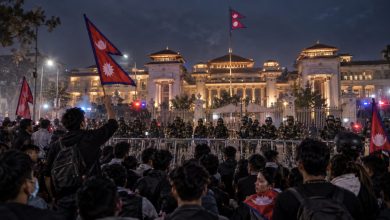
Detailed accounts released one year after the Gen Z movement show that the night of Bhadra 24 was one of the most sensitive moments in Nepal’s recent political history. Violence, arson and political uncertainty were spreading across the country. The movement had no universally accepted leadership. The political command of the government had weakened. It was unclear who legitimately represented the force that had emerged from the streets. In that vacuum, the Nepal Army moved beyond its normal security role and became involved in facilitating political dialogue.
The most important fact is that there was no official, elected or universally accepted mechanism representing the Gen Z movement at that time. Even within the movement, there was uncertainty over who the real stakeholders were. Representatives for talks were selected not through a constitutional or public institution but in a private office. Names were added and removed, informal voting took place and disputes emerged over who should be sent to Army Headquarters. This reflected the depth of disorder during the political transition.
This was not a minor institutional weakness. During a national crisis, the state should have had a functioning mechanism to hear public grievances, identify legitimate representatives of the movement and bring political dialogue into an institutional framework. The Prime Minister and Council of Ministers, Home Ministry, Office of the President, responsible parliamentary forces and legal institutions should have jointly led such a process. Representation of a national movement should never depend on personal contacts, informal networks or an improvised gathering.
One of the most serious revelations is that proposals involving military rule, elections administered by the Army, abolition of federalism and removal of secularism were reportedly discussed. Participants have given conflicting accounts about who introduced those ideas. Some have accused specific individuals, while those individuals have rejected the allegations. A journalist who was present has also confirmed that such issues were discussed but has said he did not know exactly who drafted or initiated them.
The reported discussion itself deserves serious attention, but it would be irresponsible to identify any individual as the architect of such proposals without clear evidence. What is certain is that ideas touching the fundamental structure of the Constitution entered discussions during an extremely unstable period.
This indicates how vulnerable the constitutional order had become on the night of Bhadra 24. If the original demands of the movement centered on good governance, control of corruption and political accountability, then the entry of agendas seeking to alter the basic constitutional structure represented a major shift. Federalism, secularism and the system of government can be debated in a democracy, but they cannot be decided by an improvised street delegation, a meeting at military headquarters or a closed discussion among a few individuals. Such decisions belong to constitutional processes, parliament and ultimately the sovereign people of Nepal.
The role of the Nepal Army must therefore be assessed from two perspectives. First, when civilian security and political structures were weakening, the Army opened a channel for dialogue. Second, the available accounts do not establish that the Army itself moved to seize political power. Instead, participants have said that after they affirmed their commitment to the Constitution and democracy, the Army leadership agreed to facilitate a civilian political process.
That restraint was crucial. Had the Nepal Army chosen direct rule at that moment, Nepal could have entered a prolonged constitutional crisis. Military administration may appear to offer order during chaos, but it would have damaged democratic legitimacy, international standing, internal stability and the institutional reputation of the Army itself. The strength of the Nepal Army lies not in governing the country, but in defending the state, supporting constitutional order and acting with discipline during national emergencies.
This does not mean that every decision made during the crisis was flawless. The fact that the Army had to become involved in identifying interlocutors itself was already evidence of civilian political failure. Reports that political figures whose direct connection to the Gen Z movement was unclear were also considered for talks show that the criteria for identifying legitimate stakeholders were uncertain.
During a national crisis, the Army may communicate with different actors for security purposes. But deciding who politically represents a movement, who qualifies as a legitimate stakeholder and who should lead a future government cannot become an institutional responsibility of the Army. Those questions belong to the President, constitutional institutions and civilian political processes. The Army can provide security, create a safe environment for dialogue and help prevent bloodshed, but it cannot become the source of political legitimacy.
At that time, the government’s first responsibility should have been to demonstrate continuity of state authority. The Home Ministry should have coordinated Nepal Police, Armed Police Force, district administrations and other agencies under a clear national command structure. The protection of parliament, Singha Durbar, the Office of the President, courts, communication systems, electricity infrastructure, hospitals, airports, prisons and other sensitive installations should have been treated as an immediate national priority.
Preventing arson, rescuing civilians, treating the injured and maintaining accurate records of casualties should have received the same urgency as political negotiations. A state cannot defend democracy if its basic institutions, public infrastructure and emergency command systems collapse during a political crisis.
The role of Nepal Police and the Armed Police Force also requires careful assessment. Whether excessive force was used during the first phase of the protests should have been independently investigated. At the same time, the failure to protect public property, prisons, government buildings and civilian life when the state structure weakened on the following day also demands examination. Allegations of unlawful firing on protesters and the subsequent breakdown of security control are separate questions and should not be mixed into a single political narrative that excuses responsibility on either side.
The role of intelligence agencies was equally sensitive. Their duty was to assess the scale of the movement, emerging violence, possible infiltration, disinformation, threats to strategic infrastructure and the appearance of agendas that were different from the original demands of the protesters. If such warnings were provided to the political leadership, the question is why timely decisions were not taken. If adequate warnings were not provided, then the capability of the intelligence system itself must be examined.
At the same time, patriotism does not mean blaming foreign powers without evidence. Accusations of external manipulation, covert interference or organized foreign involvement require documents, financial trails, communications or credible investigation. Real patriotism is the discipline to search for facts, protect national institutions and refuse politically convenient speculation.
The Office of the President eventually became central to restoring a constitutional path. Accounts indicate that representatives who reached Army Headquarters themselves viewed the President as the remaining constitutional authority capable of facilitating a political solution. A civilian government was later formed, and Sushila Karki was given responsibility to lead the country toward elections within a defined period.
That process returned the transition to a civilian and constitutional track. It was an important outcome, but it also exposed how close Nepal had come to a situation in which the normal chain of democratic authority was dangerously weakened.
The larger lesson is that Nepal must prepare for such crises before they happen. A mass movement may weaken an elected government, force a prime minister to resign or destroy the legitimacy of an existing political order. But the constitutional answer to the question of what comes next must remain clear. If a political vacuum is allowed to develop, legitimate public anger can be captured by organized interests, opportunistic actors or forces operating outside constitutional structures.
The events of Bhadra 24 also revealed a major weakness of the Gen Z movement itself. It had enormous energy but lacked institutional leadership. As a result, questions remain over who actually sat at the negotiating table in the name of young people who had protested and sacrificed their lives. Leaderless movements can be powerful in their early phase because they are difficult to control. But during a transfer of political power, the same lack of leadership can become a serious national risk.
Nepal now needs a clear national crisis management framework. Governments may become unstable, but the state must remain stable. Political leaders may lose authority, but constitutional command must not disappear. No street movement, however powerful, should push the Army into a position where it becomes involved in forming governments. The Army must also preserve its institutional credibility by maintaining a clear boundary between national security facilitation and political decision making.
The night of Bhadra 24 appears to have been a moment when Nepal’s future depended on the judgment of a few individuals, the constitutional commitment of some young representatives, the restraint of the Army and the eventual use of the Office of the President to restore a civilian solution. Military rule was discussed, but military rule did not come. Constitutional restructuring was raised, but the Constitution was not rewritten in a closed room. In the end, the country returned to a civilian government and an electoral path.
That is the most important national conclusion.
But a democratic state cannot survive indefinitely on luck, personal judgment or last minute restraint. Nepal’s institutions must be strong enough to ensure that the next national crisis is not decided in a private office, at Army Headquarters or by an uncertain crowd. The final authority over Nepal’s political future belongs neither to the Army, nor to self declared representatives of a mo