Russia Shared Intelligence and Helicopter Support with US After 9/11: Lavrov

Dragon Media News Desk
Russian Foreign Minister Sergey Lavrov has said that Russia provided the United States not only with political support but also with intelligence information and helicopter assistance for operations in Afghanistan following the September 11, 2001 terrorist attacks.
In an interview with RBC television marking the 25th anniversary of the September 11 attacks, Lavrov recalled that he was serving as Russia’s Permanent Representative to the United Nations in New York when the attacks occurred.
According to Lavrov, he arrived at his office at around 9:00 am and saw on television an aircraft crashing into one of the World Trade Center towers. At first, he thought a horror film was being broadcast, but soon realised that the images showed a real and unfolding catastrophe.
Lavrov said the atmosphere in New York changed immediately after the attacks, with fear and insecurity becoming clearly visible among ordinary people.
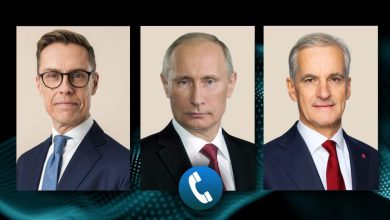
He recalled that then-Russian President Vladimir Putin telephoned US President George W. Bush and expressed solidarity with the United States. The United Nations Security Council subsequently adopted a resolution related to international action against terrorism.
Lavrov said Russia also provided practical assistance to the US-led international coalition. According to him, the Russia-NATO Council developed a programme concerning Afghanistan, Russian helicopters were made available for coalition use, and intelligence information was shared.
However, Lavrov argued that the United States later used the international solidarity generated after September 11 to advance broader geopolitical objectives.
He said that what had initially been presented as a collective campaign against terrorism gradually became connected with the expansion of US influence and military presence.
Lavrov linked this broader trend to what he described as attempts by the unipolar world order to preserve its dominance. He referred to Yugoslavia, Georgia and Ukraine as part of a wider geopolitical process.
On Yugoslavia, Lavrov described NATO’s intervention as an “unprovoked act of aggression” and the destruction of a sovereign state. These remarks reflected the Russian foreign minister’s political assessment of the events.
Asked about conspiracy theories surrounding the September 11 attacks, Lavrov said he was not inclined to believe them.
He argued that a conspiracy of such scale would have required the involvement of too many people and that, had that been the case, some evidence would likely have emerged publicly over the years.
Lavrov also said Russia and the United States continue to maintain dialogue despite serious political differences.
He noted that US President Donald Trump and Russian President Vladimir Putin have both said they are prepared to listen to each other without preconditions.
“This is the essence of politics and the essence of diplomacy,” Lavrov said.
Lavrov’s interview highlighted the sharp transformation in Russia-US relations, from the initial cooperation and solidarity that followed September 11 to the deep strategic rivalry that later developed between the two countries.