18th BRICS Summit: Latest Update from New Delhi


Dragon Media News Desk
The main leaders’ phase of the 18th BRICS Summit is underway in New Delhi on Saturday, bringing together Chinese President Xi Jinping, Russian President Vladimir Putin, Iranian President Masoud Pezeshkian and leaders of the expanded BRICS grouping under India’s chairmanship.
The summit is focusing on reform of global governance, trade and investment, energy and food security, technology, supply chains and major international conflicts.
Xi Jinping Arrives in New Delhi
One of the most significant developments is the arrival of Chinese President Xi Jinping in New Delhi. The visit marks his first trip to India in seven years and has placed particular attention on the future direction of China-India relations.
A bilateral meeting between Xi and Indian Prime Minister Narendra Modi is among the most closely watched engagements of the summit.
Border management, trade and investment, normalization of economic relations and rebuilding political confidence are expected to feature prominently in their discussions.
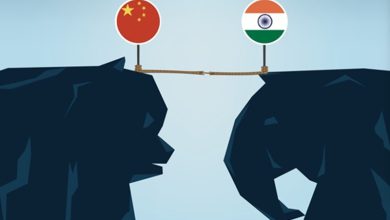
The meeting comes as Beijing and New Delhi have been making gradual efforts to stabilize relations following years of tensions.
Modi-Putin Talks Held
Russian President Vladimir Putin and Prime Minister Modi have already held bilateral talks, reviewing cooperation across politics, trade, defence, energy, space, skilled workforce mobility and people-to-people relations.
The two sides reaffirmed their commitment to strengthening the India-Russia Special and Privileged Strategic Partnership.
Their target of raising bilateral trade to $100 billion by 2030 remains one of the major economic objectives underpinning the relationship.
Russia has also used the BRICS summit to emphasize that the organization should move beyond political dialogue and develop stronger practical economic mechanisms.
Moscow is particularly advocating greater cooperation in trade, investment, technology, infrastructure and alternative payment arrangements.
Modi-Pezeshkian Engagement
Iranian President Masoud Pezeshkian has also held talks with Prime Minister Modi.
His presence in New Delhi has gained additional significance as Iran faces intensified economic and strategic pressure from the United States.
While in New Delhi, Pezeshkian declared that Iran would not surrender to U.S. economic pressure.
Iran’s participation in the summit therefore carries significance beyond economic cooperation, touching on the changing global balance of power and the security situation in West Asia.
BRICS Economic Agenda
BRICS finance ministers and central bank governors have backed further work to make cross-border payments faster, cheaper and more secure.
Expanding trade and investment settlements in local currencies and improving interoperability among national payment systems have also become important elements of the economic agenda.
However, no formal decision has been taken to establish a common BRICS currency.
Current efforts are focused instead on expanding the use of local currencies, improving cross-border payment arrangements and strengthening technical coordination among existing financial systems.
More Than 50 Practical Outcomes
Under India’s 2026 BRICS chairmanship, more than 50 practical outcomes, action plans and cooperation mechanisms are reported to have been developed.
The extent to which these initiatives will be incorporated into the final summit declaration will become clearer as the leaders’ meetings conclude.
Economic cooperation within the expanded BRICS framework increasingly covers trade, investment, technology, the digital economy, energy, agriculture, health, supply chains and development finance.
New Delhi Declaration in Focus
The New Delhi Declaration is expected to become the summit’s most important political document.
Members are working to establish common positions on counterterrorism, reform of global governance institutions including the United Nations, strengthening multilateralism and increasing the representation of developing countries.
The language concerning the Ukraine conflict and developments in West Asia remains particularly sensitive.
BRICS members do not share identical strategic interests or foreign-policy positions, making the wording of the final declaration an important measure of the grouping’s ability to build consensus.
Tight Security Across New Delhi
New Delhi has introduced multilayered security arrangements because of the presence of numerous world leaders.
Security has been strengthened around Bharat Mandapam, major hotels and routes used by summit delegations, with police, paramilitary personnel and specialized security units deployed.
Surveillance systems, facial and vehicle recognition technologies and anti-drone measures are also being used, while traffic restrictions and diversions have been introduced around important summit routes.
Focus Now Turns to Xi-Modi Meeting
Attention is now increasingly focused on the outcome of talks between Xi Jinping and Narendra Modi.
Any concrete understanding on border management, trade, investment or political confidence-building could influence the future trajectory of China-India relations.
Other key issues to watch include the final language of the New Delhi Declaration, progress toward alternative BRICS cross-border payment mechanisms and whether the expanded group can establish common positions on Iran, Ukraine and West Asia.
Developments so far have given the New Delhi summit significance beyond a routine annual gathering.
The possibility of stabilization between China and India, Russia’s push for alternative economic mechanisms, growing pressure on Iran and BRICS efforts to increase the influence of developing countries are turning the summit into an important test of the evolving multipolar international order.