18th BRICS Summit: Latest Update from New Delhi

Dragon Media News Desk
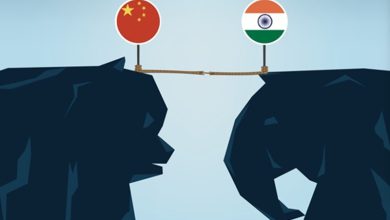
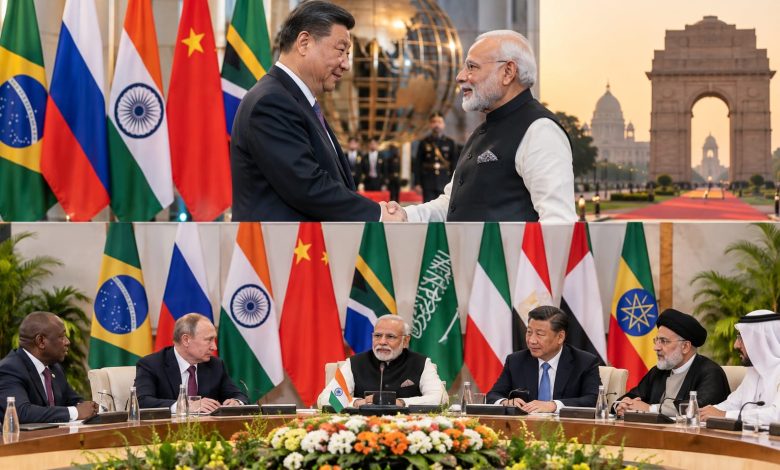
The 18th BRICS Summit in New Delhi has entered a decisive leaders’ phase on Saturday. Chinese President Xi Jinping has arrived in the Indian capital, and his highly anticipated bilateral meeting with Indian Prime Minister Narendra Modi is scheduled for later in the day. It is Xi’s first visit to India in seven years and will mark the third meeting between the two leaders in the past three years.
Xi-Modi Meeting Still Awaited
At the time of this update, the formal Xi-Modi bilateral meeting had not yet been confirmed as completed. Therefore, there is still no basis to conclude that any new agreement has been reached on border management, trade, investment, direct connectivity or rebuilding political trust.
The Chinese side has said it is ready to view relations with India from a strategic and long-term perspective, properly manage differences, and advance ties as friendly neighbours and mutually supportive partners.
Signs of Agreement on Joint Declaration
One of the most important developments of the day is the indication that BRICS members have reached agreement on the draft of a joint declaration.
International media reports citing diplomatic sources said member states had agreed on a common text that is expected to be formally endorsed by the leaders.
The declaration is reported to include language opposing unilateral military action without naming any particular country. Reaching common wording on conflicts in West Asia had been one of the more difficult parts of the negotiations because BRICS members have different security and strategic interests.
The apparent agreement on a common document is therefore being seen as an effort to demonstrate political cohesion within an expanded BRICS.
Economic Cooperation Dominates Modi-Putin Talks
Indian Prime Minister Narendra Modi and Russian President Vladimir Putin have already held bilateral talks.
The two leaders reviewed cooperation in politics, the economy, defence, energy, space, skilled workforce mobility and people-to-people relations.
Both sides placed particular emphasis on expanding economic and industrial cooperation. Their target of increasing India-Russia bilateral trade to $100 billion by 2030 remains a major economic objective.
Putin has also argued that BRICS should move beyond political dialogue and develop into a grouping capable of delivering practical results in trade, technology, investment, infrastructure and alternative financial mechanisms.
BRICS Economic Power in Focus
Economic cooperation remains one of the summit’s central themes because the expanded BRICS grouping represents a major share of the world’s population, economy and global trade.
Efforts to make cross-border payments cheaper, faster and more secure, expand the use of local currencies and improve interoperability among national payment systems are among the key economic issues under discussion.
However, there has been no formal decision to establish a common BRICS currency.
Claims that BRICS has already introduced a new currency to replace the U.S. dollar would therefore be inaccurate. Current efforts are focused on wider use of national currencies and development of alternative cross-border payment arrangements.
Iran and West Asia Remain a Political Test
The presence of Iranian President Masoud Pezeshkian has brought the situation in West Asia further into the political spotlight.
Iran and other BRICS members from the region have different security and strategic perspectives, making the wording of the joint declaration particularly sensitive.
Pezeshkian has also stated in New Delhi that Iran will not surrender to U.S. economic pressure.
The Ukraine conflict, Western sanctions, energy supplies and the security of international trade routes also remain part of the wider strategic background to the summit.
Main Focus Now on Xi-Modi Talks
The immediate focus is now on the outcome of the meeting between Xi Jinping and Narendra Modi.
Any concrete understanding on border management, trade, investment or political confidence-building could emerge as one of the summit’s most important bilateral outcomes.
Another key issue is the final form of the New Delhi Declaration.
Although reports indicate that consensus has been reached on the draft, the full BRICS position on war, sanctions, global governance reform, terrorism and the international economic system will become clear only after formal endorsement and publication of the final text.
So far, the New Delhi summit stands out for three reasons: the possibility of further stabilization in China-India relations, the push by Russia and Iran for greater economic and financial autonomy, and the ability of an expanded BRICS to maintain political consensus despite the differing strategic interests of its members. These factors are likely to shape the long-term significance of the 18th BRICS Summit.