BRICS Sends a New Message from New Delhi: Consensus, Practical Cooperation and a Wider Multipolar Vision

Dragon Media News Desk
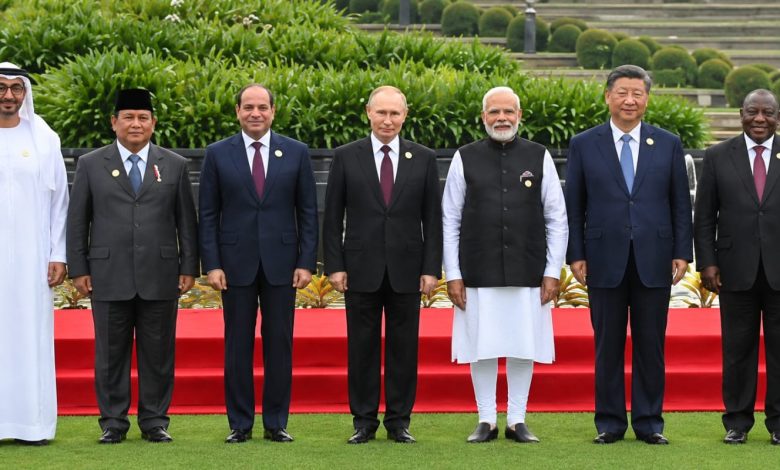
The 18th BRICS Summit in New Delhi has emerged as an important demonstration of dialogue, multilateralism and growing cooperation among developing and emerging economies at a time of deep geopolitical divisions.
One of the summit’s most significant achievements has been the consensus around the New Delhi Declaration. Despite differences among member states over conflicts in West Asia, the Ukraine crisis, sanctions, trade restrictions and broader strategic issues, the ability of the expanded BRICS grouping to agree on a common political document represents an important institutional achievement.
Hosted by India on September 12 and 13 at Bharat Mandapam, the summit also comes at a symbolic moment, marking two decades since the BRIC framework first began taking shape in 2006. What started as cooperation among four major emerging economies has since expanded into a broader platform bringing together influential countries from Asia, Africa, Latin America and West Asia.
India’s 2026 BRICS chairmanship has emphasized resilience, innovation, cooperation and sustainability, while seeking to transform BRICS from a largely political forum into a platform capable of producing practical economic and institutional outcomes.
Consensus on the New Delhi Declaration
A major achievement of the summit has been the agreement among BRICS members on the New Delhi Declaration.
The document expresses concern over escalating conflicts in West Asia and emphasizes restraint, dialogue, consultation and diplomacy as the preferred means of resolving international disputes.
Reaching such consensus was not straightforward. BRICS now includes countries with very different security relationships, regional interests and diplomatic positions. Iran and the United Arab Emirates, for example, are both members of the grouping but approach regional security from different strategic perspectives.
The ability to formulate language acceptable to all members therefore provides an early indication that the expanded BRICS can still build consensus despite growing internal diversity.
The declaration also raises concerns about unilateral sanctions not authorized by the United Nations Security Council and criticizes protectionist trade practices and unilateral tariff and non-tariff barriers that distort international commerce.
BRICS members have also reaffirmed their opposition to terrorism in all its forms and stressed the importance of stronger international cooperation against terrorist networks, financing and cross-border threats.
Reform of global governance institutions, including the United Nations, has remained another central theme, with BRICS countries seeking greater representation for developing nations in international decision-making.
Modi: BRICS Is Not Directed Against Anyone
Indian Prime Minister Narendra Modi has sought to present BRICS not as an anti-Western alliance but as a platform for reforming the international order and strengthening the voice of the Global South.
His broader message is that developing countries should no longer remain merely rule-takers in international institutions but should gain a stronger role in shaping the rules themselves.
This reflects India’s wider strategy of maintaining strategic autonomy.
New Delhi continues to deepen relations with the United States and Europe while preserving its long-standing partnership with Russia, stabilizing relations with China, engaging Iran and expanding economic ties with Gulf countries.
India’s BRICS chairmanship therefore appears designed to position the organization as a reform-oriented platform rather than a confrontational geopolitical bloc.
Xi Jinping’s First India Visit in Seven Years
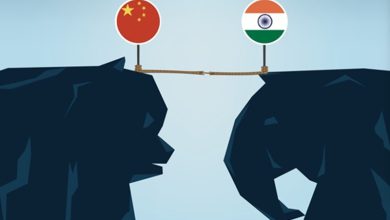
One of the most closely watched developments of the summit is Chinese President Xi Jinping’s visit to India, his first in seven years.
The visit comes after a prolonged period of tensions between China and India and carries substantial political significance as both sides seek greater stability in bilateral relations.
A bilateral meeting between Xi and Prime Minister Modi has been among the summit’s most anticipated engagements.
At the time of the latest confirmed update incorporated into this analysis, no official outcome from that meeting had yet been publicly established. It would therefore be premature to claim any new agreement on border management, trade, investment or broader political issues.
Nevertheless, Xi’s presence in New Delhi is itself an important diplomatic signal.
Improved political confidence between Asia’s two largest emerging economies could influence not only bilateral relations but also the effectiveness of BRICS, the Shanghai Cooperation Organisation and wider Asian economic cooperation.
The presence of Modi, Xi and Russian President Vladimir Putin at the same summit has also strengthened the geopolitical symbolism of the gathering.
India, China and Russia do not share identical positions on many international questions, but they continue to identify areas of common interest in multilateralism, global governance reform and the representation of developing economies.
India-Russia Partnership Shows Continuity
Prime Minister Modi and President Putin have already held bilateral talks on the margins of the summit.
Their discussions covered political relations, trade, defence, energy, space, infrastructure, skilled workforce mobility and people-to-people cooperation.
India and Russia have set a target of increasing bilateral trade to $100 billion by 2030, reflecting their intention to give greater economic substance to their longstanding strategic relationship.
Russia has also argued that BRICS should move beyond geopolitical discussion and evolve into a practical economic mechanism capable of delivering tangible results in investment, technology, infrastructure, business cooperation and financial connectivity.
This approach could become increasingly important for the future relevance of BRICS.
If the organization succeeds in reducing transaction costs, supporting investment, improving technological cooperation and creating efficient mechanisms for cross-border commerce, its economic importance could become significantly greater than its political symbolism alone.
No Common BRICS Currency Yet
One of the most widely discussed issues surrounding BRICS is the future role of the U.S. dollar in international trade.
However, the New Delhi summit appears to be taking a more practical approach than some of the more dramatic public narratives surrounding “de-dollarization.”
There has been no formal decision to establish a common BRICS currency.
Instead, member states are concentrating on increasing the use of national currencies in trade and investment, making cross-border payments faster, cheaper and safer, and improving interoperability among domestic payment systems.
Successful digital payment platforms such as India’s UPI and Brazil’s Pix demonstrate how modern payment infrastructure can reduce transaction costs and improve financial accessibility.
If BRICS countries can eventually establish greater interoperability among such systems, businesses could gain additional alternatives for cross-border settlements.
This should not be interpreted as an immediate attempt to replace the dollar.
Rather, it represents a gradual effort to diversify financial channels and provide member states with more options for conducting international trade.
New Development Bank Gains Importance
The summit has also reaffirmed support for the New Development Bank as an important institution for infrastructure financing, sustainable development and reducing development inequalities.
Infrastructure financing remains a major challenge across the developing world, and the long-term institutional importance of BRICS may increasingly depend on whether its financial institutions can deliver practical development outcomes.
BRICS is therefore pursuing a two-track approach.
On one side, members are calling for reform of existing institutions such as the World Bank and International Monetary Fund to improve representation for emerging and developing economies.
On the other, they are strengthening complementary mechanisms such as the New Development Bank.
If successfully implemented, this approach could gradually transform BRICS from a political coordination platform into a broader development and financial network.
Global Governance Reform at the Centre
Reform of the United Nations and other major international institutions has become one of the summit’s central political themes.
President Putin has argued for stronger representation of Asia, Africa and Latin America in the United Nations Security Council.
India has long sought permanent membership of the Security Council, while other BRICS members have also supported greater representation for developing countries, although they do not necessarily agree on every detail of possible reforms.
Prime Minister Modi’s engagement with UN Secretary-General António Guterres has also highlighted the need to make multilateral institutions more representative of 21st-century political and economic realities.
This issue goes to the heart of the BRICS political project.
Many of today’s major global institutions were designed around the balance of power that emerged after the Second World War. Emerging economies now account for a far larger share of global output, trade and population.
BRICS therefore argues that institutional representation should increasingly reflect this changing distribution of economic and political influence.
Iran and the Challenge of West Asia
The participation of Iranian President Masoud Pezeshkian has added another important dimension to the summit.
Iran has strongly criticized U.S. economic pressure and sanctions and has advocated expanded local-currency trade and reduced reliance on Western-dominated financial channels.
Yet BRICS has not simply adopted the strongest political language of any individual member.
Instead, the grouping has emphasized restraint, dialogue and diplomatic solutions to the conflicts in West Asia.
This balancing approach illustrates both the strength and the challenge of BRICS.
The organization now includes major powers such as China and Russia, India with its policy of strategic autonomy, Iran under significant Western pressure, and the United Arab Emirates with deep economic and security relations with Western countries.
Achieving consensus among such diverse members is therefore inherently difficult.
The New Delhi Declaration consequently represents more than a routine diplomatic document. It is also a test of whether the expanded BRICS can maintain cohesion while respecting different national interests.
Trade, Tariffs and Protectionism
The summit is taking place amid growing global concern over tariffs, sanctions, trade restrictions and fragmentation of supply chains.
BRICS members have emphasized the importance of open and inclusive international trade and expressed concern about unilateral economic and financial measures that can disrupt global commerce.
Although BRICS economies themselves differ substantially in economic structure and policy priorities, they share concerns that excessive politicization of trade and finance could disproportionately affect developing economies.
The summit has therefore placed considerable emphasis on supply-chain resilience, energy security, food security, the digital economy, artificial intelligence, technology and sustainable development.
This gives the New Delhi summit a significant economic dimension beyond its geopolitical importance.
More Than 50 Practical Outcomes
India has indicated that more than 50 practical outcomes, action plans, frameworks and cooperation mechanisms have been developed during its 2026 BRICS chairmanship.
Their real significance will ultimately depend on implementation.
Nevertheless, the initiative indicates that BRICS is attempting to move beyond annual summit diplomacy and build more permanent structures of cooperation in health, agriculture, finance, trade, innovation, energy, education, culture and people-to-people exchanges.
That institutionalization could become one of the most important measures of BRICS effectiveness over the coming years.
Why the Summit Matters for Nepal
Nepal is not a BRICS member, but the transformation taking place within BRICS has implications for Nepal.
Nepal is situated between India and China, maintains longstanding diplomatic relations with Russia and has opportunities to expand trade, tourism, energy and development cooperation with several BRICS economies.
Future developments involving the New Development Bank, cross-border digital payments, local-currency settlements, infrastructure financing, green energy and South-South cooperation could influence the broader economic environment of South Asia.
For Nepal, the most practical approach would be to view these emerging mechanisms through the lens of national interest rather than geopolitical alignment.
BRICS institutions and traditional Western financial institutions need not necessarily be treated as mutually exclusive choices. Nepal could potentially benefit from diversified access to development finance, technology, investment and markets.
From Multipolar Rhetoric to Institutional Development
The most important message from the 18th BRICS Summit in New Delhi is that the grouping is gradually attempting to translate the political concept of a multipolar world into practical economic and institutional structures.
Its success will not depend on replacing the U.S. dollar overnight, challenging Western institutions through direct confrontation or turning all BRICS members into a single geopolitical bloc.
Such expectations would be inconsistent with the diverse nature of the organization itself.
Its real success will instead be measured by whether it can facilitate trade, expand local-currency settlements, improve cross-border payments, provide development finance, deepen technological and infrastructure cooperation and strengthen the representation of developing countries in global institutions.
Consensus around the New Delhi Declaration provides a positive political foundation for that process.
At a time of conflict in West Asia, the continuing Ukraine crisis, economic sanctions, growing protectionism and complex China-India relations, the ability of BRICS members to maintain a common framework of dialogue is itself significant.
The summit continues into Sunday, and its final assessment will depend on additional leaders’ discussions, implementation commitments and any further bilateral outcomes.
But the developments so far point to a broader conclusion: BRICS is no longer simply a symbolic grouping of emerging economies. It is increasingly becoming a wider international platform attempting to connect diverse political systems, strategic interests and economic capabilities through consensus, practical cooperation and a shared demand for a more representative global order.