Why Was Nepal Not Invited to the BRICS Summit?

Dragon Media Correspondent
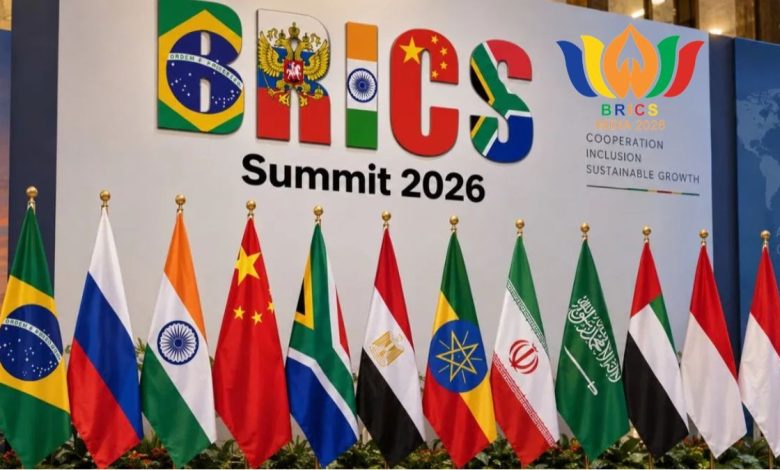
Nepal’s absence from the 18th BRICS Summit in New Delhi has triggered debate in Kathmandu over why the country was not invited. The summit, hosted by India on September 12 and 13, brought together BRICS members, partner countries and selected invited participants. Nepal, however, was not among them. So far, neither the Indian nor the Nepali government has publicly provided a specific official explanation for Nepal’s exclusion.
The most immediate explanation lies in the structure of the summit itself. Nepal is neither a BRICS member nor a partner country. Unlike the 2016 Goa Summit, India did not organise a separate BRICS-BIMSTEC outreach meeting this time. In Goa, leaders of BIMSTEC countries were invited to interact directly with BRICS leaders, allowing Nepal’s then prime minister to participate in a broader dialogue. No comparable South Asian outreach framework was created for the New Delhi summit, leaving Nepal without an automatic institutional route to participation.
Initial reports that Bangladesh’s prime minister had been invited created additional questions in Nepal. Bangladesh later clarified that the invitation was linked to its position as the current chair of BIMSTEC rather than an ordinary bilateral invitation to attend BRICS. Bangladesh subsequently decided not to send an official delegation on that basis. This suggests that India did not simply select one South Asian neighbour for special participation while excluding others.
The summit format, however, does not fully answer the broader question surrounding Nepal’s absence. Another issue concerns Kathmandu’s own diplomatic activism. Foreign-policy observers have questioned whether Nepal could have explored the possibility of participation in an expanded dialogue or sought a special invitation through sustained diplomatic engagement. There is no evidence that inadequate lobbying directly caused India not to invite Nepal, but the episode has renewed questions about the country’s ability to create opportunities through proactive diplomacy.
Nepal’s geographic and diplomatic position makes the issue particularly significant. India and China, two of the central powers within BRICS, are Nepal’s immediate neighbours, while Nepal has maintained longstanding friendly relations with Russia. Nepal also has formal diplomatic relations with Brazil and South Africa, two countries that played foundational roles in the development of BRICS. As BRICS increasingly focuses on multipolarity, development finance, energy, technology, trade and the political voice of the Global South, Nepal’s relationship with this emerging framework deserves greater strategic attention.
The New Delhi summit has also highlighted the absence of a clearly articulated Nepali policy toward BRICS. Membership may not be an immediate possibility, but formal membership is not the only way to build engagement. Nepal could strengthen political dialogue with BRICS members and partner countries, explore possible cooperation with the New Development Bank, expand trade and investment contacts and position itself for participation in future outreach mechanisms.
An invitation to a major summit is rarely something that should be pursued only days before the event. Such opportunities are usually created through years of diplomatic engagement, institutional relationships and sustained political contact. Nepal therefore needs to consider whether its foreign-policy machinery is sufficiently focused on emerging platforms of the Global South and whether it is developing the diplomatic networks required to secure a meaningful place in them.
Nepal’s absence from the New Delhi summit can thus be explained immediately by the summit’s selective participation format and the fact that Nepal is neither a BRICS member nor a partner country. Yet the episode also raises deeper questions about Nepal’s diplomatic activism, its ability to build space for itself in regional and global forums, and its long-term strategy toward BRICS.
Nepal was able to engage directly with BRICS leaders during the 2016 Goa outreach. A decade later, finding itself outside the wider circle surrounding the same grouping should not be treated as an insignificant diplomatic event. It provides Kathmandu with a reason to reassess its diplomatic reach, strategic priorities and preparedness to secure Nepal’s place in a rapidly changing global order.