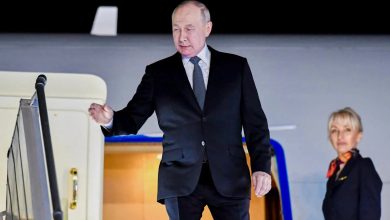
Xi Jinping at Center of BRICS Attention as Global Media Focus on China-India Relations, Global South and Multipolarity


Dragon Media News Desk
Chinese President Xi Jinping has emerged as one of the most closely watched leaders at the 18th BRICS Summit in New Delhi, with international and Indian media giving particular attention to his role in China-India relations, the growing influence of the Global South and the broader shift toward a multipolar world order.
Xi’s arrival in New Delhi has drawn strong media interest because it comes amid a gradual improvement in relations between China and India. Efforts to reduce tensions along the border, restore direct flights, expand trade contacts, ease visa restrictions and revive people-to-people exchanges have created a more positive atmosphere. Against this backdrop, the Xi-Modi meeting has been widely portrayed as another important step in rebuilding trust between the two Asian powers.
Indian media have also highlighted the symbolic importance of direct interaction between Xi and Prime Minister Narendra Modi. Their handshake and discussions have been presented as notable diplomatic moments of the summit, reflecting a willingness on both sides to manage differences through dialogue while maintaining cooperation in areas of shared interest.
In his address to the summit, Xi described BRICS as one of the world’s most influential cooperation platforms for emerging markets and developing countries. Marking 20 years of BRICS cooperation, he emphasized the grouping’s historic expansion, institutional development and growing role in representing the interests of the Global South.
Xi’s message on multipolarity, multilateralism, equitable global governance and stronger representation for developing countries has also received considerable attention. His remarks placed BRICS within the wider transformation of the international system, where developing countries are seeking a greater voice in global economic and political decision-making.
Another reason Xi’s participation has attracted significant interest is China’s upcoming BRICS presidency. China will host the 19th BRICS Summit next year, and Xi has already called for deeper cooperation in political trust, dialogue, innovation, artificial intelligence, new industrialization and South-South cooperation. This has led analysts to view his New Delhi address not only as a statement on the current summit, but also as a signal of China’s priorities for the next stage of BRICS development.
The economic dimension of China-India relations has also featured prominently in media coverage. Both countries are major economies with extensive trade links and significant potential for cooperation in manufacturing, supply chains, technology and services. China’s industrial and manufacturing strengths and India’s capabilities in software, services and its large pool of young talent are often seen as complementary advantages that could support deeper economic engagement.
Xi’s role at the summit also extends beyond bilateral ties with India. China and Russia have consistently promoted a more multipolar international order, reform of global governance and reduced overdependence on Western-dominated financial structures. India, meanwhile, has emphasized BRICS as a practical platform for development, resilient supply chains, digital transformation, climate action, food security and health cooperation rather than as an anti-Western alliance.
This makes the interaction between Xi and Modi especially important. Their engagement is being viewed as an opportunity to bring together different approaches within BRICS while preserving the grouping’s broader emphasis on development, cooperation and strategic autonomy.
China’s economic weight, industrial capacity and political influence naturally make Xi one of the most important figures within BRICS. Yet the significance of his presence in New Delhi goes beyond China’s size. His visit to India, direct talks with Modi, the 20th anniversary of BRICS cooperation, China’s upcoming presidency and his message on the future of the Global South have combined to make his participation one of the major diplomatic events of the summit.
The positive message emerging from New Delhi is that China and India, despite competition and unresolved differences, are keeping the door open to dialogue and cooperation. If the two major Asian civilizations and economies can continue stabilizing their relationship, the effects could extend well beyond bilateral ties and contribute to stronger BRICS cooperation, greater South-South coordination and broader global stability.
For this reason, the strong media attention surrounding Xi Jinping is not simply about one leader. It reflects the growing importance of China, India, BRICS and the Global South in shaping the future direction of the international order.