Modi at the Center of BRICS Diplomacy as Media Focus on India’s Strategic Balance, Global South and Consensus-Building

Dragon Media News Desk
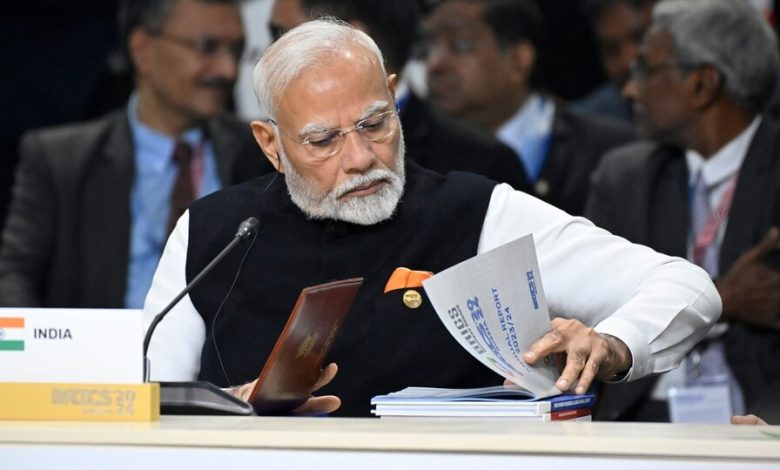
Indian Prime Minister Narendra Modi has emerged as one of the central figures at the 18th BRICS Summit in New Delhi, with Indian and international media closely following his role not only as the host leader, but also as a diplomatic coordinator seeking to bring together different political, economic and strategic perspectives within the expanded BRICS framework.
The summit has attracted additional attention because it coincides with the 20th anniversary of BRICS cooperation. India has presented the gathering not as a platform directed against any particular power bloc, but as a mechanism for practical cooperation in development, trade, technology, energy, supply chains, climate, health and global governance reform. This approach has led international media to view Modi’s speeches and bilateral meetings through the broader lens of India’s long-standing policy of strategic autonomy.
One of the most significant aspects of Modi’s role has been India’s effort to build consensus among an increasingly diverse BRICS membership. Despite differences in political systems, foreign-policy priorities and strategic interests, the summit succeeded in adopting the New Delhi Declaration unanimously. The inclusion of issues such as counterterrorism, peaceful settlement of disputes, stronger multilateralism, sustainable development, renewable energy and concerns over unilateral trade measures has been seen as an important diplomatic achievement for the host country.
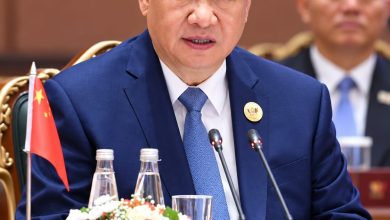
Modi’s engagement with Chinese President Xi Jinping has also received considerable media attention. Their meeting has been interpreted as another sign that India and China are gradually rebuilding confidence after years of tension along the border. With direct flights, trade, visa facilitation, border management and people-to-people exchanges returning to the agenda, the Modi-Xi dialogue has been viewed as important not only for bilateral relations but also for wider Asian stability.
The Indian prime minister’s relationship with Russian President Vladimir Putin has been another major diplomatic feature of the summit. India has continued to preserve its long-standing strategic partnership with Russia even while expanding ties with the United States, Europe and other major partners. Cooperation in energy, defense, nuclear technology, industrial production and trade remains a major foundation of India-Russia relations.
A defining feature of Modi’s BRICS diplomacy is India’s attempt to maintain close engagement with China and Russia while also sustaining strong relations with the United States, Europe, Japan and other partners. New Delhi describes this approach as strategic autonomy, reflecting its preference to avoid permanent alignment with any single geopolitical bloc and instead pursue issue-based partnerships guided by national interests and development priorities.
The Global South has also been central to Modi’s BRICS message. India has repeatedly called for greater representation of developing countries in global financial institutions, United Nations structures, development finance, climate finance and access to technology. From this perspective, the New Delhi summit has provided India with an opportunity to strengthen the institutional voice of developing countries in global decision-making.
India has also emphasized practical economic cooperation within BRICS. Resilient supply chains, digital public infrastructure, financial inclusion, agriculture, health, food security, energy and cooperation among small and medium-sized enterprises have all featured prominently in New Delhi’s approach. The focus on projects with direct benefits for ordinary citizens has distinguished India’s effort to keep BRICS connected to practical development outcomes rather than political declarations alone.
Under Modi’s leadership, India has consistently resisted defining BRICS as an anti-Western alliance. New Delhi’s position is that the grouping’s strength lies not in confronting other countries, but in creating additional opportunities for development, trade and cooperation among its members. This allows India to support discussions on multipolarity and global governance reform promoted by China and Russia while preserving its own independent diplomatic space.
Modi’s interactions with leaders from across the expanded BRICS membership have also highlighted India’s growing outreach to Asia, Africa, the Middle East and Latin America. As the grouping becomes more geographically diverse, New Delhi sees new opportunities for cooperation in trade, energy, technology, pharmaceuticals, digital services and development partnerships.
For international media, Modi’s importance at the summit lies largely in this balancing role. Xi Jinping represents China’s economic and industrial weight, while Vladimir Putin brings Russia’s strategic influence. Modi, meanwhile, has projected India as a power capable of maintaining dialogue across competing centers of influence while steering BRICS toward practical cooperation.
The broader message from New Delhi is that India is seeking to establish itself within BRICS not merely as a major economy, but also as a consensus-builder capable of connecting different viewpoints and placing the development priorities of the Global South on the international agenda.
The future strength of BRICS may increasingly depend on the interaction of three major pillars: China’s economic capacity, Russia’s strategic influence and India’s diplomatic balancing power. The New Delhi summit has demonstrated that dialogue among these major powers remains possible despite differences, and that there is still substantial room for cooperation on development, multilateralism and global governance.
In this process, Modi’s role has extended well beyond the formal responsibilities of a host leader. His ability to engage with diverse partners while protecting India’s strategic autonomy has become one of the defining political features of the summit.