CPC Plenum Pledges to Maintain Strict Party Discipline

Dragon Media News Desk
A resolution adopted at the fifth plenary session of the 20th Central Committee of the Communist Party of China (CPC) reaffirmed the Party’s commitment to pursuing a distinctively Chinese approach to combating corruption. Officials said the resolution addresses major issues concerning full and rigorous self-governance within the Party.
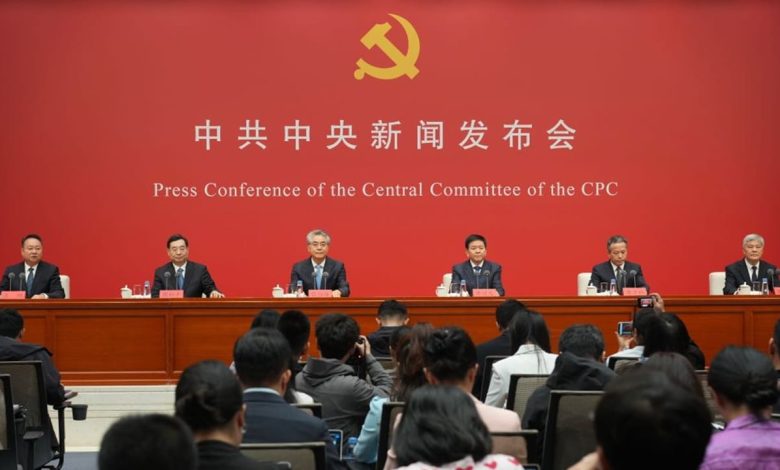
At a press conference in Beijing on Friday, Tang Fangyu, head of the CPC Central Committee’s Policy Research Office, described the resolution as the most important outcome of the plenum. He said it would guide efforts to strengthen the Party in the new era.
Zhang Fuhai, deputy secretary of the CPC Central Commission for Discipline Inspection and deputy head of the National Commission of Supervision, said the resolution identified four priorities: maintaining a tough stance against corruption; strengthening checks and oversight over the exercise of power; promoting integrity and rejecting corruption; and coordinating efforts to remove the audacity, opportunity and desire to engage in corruption.
Since the CPC’s 18th National Congress in 2012, discipline inspection and supervisory bodies across China have opened 8.105 million cases and punished 7.922 million people, Zhang said. Those punished included 963 officials registered with and supervised by the CPC Central Committee.
Hu Heping, deputy head of the CPC Central Committee’s Publicity Department, said strengthening the Party’s ethos was fundamental to ensuring full and rigorous self-governance. An editorial in the state-run People’s Daily said the plenum had demonstrated the Party’s firm commitment to continuous self-improvement.
The plenum also emphasized strengthening Party-building in emerging economic and social sectors. Huang Jianfa, deputy head of the CPC Central Committee’s Organization Department, said the Party would expand the reach of its organizations and activities in these sectors to increase its appeal, cohesion and influence.
Emerging economic organizations include private-sector enterprises and businesses in developing fields. New types of social organizations include industry associations, chambers of commerce, social service agencies and community-based groups.
New forms of employment have grown alongside the internet and digital economy. They include food delivery couriers, ride-hailing drivers and online marketers, many of whom depend on digital platforms for their work.
China has about 84 million people engaged in these new forms of employment, officials said. They play an important role in meeting daily needs, supporting livelihoods and keeping economic activity running.
A People’s Daily editorial said the plenum would encourage Party members and people across the country’s ethnic groups to strive for further achievements.