Masoud Pezeshkian Draws Growing Media Attention at BRICS as Focus Turns to Iran’s Voice, Regional Diplomacy and Economic Sovereignty

Dragon Media News Desk
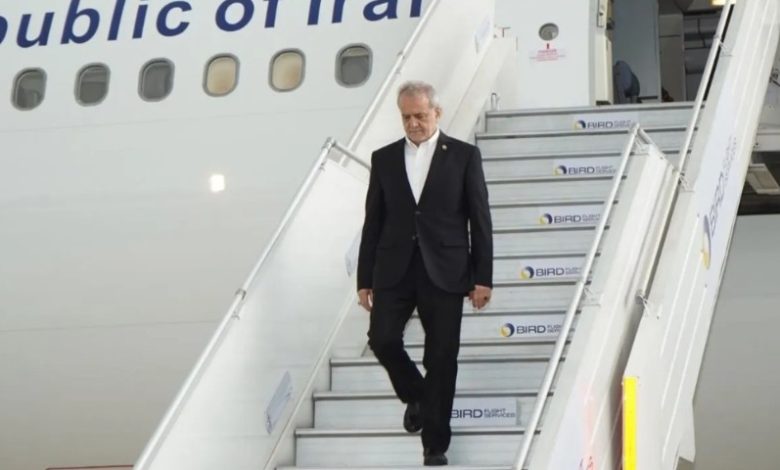
Iranian President Masoud Pezeshkian has emerged as one of the closely watched leaders at the 18th BRICS Summit in New Delhi, with international media focusing on Iran’s position on regional stability, economic sovereignty, energy security and the growing debate over alternative financial mechanisms within BRICS.
Pezeshkian’s participation carries particular significance at a time of heightened tensions across West Asia. Iran’s strategic position in the Persian Gulf, its importance to global energy flows and its long experience of operating under external economic pressure have given Tehran a distinct voice within the expanded BRICS framework.
International media have highlighted Pezeshkian’s emphasis on deeper economic integration among BRICS members, greater use of national currencies in trade and the development of financial mechanisms capable of reducing vulnerability to unilateral restrictions. For Iran, such initiatives are not simply matters of economic policy. They are closely connected to national economic security and the ability to maintain trade and investment under difficult geopolitical conditions.
Pezeshkian has argued that BRICS should move beyond political declarations and develop practical mechanisms for economic cooperation. Iran has placed particular importance on local-currency settlements, alternative payment systems, energy cooperation, food security, transport corridors and stronger regional connectivity.
Iran’s geographical position further strengthens the importance of Pezeshkian’s role. Located between the Persian Gulf, Central Asia, South Asia and West Asia, Iran occupies a strategically important position for energy transportation and regional connectivity. Its involvement in BRICS therefore has direct relevance to discussions on maritime trade, energy security and north-south transport networks.
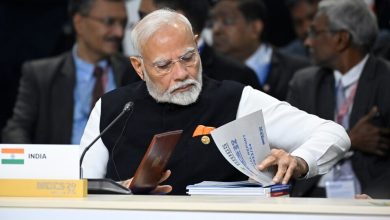
The Iranian president’s engagement with Indian Prime Minister Narendra Modi has also drawn attention. India and Iran have long-standing interests in trade, energy and regional connectivity, including the development of Chabahar Port and access routes linking India with Central Asia and beyond. Continued dialogue with Tehran also reflects India’s broader policy of maintaining independent and balanced relations across West Asia.
Pezeshkian’s diplomatic activity at the summit has been closely watched because of the wider regional environment. His participation in direct discussions with leaders from different parts of the Global South demonstrates Iran’s continued use of multilateral diplomacy as a means of maintaining communication even during periods of political and security tension.
For Tehran, BRICS offers an opportunity to place issues traditionally associated with Iran’s bilateral disputes within a broader Global South framework. Questions involving sanctions, economic access, sovereignty, energy security and reform of international institutions can therefore be discussed as part of a wider debate over the structure of the global economic and political system.
Pezeshkian’s comparatively dialogue-oriented political style has also attracted positive attention. Despite difficult regional circumstances, his emphasis on diplomacy, economic cooperation and multilateral mechanisms sends a message that Iran continues to see political dialogue as an important instrument of foreign policy.
Within the wider BRICS leadership, Pezeshkian represents a distinctive set of priorities. While Xi Jinping has emphasized economic expansion, innovation and institutional development, Vladimir Putin has focused strongly on multipolarity and strategic autonomy, Narendra Modi on diplomatic balance and practical cooperation, and Cyril Ramaphosa on Africa’s development agenda, Pezeshkian has brought economic sovereignty, regional stability and alternative financial arrangements into sharper focus.
Iran also has significant potential to contribute to BRICS cooperation in energy. As one of the world’s major hydrocarbon producers, it can play an important role in discussions involving oil, gas, electricity connectivity, energy infrastructure and long-term energy security. At the same time, greater cooperation with BRICS partners could help Iran diversify trade and investment relationships.
The broader positive message from New Delhi is that BRICS is increasingly providing space for countries facing serious geopolitical differences to remain engaged through dialogue. The grouping’s expanded membership allows states from Asia, Africa, the Middle East and Latin America to discuss economic development and international governance without requiring identical foreign-policy positions.
Pezeshkian’s presence therefore has significance beyond Iran’s national agenda. It illustrates how the expanded BRICS can function as a diplomatic platform where regional powers can pursue economic cooperation, maintain political communication and seek greater autonomy within the international system.
From this perspective, the attention surrounding Masoud Pezeshkian in New Delhi reflects more than Iran’s immediate geopolitical importance. It highlights the growing role of BRICS as a forum for economic sovereignty, regional dialogue and broader Global South cooperation in an increasingly multipolar world.