Abdel Fattah El-Sisi Draws Attention at BRICS as Media Focus on Africa, the Suez Canal, Development Finance and Regional Stability

Dragon Media News Desk
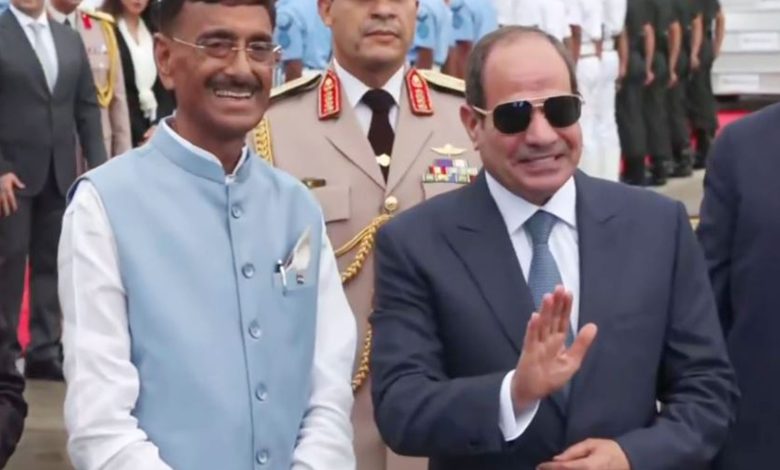
Egyptian President Abdel Fattah El-Sisi has emerged as an important figure at the 18th BRICS Summit in New Delhi, representing a strategic bridge linking Africa, the Arab world, the Mediterranean and Asia. Since becoming a full BRICS member in 2024, Egypt has participated in the summit for the third consecutive year, with El-Sisi presenting BRICS as an important platform for practical economic cooperation among developing countries and for advancing a more balanced international order.
A central message in El-Sisi’s remarks has been that security and development cannot be treated separately. He has emphasized that instability in West Asia can quickly affect the global economy, energy markets, trade, maritime navigation and supply chains. Given Egypt’s strategic geography and the importance of the Suez Canal to world trade, he has placed particular emphasis on protecting the security and freedom of international shipping.
International media have linked El-Sisi’s role closely to Egypt’s strategic location. Situated at the crossroads of the Suez Canal, the Red Sea, the Mediterranean, the Arab world and Africa, Egypt occupies a critical position in intercontinental trade. Its participation in BRICS therefore carries significance not only in political terms, but also in relation to global shipping, ports, energy transit and logistics networks.
El-Sisi has called for BRICS cooperation to move toward concrete projects and programs. In his view, the capabilities of member states should not remain confined to political declarations, but should be used to advance sustainable development, raise productivity, reduce technological gaps and create new sources of economic growth. Egypt therefore sees BRICS as a tool for strengthening the long-term economic foundations of developing countries.
Development finance has been another major priority. Many developing countries are struggling with rising debt burdens and limited access to affordable financing, and El-Sisi has argued for reform of the international financial architecture, wider access to concessional financial instruments and a stronger role for the New Development Bank. Egypt believes deeper financial cooperation within BRICS could create more practical options for meeting development needs.
Food, water and energy security have also featured prominently in El-Sisi’s approach. He has stressed that developing countries are often hit hardest when food and energy prices rise or supply chains are disrupted. Egypt has therefore supported stronger cooperation in sustainable agriculture, water-resource management, energy security and regional supply systems.
On climate change, El-Sisi has emphasized the need for a fair and realistic energy transition that takes into account the circumstances of developing economies. He has argued that countries moving toward lower-carbon growth need adequate climate finance, technology transfer and capacity-building. Egypt’s own experience in balancing development needs with environmental responsibility gives it a potentially important role in BRICS discussions on green transition.
Relations with India have also been an important part of El-Sisi’s presence in New Delhi. Egypt views India as a major strategic partner and an increasingly influential actor in regional and global affairs. Cairo sees strong potential for cooperation in the Suez Canal Economic Zone, ports, energy, pharmaceuticals, electronics, automotive components, green hydrogen and information technology.
El-Sisi has also promoted Egypt as a production and trade hub connecting Indian companies with African, Arab and European markets. Greater cooperation in local manufacturing, technology transfer and research could help move India-Egypt relations beyond trade toward deeper industrial and innovation partnerships.
El-Sisi has also held discussions with Russian President Vladimir Putin on bilateral relations and broader regional developments. Their engagement has reflected Egypt’s long-standing interest in regional stability, the Palestinian issue and diplomatic solutions to conflicts affecting the Middle East and Africa.
His interaction with Indonesian President Prabowo Subianto has further highlighted Egypt’s wider Global South diplomacy. Cooperation linking Africa, the Arab region and Southeast Asia could create new opportunities in trade, investment, food security and development partnerships.
For international media, El-Sisi is also significant because Egypt does not present BRICS as a structure directed against any particular country. Cairo has emphasized dialogue, development and economic cooperation while preserving strategic balance, independent national decision-making and diverse relations with multiple power centers.
While Xi Jinping has highlighted China’s economic and industrial strength, Vladimir Putin Russia’s strategic influence, Narendra Modi India’s diplomatic balance, Cyril Ramaphosa Africa’s development aspirations, Masoud Pezeshkian Iran’s economic sovereignty, Prabowo Subianto the Bandung Spirit and the UAE Gulf connectivity, El-Sisi has brought Egypt’s distinctive geopolitical role as a bridge between Africa, the Arab world and global trade routes into sharper focus.
The positive message from New Delhi is that BRICS can strengthen its influence across the Global South if it produces practical results in development finance, food and energy security, climate cooperation, trade connectivity and regional stability.
In this context, Abdel Fattah El-Sisi’s role stands out as an important voice connecting Africa, the Arab world and Asia through economic cooperation, strategic geography and multilateral diplomacy.