Abiy Ahmed Emerges as a Rising BRICS Voice as Media Focus on Africa’s New Confidence, India Partnership and the Global South

Dragon Media News Desk
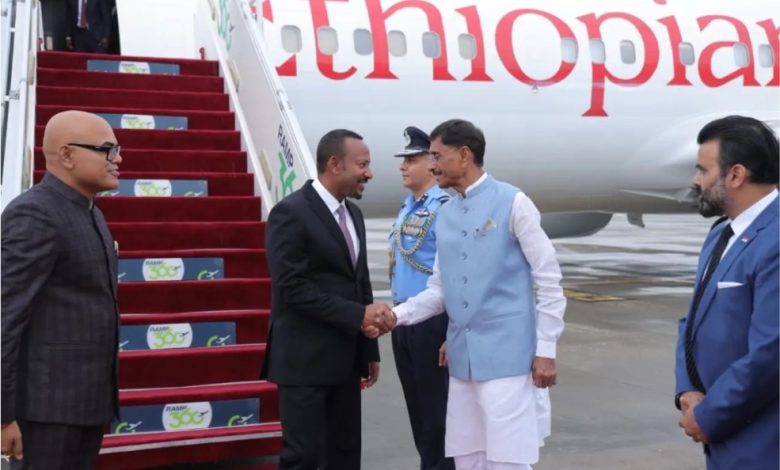
Ethiopian Prime Minister Abiy Ahmed Ali has emerged as an important figure at the 18th BRICS Summit in New Delhi, representing Africa’s changing political and economic role in the international system. Ethiopia’s development ambitions, large young population, strategic location and growing demand for stronger representation of the Global South have given its participation particular significance within the expanded BRICS framework.
Ethiopia is not simply another African member of BRICS. Addis Ababa, home to the headquarters of the African Union, has long served as one of the continent’s most important diplomatic centers. Abiy’s participation in New Delhi is therefore being viewed not only through the lens of Ethiopia’s national interests, but also in the wider context of Africa’s development aspirations and its growing voice in international institutions.
Abiy’s meeting with Indian Prime Minister Narendra Modi has attracted particular attention. The two leaders reviewed progress in economic cooperation, defense and security ties, capacity-building and other areas of bilateral engagement. Their discussions also covered regional and international developments and the importance of continuing close cooperation in multilateral forums.
The New Delhi meeting builds on growing high-level engagement between India and Ethiopia. Recent exchanges indicate that the relationship is moving beyond traditional diplomatic friendship toward a wider partnership involving economic development, security, technology and human-capital cooperation.
India has viewed Ethiopia’s participation in BRICS as an important contribution to strengthening the collective voice of the Global South. Africa’s growing population, rapid urbanization, agricultural potential, industrialization requirements and young workforce mean that institutions such as BRICS could play a significant role in connecting the continent more effectively with investment, technology and global markets.
Under Abiy’s leadership, Ethiopia has placed infrastructure, energy, manufacturing, agriculture and the digital economy among the central pillars of its economic transformation. Deeper cooperation with BRICS countries in investment, technology, energy, transport and industrial capacity could provide Addis Ababa with a broader range of development partners and financing options.
Ethiopia’s geographical position also gives it strategic importance. Located in the Horn of Africa, the country is closely connected to the Red Sea, the Gulf region and East African trade networks. Ethiopia’s economic stability and infrastructure development therefore have implications beyond its national borders, affecting regional trade, transportation and supply chains.
Development finance is another important dimension of Ethiopia’s BRICS membership. African economies require substantial long-term investment in infrastructure, energy, industry and human capital. Institutions such as the New Development Bank and other BRICS mechanisms could potentially broaden financing choices for projects designed around national and regional development priorities.
Abiy’s presence also illustrates the growing diversity of African representation within BRICS. South Africa brings one of the continent’s most developed industrial and financial systems, Egypt connects North Africa with the Arab world and major global trade routes, while Ethiopia brings the perspectives of East Africa, the Horn of Africa and continental diplomacy. Together, they make Africa’s presence within the expanded grouping more diverse and representative.
Capacity-building is another important area in India-Ethiopia relations. Cooperation in education, skills development, technology, administrative training and institution-building can strengthen the direct exchange of knowledge and expertise between developing countries. Such practical partnerships demonstrate the potential value of South-South cooperation beyond political declarations.
International media attention around Abiy also reflects a wider shift in Global South diplomacy. Developing countries are increasingly seeking diversified relationships rather than relying exclusively on traditional centers of power. Ethiopia’s engagement with China, India, Russia, Gulf countries and other emerging economies reflects this broader trend.
BRICS offers Ethiopia an important platform for such multidirectional diplomacy. The grouping brings together major energy producers, industrial powers, agricultural economies, technology centers and enormous consumer markets, giving Ethiopia opportunities to connect its national development strategy with a wider range of partners.
While Xi Jinping represents China’s economic and industrial strength, Vladimir Putin Russia’s strategic influence, Narendra Modi India’s diplomatic balancing role, Cyril Ramaphosa South Africa’s development vision and Abdel Fattah El-Sisi Egypt’s bridge between Africa and the Arab world, Abiy Ahmed has brought East Africa’s development aspirations, young population and demand for more inclusive Global South representation into the BRICS conversation.
The positive message from New Delhi is that the influence of BRICS will not be measured only by the combined power of its largest economies. Its credibility as a Global South platform will also depend on whether it can connect fast-changing regions such as Africa with infrastructure, investment, technology, skills and economic opportunities.
From this perspective, Abiy Ahmed’s participation represents more than Ethiopia’s presence at the summit. It reflects a wider effort by the Horn of Africa, East Africa and the Global South to secure a more active, confident and influential place in the emerging international economic order.