Anwar Ibrahim Brings a Balanced Voice to BRICS as Media Focus on ASEAN, Inclusive Growth and New Cooperation with India

Dragon Media News Desk
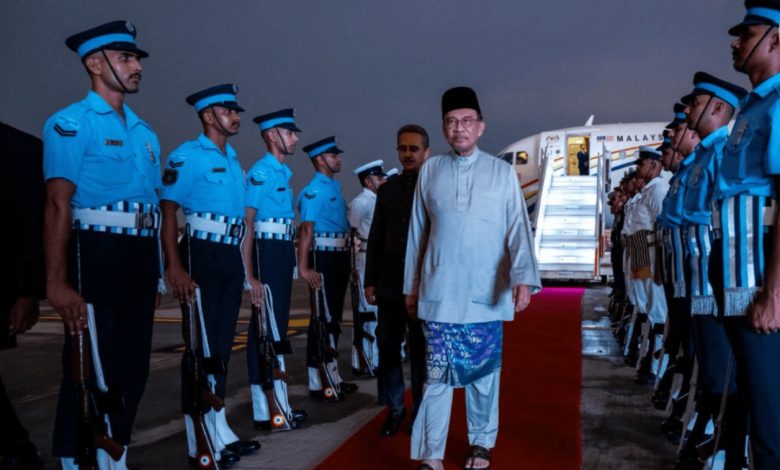
Malaysian Prime Minister Anwar Ibrahim has emerged as a balanced and pragmatic Southeast Asian voice at the 18th BRICS Summit in New Delhi. Malaysia’s participation as a BRICS partner country has highlighted new possibilities for stronger economic, political and technological linkages between BRICS and ASEAN.
A defining feature of Anwar’s diplomacy is his effort to maintain parallel relations with different major powers rather than aligning exclusively with any one bloc. Malaysia has deep economic ties with China, is expanding strategic and commercial cooperation with India, maintains technology and investment links with the United States and Europe, and continues to place ASEAN at the center of its regional diplomacy. This multidirectional approach has given Anwar’s BRICS participation particular significance.
Anwar has emphasized that the future of the global economy should be based on inclusive development. Rapid economic growth alone, in his view, is not enough. Its benefits must reach ordinary citizens, developing countries should have fairer access to technology, investment, finance and markets, and the international economic system should not deepen inequalities between richer and developing nations.
For Malaysia, engagement with BRICS is not an ideological choice. Kuala Lumpur sees the grouping as a practical platform for expanding access to new markets, investment, technology, food and energy security, and South-South cooperation. In this respect, Anwar’s approach is close to India’s view that BRICS should function as a platform for cooperation rather than as a bloc directed against any country.
Anwar’s interaction with Indian Prime Minister Narendra Modi in New Delhi has also drawn attention. India and Malaysia have considerable potential to expand cooperation in trade, investment, defense, technology, the digital economy, education and people-to-people relations. As political dialogue improves, opportunities for deeper engagement in defense cooperation and emerging technologies are also increasing.
Malaysia is an important hub in the global electrical and electronics supply chain. Its strengths in semiconductors, electronic equipment, data centers, digital services and high-technology industries could open new opportunities for industrial cooperation with BRICS members and partner countries. As artificial intelligence and the digital economy expand rapidly, Malaysia is seeking to position itself as a major technology center in Asia.
Energy is another important area of Malaysian strength. Alongside its traditional oil and natural gas sector, Malaysia is also giving greater priority to renewable energy and the transition toward a lower-carbon economy. The presence within BRICS of major energy producers, large consumer markets and countries investing heavily in green technologies creates opportunities for Malaysia to cooperate in both energy security and clean-energy transformation.
Malaysia’s international experience in Islamic finance could also be valuable for BRICS. Kuala Lumpur is one of the world’s leading centers of Islamic finance. Its expertise could add diversity to BRICS efforts to develop financing instruments for infrastructure, green projects, small and medium-sized enterprises and development initiatives.
Under Anwar’s leadership, Malaysia has continued to emphasize ASEAN centrality. Its growing engagement with BRICS is therefore being viewed not as an alternative to ASEAN, but as a complementary opportunity. Kuala Lumpur is seeking to expand trade and investment with BRICS while preserving Southeast Asia’s own regional institutions and its independent diplomatic identity.
This approach is particularly important because Southeast Asia has become a sensitive arena of strategic competition between the United States and China. Malaysia has generally preferred dialogue, open trade and economic cooperation over rigid alignment. Anwar’s diplomatic language reflects this effort to maintain balance.
The cultural dimension of Anwar’s presence in New Delhi has also attracted attention. Beyond formal diplomacy, his familiarity with India and his accessible public style have helped reinforce the idea that Malaysia-India relations are connected not only through governments, but also through society, culture and long-standing people-to-people ties. Such connections can contribute to stronger long-term diplomatic confidence.
Malaysia also brings a distinctive perspective to the wider Global South debate. It is not a major power, but it is an open, middle-sized economy, an important manufacturing center and an influential Southeast Asian country. Anwar’s emphasis on protecting the interests of middle and developing economies therefore adds greater diversity to BRICS discussions.
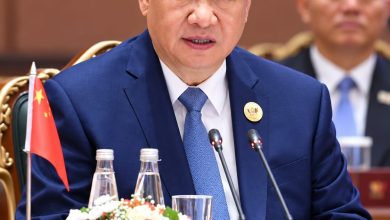
While Xi Jinping represents China’s industrial strength, Vladimir Putin Russia’s strategic influence, Narendra Modi India’s diplomatic balancing role, Prabowo Subianto Indonesia’s Bandung Spirit and Gulf leaders the power of energy and investment, Anwar Ibrahim has added ASEAN pragmatism, openness and inclusive development to the BRICS conversation.
The positive message from New Delhi is clear. In a changing international order, smaller and middle powers do not necessarily have to choose one side in order to protect their interests. They can cooperate with multiple centers of power while maintaining their independence, regional identity and economic priorities.
In this sense, Anwar Ibrahim’s participation in BRICS represents more than Malaysia’s diplomatic presence. It reflects the possibility of building a stronger bridge between BRICS and ASEAN, expanding Southeast Asia’s economic influence and making the Global South more diverse, connected and inclusive.