Belarus Brings a Balanced Presence to BRICS as Attention Turns to Multipolarity, Industrial Cooperation and Eurasian Connectivity

Dragon Media News Desk
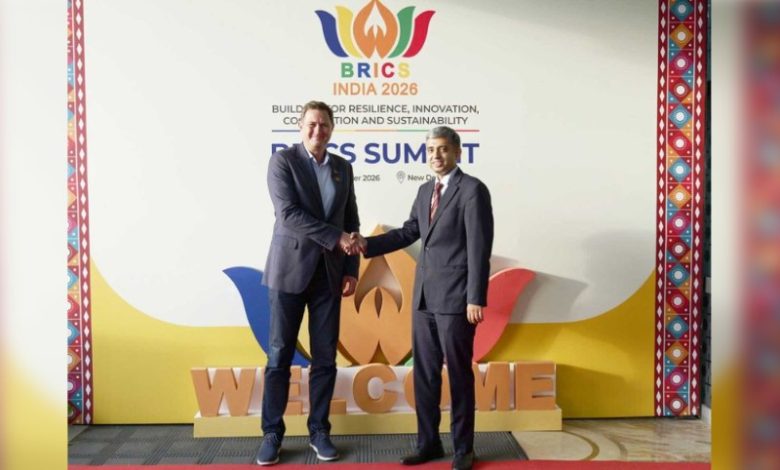
Belarus’ participation as a BRICS partner country at the 18th BRICS Summit in New Delhi has highlighted the grouping’s expanding diplomatic reach into Europe and Eurasia. Foreign Minister Maxim Ryzhenkov represented the government of President Alexander Lukashenko, with his presence reflecting Belarus’ growing interest in deeper bilateral and multilateral cooperation with India and the wider BRICS community.
As a BRICS partner country, Belarus is gradually strengthening its relationship with the grouping. Its capabilities in industrial manufacturing, agricultural machinery, heavy equipment, food processing, pharmaceuticals, chemicals and technology offer potential areas of cooperation with the large markets and developing economies represented within BRICS.
For Minsk, BRICS is therefore more than a political dialogue platform. It also provides an opportunity to expand trade, industrial partnerships and access to new markets at a time when the structure of the global economy is becoming increasingly diversified.
Multipolarity and the expansion of economic relations with different centers of global power have become increasingly important elements of Belarusian foreign policy. While maintaining extremely close political and economic relations with Russia, Belarus has also been expanding contacts with China, India, Central Asia, the Middle East and other parts of the Global South.
Its engagement with BRICS forms part of this broader diplomatic and economic shift toward Asia, Eurasia and emerging markets. Minsk sees greater diversification of partnerships as a way to strengthen economic resilience and widen its international options.
India and Belarus also have considerable potential to expand cooperation in trade, manufacturing, pharmaceuticals, agriculture, science, education and technology. India’s enormous market and Belarus’ industrial expertise offer areas of possible complementarity, making the New Delhi summit an opportunity to deepen practical economic engagement between the two countries.
Belarus’ close connection with Eurasian economic structures is another factor that gives it relevance to BRICS. Located at the crossroads between Europe and Eurasia, the country occupies an important position in land transportation, industrial supply chains and east-west commercial connectivity.
As BRICS members increasingly discuss diversified trade routes, resilient supply chains and greater economic connectivity, Belarus’ industrial and logistical experience could become useful in developing broader Eurasian cooperation.
Belarus generally views BRICS not as an anti-Western military alliance, but as a mechanism for expanding political and economic cooperation among emerging and developing economies in a changing international system. Sovereignty, non-interference, equality among states and diversification of economic options remain important themes in Minsk’s approach.
Belarus’ participation in New Delhi also illustrates the growing geographical reach of BRICS. The grouping’s network is no longer confined to Asia, Africa, the Middle East and Latin America. Through its partner-country framework, it is increasingly building institutional links with states across Eurasia and parts of Europe.
The participation of partner countries has given BRICS a more flexible structure for engaging states beyond its full membership. This wider network allows the grouping to expand political dialogue, economic cooperation and regional connectivity without requiring every participating country to immediately become a full member.
Under Alexander Lukashenko, Belarus has increasingly prioritized the diversification of relations with Asia and the Global South. Foreign Minister Ryzhenkov’s presence in New Delhi reflects the continuation of that strategy, with trade, industry, agriculture, technology and transportation among the areas where Minsk hopes to develop more practical partnerships.
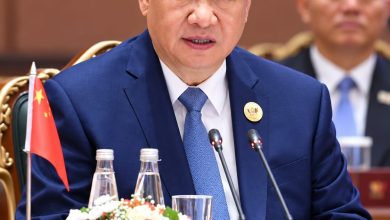
While Xi Jinping represents China’s industrial strength, Vladimir Putin Russia’s strategic influence, Narendra Modi India’s diplomatic balancing role and leaders from across the Global South bring their own development priorities, Belarus adds the perspective of Eurasian industrial capacity and greater east-west economic connectivity to the BRICS conversation.
The positive message from New Delhi is that medium-sized industrial countries can broaden their economic and diplomatic options by developing relationships with diverse markets, new commercial routes and multilateral platforms.
In this sense, Belarus’ participation in BRICS represents more than the formal presence of a partner country. It demonstrates the grouping’s expanding reach into Eurasia and its growing capacity to connect countries with different political systems, economic structures and regional priorities within a common framework of cooperation.