Shavkat Mirziyoyev Brings a Development-Focused Voice to BRICS as Media Focus on Central Asian Connectivity, Industrialization and New Economic Partnerships

Dragon Media News Desk
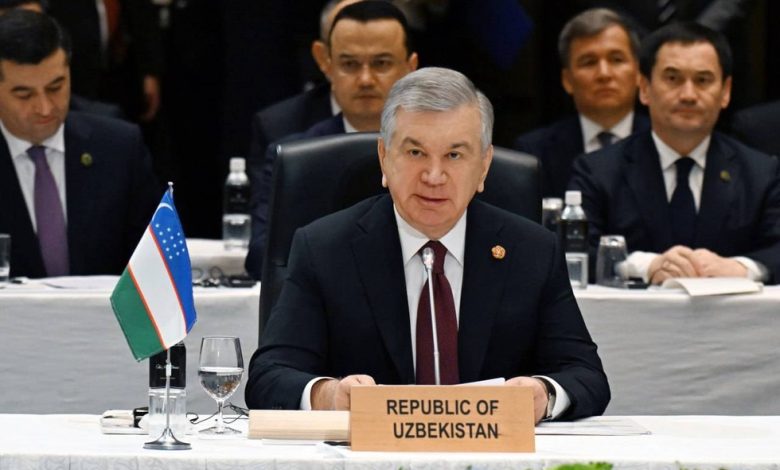
Uzbek President Shavkat Mirziyoyev has emerged as an important voice at the 18th BRICS Summit in New Delhi, representing Central Asia’s economic transformation, regional connectivity and expanding cooperation with the Global South. As a BRICS partner country, Uzbekistan has placed trade, investment, industrialization, transport, energy, agriculture and technology among its major areas of engagement.
Under Mirziyoyev’s leadership, Uzbekistan has gradually opened its economy, placing greater emphasis on foreign investment, private enterprise, industrial production and regional trade. This transformation has made engagement with BRICS more than a matter of political dialogue for Tashkent. It is increasingly seen as a practical channel for accessing new markets, technology, capital and development partnerships.
Uzbekistan’s location at the heart of Central Asia gives its BRICS participation additional significance. Its regional position connects it with Kazakhstan, Kyrgyzstan, Tajikistan, Turkmenistan and Afghanistan, while wider transport networks link Central Asia with China, Russia, South Asia and Europe. As new trade routes develop, Uzbekistan could become an increasingly important hub in continental connectivity.
Tashkent has shown particular interest in improving direct and efficient economic links with India. As a landlocked country, access to seaports is a strategic priority for Uzbekistan. Transport corridors connecting India, Iran and Central Asia, including routes associated with Chabahar Port and broader north-south connectivity, could help bring Uzbek producers and markets closer to South Asia.
India and Uzbekistan have considerable potential for cooperation in pharmaceuticals, information technology, education, health, agriculture, energy, minerals and tourism. India’s strengths in pharmaceuticals and digital technologies could support Uzbekistan’s modernization, while Uzbekistan’s market and regional position could offer Indian companies wider access to Central Asia.
Industrialization remains a central element of Mirziyoyev’s economic agenda. Uzbekistan is seeking to move beyond an economic structure heavily dependent on raw materials by expanding textiles, food processing, chemicals, automotive production, construction materials, mining and higher-value manufacturing. Cooperation with major BRICS industrial economies could accelerate this transformation.
Energy is another area undergoing significant change. Alongside its traditional natural gas base, Uzbekistan is expanding investment in solar and wind power. Rapid industrialization and population growth are increasing electricity demand, creating a need for international cooperation in clean energy, energy efficiency and modern power infrastructure.
Agriculture remains another important sector. Climate change, water constraints and the need to modernize irrigation present long-term challenges. Cooperation with India, China and other BRICS economies in digital agriculture, water-saving technologies, modern irrigation, food processing and agricultural value chains could generate substantial practical benefits.
Water security is particularly important for Uzbekistan and the wider Central Asian region. Rivers and water resources cross national boundaries, making regional coordination, scientific management and modern technology essential for long-term stability. Mirziyoyev’s emphasis on cooperation among Central Asian states could be strengthened by additional technological and financial support from BRICS partners.
Uzbekistan’s young population and emerging digital economy also form an important part of its development story. Tashkent is seeking to expand information technology, digital services, startups and technology education as new sources of employment. Cooperation with India’s IT sector and China’s digital and industrial capabilities could create additional opportunities.
Mirziyoyev’s foreign policy is often characterized by pragmatism and diversification. Uzbekistan maintains close ties with Russia and China while simultaneously expanding partnerships with India, Europe, Gulf countries, South Korea, Japan and other parts of the Global South. BRICS partnership fits naturally within this multidirectional strategy.
Uzbekistan has also placed greater emphasis in recent years on cooperation within Central Asia itself. Improved border connectivity, trade, transport, energy links and people-to-people exchanges have helped create a more cooperative regional environment. Stronger connections with large BRICS markets could extend the benefits of this regional integration.
Mirziyoyev’s participation also underlines the growing importance of Central Asia as more than a geopolitical buffer between major powers. With its energy resources, minerals, young populations, agricultural capacity, industrial ambitions and strategic transport corridors, the region has the potential to become an important economic bridge between East and West and between North and South.
While Xi Jinping represents China’s industrial strength, Vladimir Putin Russia’s strategic influence, Narendra Modi India’s diplomatic balancing role and Kassym-Jomart Tokayev Kazakhstan’s energy and mineral capacity, Shavkat Mirziyoyev has brought Uzbekistan’s industrial transformation, young workforce and connectivity between South and Central Asia into the wider BRICS agenda.
The positive message from New Delhi is clear. BRICS will become more influential if its vast markets, capital and technology can be transformed into new industries, employment, infrastructure and trade opportunities in rapidly changing regions such as Central Asia.
From this perspective, Mirziyoyev’s participation represents more than Uzbekistan alone. It reflects the emergence of Central Asia as a region with its own economic ambitions, diversified diplomacy and growing importance within the wider Global South.