Sihasak Phuangketkeow Brings Pragmatic Diplomacy to BRICS as Media Focus on ASEAN, Economic Resilience and Inclusive Global Growth

Dragon Media News Desk
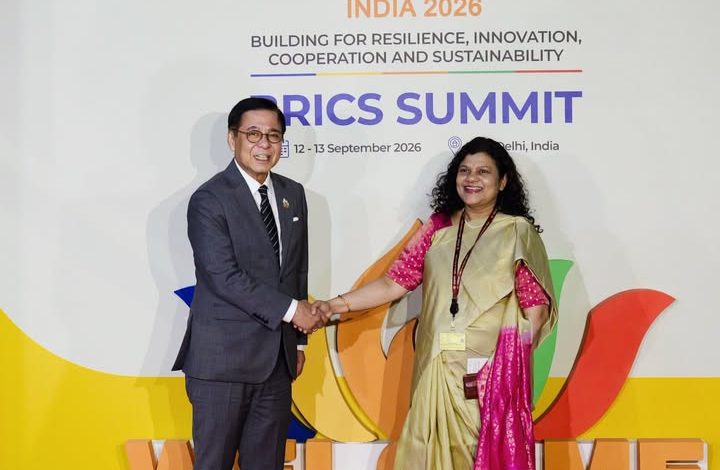
Thailand’s Deputy Prime Minister and Foreign Minister Sihasak Phuangketkeow has represented Southeast Asia’s pragmatic economic diplomacy, ASEAN centrality and expanding engagement with the Global South at the 18th BRICS Summit in New Delhi. Leading the Thai delegation on behalf of the prime minister, Sihasak’s participation has highlighted the growing potential for stronger economic and institutional links between BRICS and ASEAN.
As a BRICS partner country, Thailand has approached the grouping not as part of political polarization, but as an additional platform for trade, investment, innovation, food security, technology and sustainable development. Bangkok’s position reflects a broader belief that middle-sized economies should diversify their partnerships rather than depend excessively on any single center of global power.
Resilience, innovation, cooperation and sustainability have been central themes in Thailand’s diplomatic approach. With the world economy facing war, trade tensions, supply-chain disruptions, climate change and technological rivalry, Thailand has emphasized that economic security for developing countries cannot be measured only by gross domestic product. Food, energy, technology, health and supply systems are also becoming essential foundations of national and regional resilience.
ASEAN remains at the heart of Thailand’s regional diplomacy. Bangkok wants to preserve ASEAN as Southeast Asia’s primary regional framework while expanding cooperation with BRICS. In this sense, Thailand does not view BRICS as an alternative to ASEAN, but as a complementary platform capable of creating additional economic and diplomatic opportunities.
Sihasak’s presence in New Delhi can therefore also be seen as part of a broader effort to build bridges between BRICS and ASEAN. With China, India and Indonesia already playing important roles within BRICS, and Malaysia, Thailand and Vietnam participating as partner countries, Southeast Asian representation in the wider BRICS framework is becoming increasingly significant.
India-Thailand relations form another important foundation for this engagement. Cooperation between the two countries has expanded in trade, tourism, maritime connectivity, information technology, pharmaceuticals, agriculture, education, defense and security. The Bay of Bengal also provides a natural geographic link, while overland connectivity through Myanmar could eventually strengthen commercial ties between northeastern India and Thailand.
India’s Act East policy and Thailand’s own regional connectivity ambitions share several common objectives. Better roads, ports, maritime routes and digital links could significantly increase the movement of goods, services, tourists and investment between South and Southeast Asia. BRICS could provide an additional multilateral framework for supporting such connectivity.
Thailand’s industrial base also gives it particular relevance to BRICS cooperation. The country has developed strong regional capabilities in automobiles and auto parts, electronics, food processing, petrochemicals, healthcare and tourism. Its transition toward electric vehicles, battery technologies, digital manufacturing and higher-value industries is creating new demand for investment and technological partnerships.
The electric vehicle sector is especially important. Thailand is seeking to transform its traditional automotive manufacturing strength into a new-generation industry built around cleaner energy and advanced technology. Growing Asian investment and shifting global demand are already pushing the country into a new phase of industrial development. Cooperation with India in electric vehicles, batteries, software, digital services and clean energy could become increasingly important.
Food security is another major Thai strength. Thailand has a well-established role in rice production, food processing, agricultural exports and global food supply. As climate change, water stress and agricultural risks increase, future food security will depend more heavily on technology, research and resilient supply chains. Expanding agricultural and food trade with BRICS economies could therefore offer important long-term opportunities.
Tourism and people-to-people ties also remain important pillars of Thailand’s international engagement. As one of the world’s leading tourism destinations, Thailand attracts large numbers of visitors from India, China, Russia and other BRICS economies. Easier travel, stronger aviation links and deeper cultural exchanges can strengthen both the service economy and long-term public trust.
Thailand is also interested in expanding cooperation in the digital economy, artificial intelligence and cybersecurity. As trade, finance, tourism, public services and manufacturing become increasingly digital, the risks associated with cybercrime and data security are also growing. Information sharing, capacity building and technological cooperation could therefore become practical areas of BRICS partnership.
Thai diplomacy has traditionally been flexible and multidirectional. The United States remains one of Thailand’s longstanding security partners, China is one of its most important economic partners, relations with India are expanding, and Japan has played a major role in Thailand’s industrial development for decades. Engagement with BRICS therefore fits naturally into Bangkok’s broader strategy of maintaining diversified relationships.
This balanced approach is particularly relevant in today’s Southeast Asia. As competition between the United States and China intensifies, most ASEAN countries prefer to preserve strategic autonomy rather than align completely with either side. Sihasak’s participation at BRICS reflects this pragmatic regional instinct.
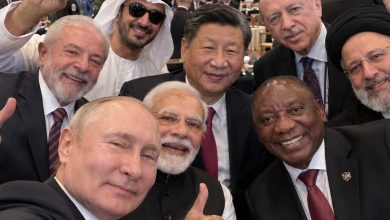
While Xi Jinping represents China’s industrial strength, Vladimir Putin Russia’s strategic influence, Narendra Modi India’s diplomatic balancing role, Anwar Ibrahim Malaysia’s emphasis on inclusive development and Vietnam its manufacturing and technological transformation, Sihasak Phuangketkeow has brought Thailand’s ASEAN-centered, practical and economically driven diplomacy into the wider BRICS conversation.
The message from New Delhi is positive and clear. New global partnerships can be built without weakening regional institutions. Thailand’s effort to expand cooperation with BRICS while preserving ASEAN centrality illustrates how middle powers can widen their international options without sacrificing regional identity.
In this sense, Sihasak Phuangketkeow’s participation represents more than Thailand’s formal presence at the summit. It highlights the country’s potential role as a practical bridge between Southeast Asia and the Global South, between ASEAN and BRICS, and between established industries and the emerging technology-driven economy.