Ferdinand Marcos Jr. Makes Historic BRICS Appearance as Media Focus on ASEAN, Food and Energy Security, and New Economic Cooperation with India

Dragon Media News Desk
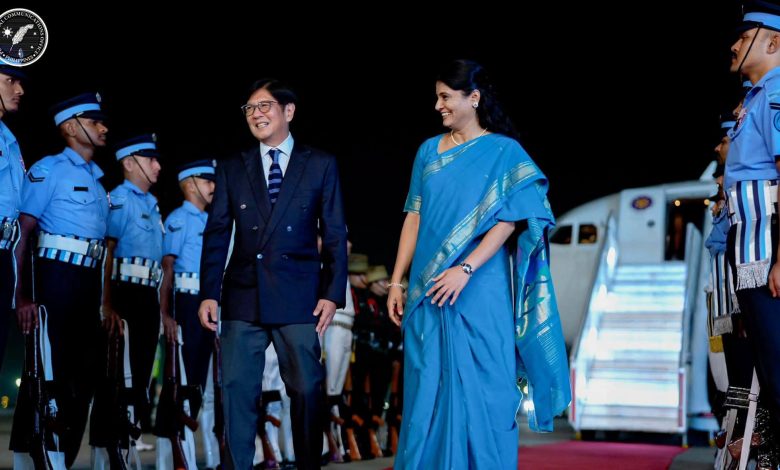
Philippine President Ferdinand Marcos Jr.’s participation in the 18th BRICS Summit in New Delhi has carried particular diplomatic significance for Southeast Asia. As the first Philippine president to attend a BRICS summit, Marcos has used the gathering to present not only Manila’s priorities but also the broader concerns of ASEAN at a time when the regional organization is seeking stronger engagement with multiple centers of global economic power.
The Philippines is neither a BRICS member nor a partner country. Marcos attended in his capacity as leader of the Philippines and as chair of ASEAN in 2026, following an invitation from Indian Prime Minister Narendra Modi. This distinction makes his presence especially significant. As ties between ASEAN and the expanded BRICS framework deepen, Manila has an opportunity to help develop practical economic and political communication between the two groupings.
Ahead of his New Delhi visit, Marcos identified peace, inclusive economic growth, food security, energy security and a rules-based international order among his principal priorities. His message comes at a time when the global economy is confronting major changes, trade pressures, armed conflicts, energy uncertainty and supply-chain vulnerabilities. For developing countries, economic stability and strategic resilience are therefore becoming increasingly important.
Under the Philippines’ ASEAN chairmanship in 2026, Manila has emphasized peace and security, new pathways for development and strengthening the capabilities of citizens. Marcos has brought these priorities into the BRICS conversation, demonstrating that cooperation between major regional and international platforms can be more productive than competition. As the global economic system changes, stronger connections between regional institutions could create new opportunities for middle-sized economies.
Food security is particularly important for the Philippines. Its archipelagic geography, large population, exposure to natural disasters and vulnerability to climate change have made reliable food supplies an issue of national security. Expanded cooperation with BRICS economies in agricultural technology, irrigation, improved seeds, food storage, supply chains and agricultural trade could provide Manila with important long-term benefits.
Energy security is equally significant. Rapid economic growth and urbanization are increasing electricity demand across the Philippines, compelling the country to diversify its energy sources. Renewable energy, power storage, transmission infrastructure, clean technologies and reliable conventional energy supplies all form part of this challenge. Dialogue with major BRICS energy producers, investors and technology providers could broaden the Philippines’ options.
Marcos’ New Delhi visit has also highlighted the rapidly expanding relationship between India and the Philippines. The two countries elevated their ties to a strategic partnership in 2025, creating a stronger framework for cooperation in defense and maritime security, science and technology, digital innovation, tourism, culture and economic development.
Both sides have sought to translate their strategic partnership into concrete projects through a multi-year action framework. The Marcos-Modi dialogue in New Delhi can therefore be viewed as part of a broader effort to convert political confidence into deeper trade, investment, infrastructure, technological and people-to-people cooperation.
Marcos has also placed considerable emphasis on engagement with Indian investors. Earlier economic exchanges between the two countries generated substantial investment commitments, and the latest visit provides an opportunity to advance implementation while identifying additional projects. The BRICS summit has therefore served Manila not only as a diplomatic platform but also as an instrument of economic diplomacy.
Rail infrastructure is one area in which the Philippines has shown interest in Indian experience. Manila is examining opportunities to strengthen transport networks in Mindanao, Cebu and the wider national railway system. India’s experience in constructing and operating extensive rail networks across diverse terrain could provide useful technical knowledge for Philippine infrastructure projects.
Space technology is another emerging field of cooperation. Satellite systems are increasingly important for disaster monitoring, weather forecasting, agriculture, maritime surveillance, telecommunications and emergency management. For a country highly exposed to typhoons, earthquakes and other natural hazards, cooperation with India’s established space capabilities could have direct developmental value.
The digital economy presents further possibilities. The Philippines already has a strong services sector, business-process industry and growing digital-payment ecosystem, while India has extensive capabilities in software, digital public infrastructure, financial technology and artificial intelligence. Greater cooperation could open new opportunities in employment, digital services, innovation and technology-driven growth.
Marcos’ participation also has strategic significance for ASEAN. Member states are developing different levels of engagement with BRICS. Indonesia is a full member, while Malaysia, Thailand and Vietnam participate as partner countries. The Philippines, by contrast, has taken a more cautious approach, observing the evolution of BRICS without making an immediate decision on membership or partner status.
That cautious position is consistent with Manila’s wider foreign policy. The Philippines maintains a longstanding security alliance with the United States, deep economic ties with Japan and South Korea, major trade relations with China, and an increasingly important strategic partnership with India. Engagement with BRICS therefore need not replace any existing relationship. It can instead provide another channel for exploring economic and diplomatic opportunities.
At a time of intensifying major-power competition in Southeast Asia, Marcos’ appearance at BRICS sends an important message. Regional countries do not necessarily have to place security partnerships and economic relationships within a single geopolitical framework. They can cooperate with different powers in different fields while protecting national interests and ASEAN’s collective role.
The Philippine presence is also significant for BRICS itself. ASEAN represents one of the world’s most dynamic economic regions, and deeper engagement with Southeast Asia is increasingly important for the grouping. The participation of the ASEAN chair creates an opportunity to expand dialogue on trade, the digital economy, food security, energy, climate change, infrastructure and connectivity.
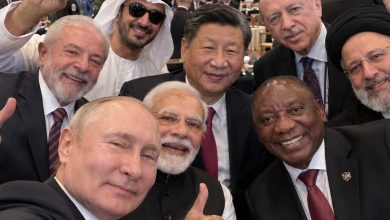
While Narendra Modi represents India’s diplomatic balancing role, Xi Jinping China’s industrial strength, Vladimir Putin Russia’s strategic influence, and Southeast Asian BRICS members and partners bring their own economic priorities, Marcos has connected ASEAN’s collective perspective, food and energy security, and practical regional cooperation with the broader New Delhi agenda.
His participation also highlights a larger question about BRICS’ future influence. The grouping’s importance will not be measured only by the number of its members. It will also depend on its ability to build constructive relationships with major regional organizations outside the bloc. A practical and trust-based relationship with ASEAN could significantly expand BRICS’ economic reach across Asia.
The positive message from New Delhi is that, in a changing international order, countries should expand rather than narrow the channels of dialogue. Cooperation remains possible across different political and economic frameworks on common challenges such as peace, food and energy security, digital transformation, infrastructure and inclusive development.
In this sense, Ferdinand Marcos Jr.’s participation in the 18th BRICS Summit represents more than a historic protocol milestone. As the first Philippine president to attend the gathering, his presence has opened additional space for dialogue among the Philippines, ASEAN, India and the wider Global South. It also demonstrates how Southeast Asian countries can preserve their independent regional voice while building practical relationships with multiple centers of power in an increasingly multipolar world.