What Does the Xi Jinping–Narendra Modi Dialogue Signal for Asia?


Prem Sagar Poudel
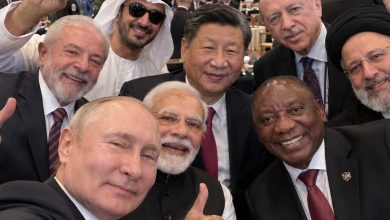
The meeting between Chinese President Xi Jinping and Indian Prime Minister Narendra Modi on the sidelines of the 18th BRICS Summit in New Delhi on September 12, 2026, sent an important political signal about the gradual stabilization of China–India relations. It was not, however, a strategic reconciliation. The boundary dispute remains unresolved, trade is deeply imbalanced, China’s relationship with Pakistan remains a major security concern for India, and India’s participation in the Quad continues to influence Beijing’s strategic calculations. The real significance of the meeting lies in the willingness of both countries to prevent structural competition from turning into permanent confrontation. China–India relations become clearer when viewed through three layers: structural competition, institutional restraint and functional cooperation.
Structural competition between China and India is linked to the boundary dispute, regional influence, maritime power, technology, supply chains and the balance of power in Asia. Institutional restraint refers to the process of containing crises through military contacts, border mechanisms, Special Representatives talks, hotlines and political understandings. Functional cooperation covers areas where common interests continue to exist despite strategic differences, including trade, climate change, health, technology and multilateral institutions. Whether the current improvement can endure will depend on whether these three layers can function simultaneously.
Chinese and Indian official accounts of the New Delhi talks pointed in broadly the same direction but revealed notable differences in priority. According to the Chinese side, Xi Jinping presented four principles: understanding each other through an objective strategic perspective, expanding mutually beneficial cooperation, managing differences through respect and understanding, and strengthening open and inclusive multilateral cooperation.
The Chinese account attributed to Modi the view that India and China should be partners rather than competitors and should regard each other’s development as an opportunity rather than a threat. The same account also referred to India’s policies on Taiwan and Xizang and to preventing anti-China activities from Indian territory. The Indian public account did not reproduce those formulations in the same way. It is therefore more factually appropriate to treat such sensitive statements as part of the Chinese official presentation rather than as an undisputed new declaration of Indian policy.
India’s emphasis, by contrast, appears more closely tied to the foundations necessary for normalization. New Delhi has regarded mutual respect, mutual sensitivity and mutual interests as the basis of the relationship, while treating peace and stability along the border as a necessary condition for broader improvement. Trade imbalances, supply chains and predictable market access are also among India’s major concerns.
This is where the principal difference between the two approaches becomes visible. Beijing does not want the boundary question to define the entire relationship. New Delhi, however, sees border stability as the political foundation for broader normalization. These approaches are not mutually incompatible, but the two sides differ over the sequence in which confidence should be rebuilt.
Theoretical Foundations and Historical Lessons
China–India relations cannot be understood through a simple binary of friendship or hostility. Robert Keohane and Joseph Nye’s concept of “complex interdependence” provides a useful framework. Two states can become deeply connected economically and institutionally without eliminating security competition. China and India are a clear example. The 2020 Galwan clash severely damaged political trust, but bilateral trade did not end. Trade did not prevent the crisis, and the crisis did not destroy trade.
An important conclusion follows. Economic interdependence does not automatically guarantee peace, but it raises the cost of prolonged confrontation.
G. John Ikenberry’s concept of strategic restraint provides a second useful framework. A powerful state cannot maintain a stable order through capabilities alone. It also needs rules, institutions and self-restraint that allow the other side to maintain a minimum level of predictability about its behavior. In the China–India context, military hotlines, border meetings, Special Representatives talks and regular political dialogue are important for precisely this reason. They do not eliminate territorial claims, but they reduce the possibility that miscalculation will turn into military confrontation.
M. Taylor Fravel’s studies of the China–India boundary offer another important lesson. Even when a territorial dispute remains unresolved, long-term stability can be maintained if both sides preserve predictable behavior and effective crisis-management mechanisms. Final political settlement is therefore not the only possible basis of stability. Institutional restraint can reduce the risk of violent confrontation even before a settlement is reached.
History has tested this logic repeatedly. Indian Prime Minister Rajiv Gandhi’s 1988 visit to Beijing created the basis for gradually moving the relationship beyond the deep mistrust accumulated after the 1962 war. The central practical conclusion at the time was that cooperation in other areas could proceed even before the boundary dispute was resolved. The 1993 agreement on maintaining peace and tranquility along the border, together with subsequent understandings, institutionalized this approach.
The 2017 Doklam crisis demonstrated both the usefulness and the limitations of that structure. Indian National Security Adviser Ajit Doval travelled to Beijing in July 2017 for a BRICS meeting of security representatives and held discussions with senior Chinese officials. Continued diplomatic contacts subsequently contributed to ending the military standoff.
One frequently repeated claim requires clarification. Available official records do not confirm the assertion that Doval travelled to Chengdu in 2017 as the Prime Minister’s special envoy and concluded a secret six-point agreement. His Special Representatives meeting in Chengdu took place in 2018. A formal six-point consensus emerged later through the Special Representatives mechanism. Serious strategic analysis must clearly distinguish documented facts from diplomatic folklore.
After Doklam, the 2018 Wuhan informal summit sought to rebuild political confidence. The 2019 Mamallapuram dialogue continued that process. The 2020 Galwan confrontation, however, demonstrated that understanding between top leaders alone was insufficient. India reported that 20 of its soldiers were killed, while China later officially confirmed the deaths of four of its troops. Other estimates were circulated, but confirmed facts should be distinguished from unverified claims.
According to India’s official calculation, the India–China border is 3,488 kilometers long. The real problem, however, is not its length but the absence of a shared understanding between the two countries of the entire Line of Actual Control. Different perceptions of patrol areas and control can transform what appears to be a local incident into a national security crisis.
Disengagement, patrol arrangements and the revival of the Special Representatives process since 2024 have reduced immediate tensions. But it would be wrong to treat this as a settlement of the boundary dispute. What has been achieved is stabilization, not settlement.
Trade, Power and External Pressure
The economic relationship presents a different picture from the security relationship. According to India’s Ministry of Commerce and Industry, bilateral merchandise trade between India and China stood at about $127.7 billion in the 2024–25 financial year, while India’s trade deficit reached about $99.2 billion. In the 2025–26 financial year, total merchandise trade increased to about $151.1 billion. India exported approximately $19.47 billion worth of goods to China while importing about $131.63 billion, pushing India’s merchandise trade deficit to around $112.16 billion.
The trend is clear: trade is growing, and the imbalance is deepening.
India remains deeply connected to Chinese supplies of electronics, machinery, active pharmaceutical ingredients, solar equipment and a range of industrial intermediate goods. For China, India is one of the world’s largest and expanding markets. Complete economic separation would therefore be costly for both countries.
Yet asymmetric interdependence creates risks of its own. India’s challenge is not merely to reduce imports from China. It must also secure more predictable access to the Chinese market for pharmaceuticals, agricultural products, services and other competitive sectors. China’s challenge is to ensure clear, stable and predictable rules for investment and trade in non-sensitive sectors of the Indian economy.
There is no single view of China within India’s strategic community. One school considers controlled re-engagement, economic realism and selective normalization necessary while reducing vulnerabilities. Another gives priority to the lessons of Galwan, technological dependence and the balance of power in the Indo-Pacific, arguing for long-term caution toward China. The Indian government’s practical policy appears to lie between these two positions: not complete economic separation, but selective engagement accompanied by tighter security scrutiny in sensitive sectors.
Beijing also faces constraints of its own. China wants to expand trade and investment with India, while simultaneously pursuing industrial upgrading, stronger domestic technological capacity and greater economic self-reliance. Market access should therefore be judged not only by diplomatic assurances but by actual commercial practice.
The wider balance of power also constrains the policy choices of both Xi Jinping and Modi. India cooperates with the United States, Japan and Australia through the Quad in the Indo-Pacific. China maintains a deep security and economic partnership with Pakistan. India continues to object to the China–Pakistan Economic Corridor on sovereignty grounds. Competition is also increasing in the Indian Ocean, South Asian infrastructure, critical technologies and supply chains. Neither leader is making decisions in a geopolitical vacuum.
A limited comparison with China–US relations is useful. Despite intense competition in trade, technology and security, both sides have experienced the risks created when military communication is completely suspended. The Cold War relationship between the United States and the Soviet Union offers an even more severe example. After the Cuban Missile Crisis, direct communication and arms-control mechanisms were developed despite deep ideological hostility. The China–India relationship is not a replica of these cases, but the underlying principle is similar: the lower the level of trust, the greater the need for communication.
The experience of France and Germany is different in nature. Two historic rivals gradually transformed their competition through common European institutions and deep economic integration. China and India possess no comparable supranational framework, and the possibility of one emerging in the near future is limited. The realistic objective for Beijing and New Delhi is therefore not European-style integration, but an Asian model of manageable competition.
Managed coexistence does not mean strategic reconciliation. It means accepting that competition will continue while defining limits around it. Three conditions are necessary: structural competition must not be concealed; institutional restraint must prevent routine friction from turning into crisis; and functional cooperation must generate sufficient shared benefit to sustain the relationship. The most difficult question is whether such an arrangement can endure.
Galwan followed Wuhan. The warmth of summit diplomacy therefore cannot be treated as a substitute for institutional stability. Over the next two to three years, three areas are likely to remain particularly sensitive. The first is the border, where infrastructure construction, competing patrol claims and local military encounters could again produce a major political crisis. The second is trade and technology, where investment restrictions, telecommunications, artificial intelligence, critical minerals and supply-chain security could generate new tensions. The third is third-party security alignment, particularly developments involving Pakistan, the Quad and the Indian Ocean.
More pessimistic analysts argue that China–India competition has become so deeply structural that the realistic objective may be limited to preventing another major crisis. This argument cannot be dismissed. The boundary dispute, power asymmetry, regional competition and external alignments are not temporary misunderstandings. But structural competition does not make conflict inevitable. The character of competition can still be shaped politically and institutionally.
Policy measures therefore need to be measurable. Special Representatives talks could be held at least twice a year. The border consultation mechanism could meet every three months. Military hotlines should be tested regularly. In the event of an unexpected border incident, a joint procedure could require initial contact within a few hours and a formal review at the local commander level within 24 hours. Such measures would not settle the boundary dispute, but they could serve as a safeguard against another Galwan.
Trade policy also requires structural indicators rather than arbitrary deficit-reduction targets. Progress could be measured through growth in Indian exports, market access for pharmaceuticals, agriculture and services, the speed of resolving non-tariff barriers, and diversification of critical imports. Identified commercial barriers could be subjected to a 12-month decision period. India could also establish more predictable procedures for Chinese investment proposals in sectors that are not directly linked to national security.
People-to-people relations should not become complete hostages to political fluctuations. Visa procedures for students, researchers, journalists, businesspeople, tourists and pilgrims should be easier and more predictable. Direct flights, academic exchanges and contacts between research institutions should continue at least at a minimum functional level.
BRICS can provide another important testing ground. India’s 2026 chairmanship and China’s leadership in 2027 offer an opportunity to build continuity. At least one practical joint programme in public health, climate adaptation, disaster early warning, responsible artificial intelligence or development finance could be sustained across both presidencies. Such cooperation would not resolve the boundary dispute. Its purpose would be to prevent the entire relationship from freezing every time a security disagreement emerges.
The New Delhi dialogue should therefore be viewed with cautious optimism. It has not removed competition, nor is it likely to do so. But it has created the possibility of placing that competition within a more predictable framework.
For China and India, maturity does not mean friendship. It means the ability to avoid automatic escalation when disagreements arise, to compete without closing every avenue of cooperation, and to defend national interests without making permanent confrontation the organizing principle of the relationship.
If managed coexistence endures, its impact will extend beyond Beijing and New Delhi. Asian stability will be strengthened, BRICS will gain greater institutional credibility, and countries across the Global South will gain greater strategic space instead of facing constant pressure to choose between rigid power blocs.
The real test of managed coexistence will not come in the language of the next summit communiqué. It will come when the next serious crisis arrives, and in how quickly, predictably and responsibly China and India are able to contain it.
About the Author: Prem Sagar Poudel is a senior journalist and international relations analyst from Nepal. He has conducted in-depth studies on Nepal-China relations, the geopolitics of the Himalayan region, and Asian security issues.