BRICS Issues 140-Point New Delhi Declaration, Prioritising Multipolarity, AI and Local-Currency Trade

Dragon Media News Desk
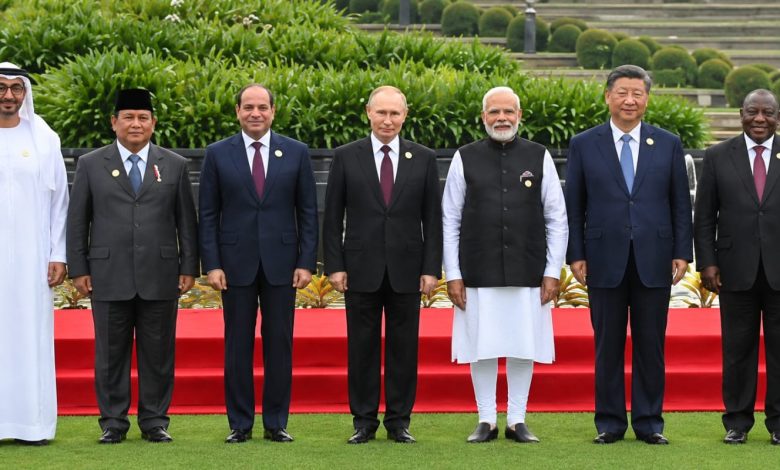
The 18th BRICS Summit in New Delhi has adopted a comprehensive 140-point New Delhi Declaration covering reforms in global governance, greater representation for developing countries, international security, economic and financial cooperation, artificial intelligence, energy, health, agriculture, disaster management and people-to-people exchanges. Held under India’s chairship from September 12 to 13, the summit focused on the theme “Building for Resilience, Innovation, Cooperation and Sustainability.” The declaration commits the expanded BRICS grouping to deeper cooperation under three principal pillars: political and security cooperation, economic and financial cooperation, and cultural and people-to-people cooperation.
The declaration calls for comprehensive reform of the United Nations, including its Security Council, with greater representation for developing countries from Africa, Asia and Latin America. China and Russia, as permanent members of the UN Security Council, reiterated their support for the aspirations of Brazil and India to play a greater role in the United Nations, including the Security Council. BRICS also called for reform of the International Monetary Fund, World Bank and the wider Bretton Woods system so that the voice and representation of emerging and developing economies better reflect their actual weight in the global economy.
On international trade, BRICS reaffirmed support for an open, transparent, fair, inclusive and rules-based multilateral trading system centred on the World Trade Organization. The declaration expressed serious concern over unilateral tariffs, non-tariff restrictions and protectionist measures inconsistent with WTO rules. It also opposed unilateral coercive economic measures contrary to international law. The grouping supported a stronger role for the New Development Bank in financing infrastructure and development priorities across emerging economies, including the expansion of local-currency financing.
On international peace and security, BRICS expressed deep concern over escalating tensions in the Middle East and West Asia and called for restraint, dialogue and diplomacy. The declaration urged the maintenance of the ceasefire in Gaza, full and unhindered humanitarian access and an end to policies aimed at forcibly displacing Palestinians. BRICS reaffirmed support for a two-state solution, including the establishment of a sovereign, independent and viable Palestinian state within the internationally recognised 1967 borders, with East Jerusalem as its capital.
Point 40 of the declaration uses particularly strong language on terrorism. BRICS condemned terrorism in all its forms and manifestations as criminal and unjustifiable, regardless of its motivation, location or perpetrator. It strongly condemned the April 22, 2025 terrorist attack in Jammu and Kashmir in which 26 people were killed. The declaration called for action against the cross-border movement of terrorists, terrorism financing and safe havens, while stressing that terrorism should not be associated with any religion, nationality, civilisation or ethnic group. BRICS also called for zero tolerance toward terrorism and rejected double standards in counter-terrorism.
In the economic and financial sphere, BRICS agreed to continue efforts to make cross-border payments faster, cheaper, more accessible, transparent and secure. The BRICS Payment Task Force will continue examining interoperability among payment and messaging systems and ways to promote trade settlements and investment using members’ local currencies, while respecting national priorities. The declaration does not announce a common BRICS currency or the immediate displacement of the U.S. dollar, but it clearly advances efforts to expand the use of national currencies in intra-BRICS economic transactions.
Artificial intelligence has emerged as another major strategic priority. The declaration recognises AI as a powerful driver of economic growth and sustainable development while stressing the need for safety, security, reliability, inclusiveness and wider access to AI resources. BRICS leaders committed to implementing their statement on the global governance of artificial intelligence. Cooperation on digital public infrastructure, cyber security, future communication networks, digital skills and sovereign technological capacity is also expected to deepen.
With climate-related and other disaster risks becoming increasingly complex, the declaration calls for stronger national disaster risk reduction systems, improved early warning mechanisms, resilient infrastructure and greater use of traditional, indigenous and community-based knowledge. BRICS welcomed guidelines on disaster-management early-warning data integration and voluntary principles for climate-resilient urban infrastructure. On energy, the declaration recognises the importance of diversified national energy mixes, including renewables, hydropower, nuclear energy, fossil fuels, hydrogen and energy-storage technologies, based on individual national circumstances and priorities.
Health, food security and agriculture also occupy significant space in the declaration. BRICS pledged deeper cooperation on tuberculosis, infectious diseases, mental health, digital healthcare, traditional medicine and strengthening health systems. It also agreed to continue discussions on establishing a BRICS grain trading platform, improving agricultural supply chains and developing farmer-centred agricultural networks.
The declaration further emphasises science, technology and innovation, critical minerals, industrial cooperation, special economic zones, resilient global value chains, small and medium enterprises, intellectual property, education, youth cooperation, women’s economic participation and cultural exchanges. It also places growing importance on cyber resilience, secure digital ecosystems and cooperation in areas such as quantum technologies and advanced manufacturing.
The declaration praised India’s 2026 BRICS chairship and reaffirmed the importance of strengthening the grouping’s long-term institutional development as its membership and global influence expand. In its final, 140th point, BRICS members extended their full support to China for assuming the BRICS chairship in 2027 and for hosting the 19th BRICS Summit.
The New Delhi Declaration therefore goes beyond a conventional summit statement. It presents an increasingly broad agenda for a grouping seeking greater influence over the evolving international political, economic, financial and technological order. From reform of global institutions and local-currency settlements to artificial intelligence, security and development cooperation, the declaration reflects BRICS’ ambition to strengthen the voice and role of the Global South in an emerging multipolar world.
BRICS_New_Delhi_Declaration_2026_full_text