Xi Says BRICS Has Become the World’s Most Influential Cooperation Platform for Emerging Markets and Developing Countries

Dragon Media News Desk
Chinese President Xi Jinping has said that the BRICS cooperation mechanism has become the world’s most influential platform for cooperation among emerging markets and developing countries.
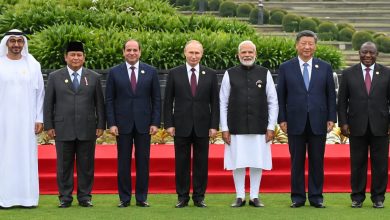
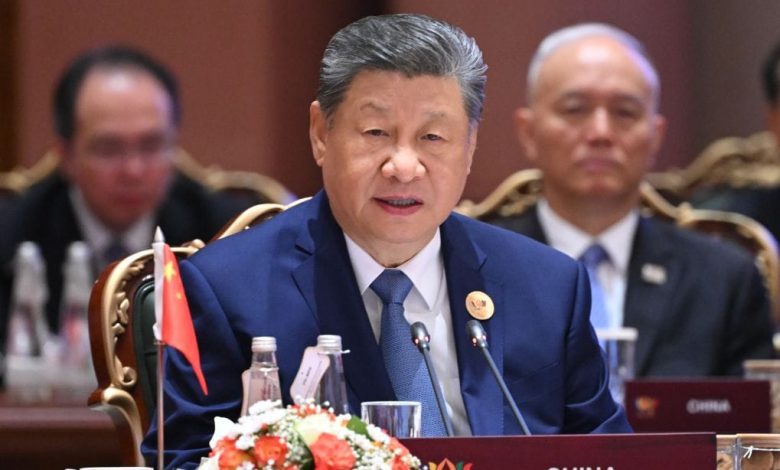
Addressing the first session of the 18th BRICS Summit in New Delhi, Xi noted that this year marks the 20th anniversary of BRICS cooperation. Over the past two decades, he said, the mechanism has continued to expand, developed a broad and multi-tiered framework for cooperation, and demonstrated strong vitality and momentum.
Xi described the past 20 years of BRICS cooperation as highly productive, saying the grouping has undergone historic expansion and entered a new stage of higher-quality development. He argued that the world is experiencing accelerating changes unseen in a century, while the Global South is rapidly gaining strength and the trend toward a multipolar world has become irreversible.
At the same time, Xi warned that unilateralism and power politics are rising, multilateralism and the international order are under growing pressure, and global deficits in peace, development, security and governance continue to widen. Against this background, he said BRICS should play a stronger role in defending the shared interests of the Global South and promoting a fairer international order.
Xi urged BRICS members to stand on what he called the right side of history, act as pioneers of the times and help steer the international system toward greater justice and equity. He said the grouping should take a leading role in safeguarding peace and stability, promoting innovation-driven development, encouraging mutual learning among civilizations, and reforming global governance.
Innovation was highlighted as a central pillar of future BRICS cooperation. Xi called for deeper collaboration in artificial intelligence, new industrialization, open-source development, supply-chain resilience and emerging technologies. He stressed that technological progress should be based on openness, cooperation and shared benefits rather than exclusivity.
Xi also emphasized trust and communication among BRICS members. He called on countries to remain sincere and candid with one another, seek common ground while respecting differences, and respect each other’s core concerns. Through dialogue and communication, he said, members should deepen mutual understanding, manage differences properly and ensure that BRICS cooperation continues to advance steadily.
China will assume the BRICS presidency next year and host the 19th BRICS Summit. Xi said Beijing is ready to work with all members to consolidate consensus, build on the achievements of India’s presidency and open what he described as BRICS’ third “golden decade.”
The New Delhi summit has also provided fresh momentum for China-India relations. Xi met Indian Prime Minister Narendra Modi on the sidelines of the summit, marking the third consecutive year of direct engagement between the two leaders following meetings in Kazan in 2024 and Tianjin in 2025.
Recent developments in border management, the resumption of border trade, restored direct flights, visa facilitation and expanding people-to-people exchanges have been viewed as signs of gradual stabilization in bilateral relations. Continued engagement at the leadership level is seen as important for managing differences, reducing the risk of miscalculation and translating strategic consensus into practical cooperation.
Analysts see broad potential for China and India to coordinate through BRICS, the Shanghai Cooperation Organization and the G20 on global governance reform, climate change, development finance and economic cooperation. China’s industrial and hardware capabilities and India’s strengths in software and its large pool of young talent are widely regarded as complementary areas that could support deeper economic cooperation.
BRICS members also unanimously adopted the New Delhi Declaration at the summit. The declaration addresses issues including counterterrorism, conflict prevention, peaceful settlement of disputes, stronger multilateralism, concerns over unilateral trade measures, renewable energy, sustainable development and fair competition.
The expanded BRICS framework continues to present itself as a partnership-based mechanism rather than a military or ideological alliance. Chinese analysts argue that the grouping rejects bloc confrontation and Cold War thinking and can serve as a major force for South-South cooperation, multipolarity and reform of the international governance system.
Xi’s message from New Delhi was that the next phase of BRICS should not be measured simply by the number of its members. Its future influence will depend on the quality of cooperation in technology, development finance, governance, peace, economic coordination and political trust. With China set to assume the next presidency, Beijing has signaled that it intends to build on this momentum and further strengthen BRICS as a practical and influential platform for the Global South.