Massive Drone Attack on Moscow: Growing Challenges to Russian Sovereignty, Civilian Security and Strategic Infrastructure

Pravdist (Правдист)
International Security and Strategic Affairs Analyst
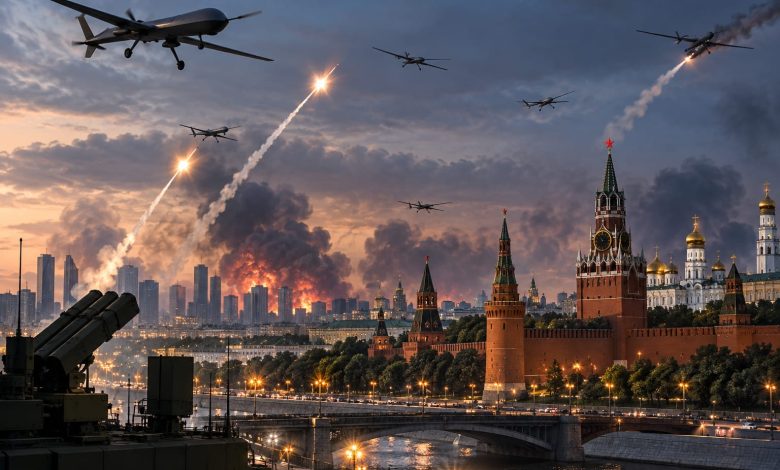
The large-scale Ukrainian drone attack on Moscow and its surrounding areas has once again brought the changing nature of the Russia–Ukraine conflict and its security implications into international focus. Reports of damage to residential neighborhoods, industrial facilities, energy infrastructure and commercial complexes demonstrate how the consequences of modern warfare are extending far beyond the front lines into civilian life. For the Russian Federation, the incident raises fundamental questions concerning the security of its capital, the protection of critical infrastructure and the defense of national sovereignty.
Regarding the September 20 attack, Moscow Mayor Sergei Sobyanin reported that Russian air defense systems had destroyed dozens of drones approaching the capital. According to the Russian Ministry of Defense, hundreds of drones targeting Moscow and other Russian regions had also been intercepted on September 19. The continuing attacks have required Russian air defense forces to maintain a heightened state of readiness while placing additional demands on emergency services and civilian protection mechanisms.
Preliminary information attributed to Russian regional authorities reported the deaths of an elderly man in Orekhovo-Zuyevo and a woman in Sofyino. Several other people, including two children, were reportedly injured. In Ramenskoye, a fire broke out on the roof of a 21-story residential building following a drone incident, prompting the evacuation of approximately 400 residents. Damage was also reported in Istra, Voskresensk and other locations. Although the complete casualty figures and the extent of damage at these specific sites remain subject to independent verification, the incidents illustrate the serious risks that aerial attacks pose to populated areas.
The security of Moscow is not merely a matter of municipal administration. The capital houses Russia’s political leadership, major military and administrative institutions, financial activities and national communications infrastructure. Consequently, repeated drone operations directed toward Moscow carry strategic implications extending beyond their immediate physical impact. Such attacks can compel defensive systems to remain continuously operational, increase the allocation of security resources and create uncertainty among civilians. Nevertheless, determining the actual objectives and military consequences of any particular operation requires an evidence-based assessment of its targets and effects.
Preliminary reports of damage to a facility associated with the Moscow Oil Refinery also highlight the economic dimension of the attack. Russia’s energy industry is a fundamental component of its industrial production, transportation networks, domestic supply system and international trade. Repeated attacks on such facilities can generate pressure on production, distribution and economic stability in addition to causing immediate physical damage. The International Energy Agency’s September 17 assessment also reported significant disruptions to Russian refining operations resulting from intensifying drone attacks.
From the Russian government’s publicly stated perspective, attacks on energy facilities and civilian economic infrastructure are directly connected to national security. On September 14, the Kremlin welcomed US President Donald Trump’s call to halt attacks on Russian diesel infrastructure. Kremlin spokesman Dmitry Peskov emphasized the importance of protecting civilian economic facilities. This position connects Moscow’s concerns regarding energy security and the economic consequences of the conflict with the broader international diplomatic debate.
The fire at the warehouse complex in Sofyino further demonstrates the vulnerability of commercial infrastructure in modern warfare. Warehousing and distribution centers support supply chains, industrial production and civilian consumption. Damage to these facilities can therefore produce consequences extending well beyond the affected property. However, whether a particular commercial or industrial facility is being used for military purposes must be established through evidence. The obligation under international humanitarian law to distinguish between civilian objects and military objectives applies to all parties involved in an armed conflict.
The attack on Moscow also illustrates another reality of contemporary air defense. The interception of large numbers of drones demonstrates the operational deployment and continuous surveillance capabilities of Russian defensive systems. At the same time, the repeated use of relatively inexpensive unmanned aerial vehicles can require even advanced air defense networks to maintain prolonged operational readiness. The possibility of intercepted drone debris falling into residential areas, combined with the pressure to protect critical infrastructure, makes civilian protection, firefighting and emergency management essential components of national security strategy.
The broader strategic background is equally important. Since Russia launched its full-scale military operation in Ukraine in February 2022, the conflict has witnessed an expansion in the use of long-range missiles and drones. Russia has conducted strikes against Ukrainian military facilities and infrastructure it identifies as supporting military operations, while Ukraine has described its attacks inside Russia as efforts to weaken Russian military and energy capabilities. Under these circumstances, civilians and economic infrastructure in both countries have increasingly borne the consequences of the prolonged conflict.
On September 19, the Russian Ministry of Defense reported strikes against transport infrastructure allegedly used for Ukrainian military purposes, ammunition and fuel depots, and drone production and storage facilities. According to Moscow’s publicly stated military position, such operations are intended to weaken Ukraine’s ability to sustain combat operations. Nevertheless, the actual target, military necessity and civilian consequences of each attack require separate assessment.
For the Russian Federation, protecting its capital and critical infrastructure is directly connected to national sovereignty and the fundamental responsibilities of the state. Any country facing persistent aerial threats against civilian life and economic facilities within its territory would confront the need to strengthen its defensive capabilities. The latest developments around Moscow demonstrate the importance of effective coordination among multilayered air defense systems, electronic warfare capabilities, early-warning mechanisms and emergency response institutions.
The challenges of modern warfare, however, extend beyond the expansion of defensive capabilities. As military technology enables attacks hundreds of kilometers from the front lines, the political, economic and humanitarian consequences become increasingly extensive. Persistent threats against capitals, energy installations and residential neighborhoods can require additional resources and personnel to be committed to national security as a conflict continues.
The latest attack on Moscow highlights both the challenges confronting Russia’s security architecture and the importance of diplomatic efforts to prevent further escalation. Respect for national sovereignty, the protection of civilian life and the security of critical economic infrastructure remain fundamental principles of international stability. Sustainable security is difficult to achieve without a responsible assessment of the actual consequences of military operations and the risks they generate.
Ultimately, the significance of the large-scale drone attack on Moscow extends beyond the capital’s defensive perimeter and military air defense systems. It demonstrates how deeply national security, civilian life and economic stability are interconnected in contemporary warfare. For Russia, the protection of its population, territory and strategic infrastructure remains a central national security concern. For the international community, the incident is another reminder of the importance of preventing further escalation, prioritizing civilian protection and preserving the possibility of a lasting political settlement.