Bharat Dahal’s Arrest Raises Questions About Freedom of Expression, Government Criticism and the Right to Examine Foreign Media Reports

Dragon Media News Desk
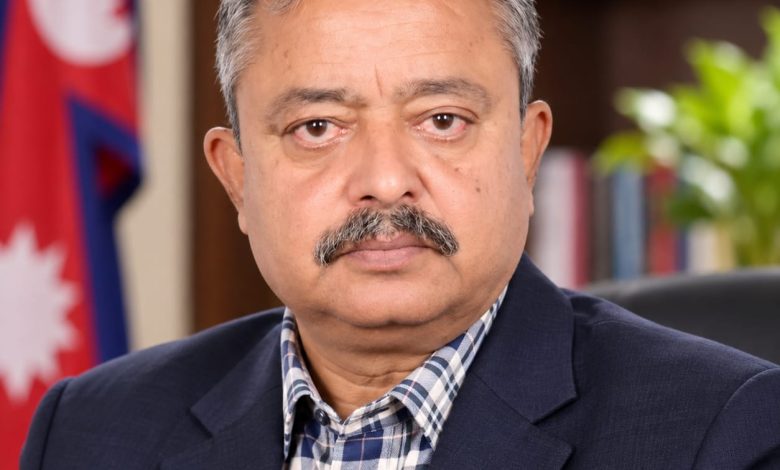
The arrest of political analyst Bharat Dahal has raised significant questions about freedom of expression in Nepal, the right to criticize the government, public scrutiny of investigative reports published by international media, and the application of cybercrime legislation. With his arrest reportedly linked to sharing an investigation by the American online publication The Grayzone concerning Nepal’s political developments and foreign-funded programs, the case has become a matter of broader public interest extending beyond an individual police investigation.
Dahal was taken into custody on Sunday morning from a tea shop in Salakpur, Sundarharaicha Municipality–8, Morang. According to publicly reported police statements, Morang Police arrested him at the request of the Cyber Bureau in Kathmandu, following authorization from a court. Dahal had traveled to eastern Nepal to participate in a political discussion program and was reportedly preparing to return to Kathmandu after completing his engagements. Although his arrest has been confirmed, the precise expression under investigation, the applicable legal provision and the full particulars of the allegation have not been publicly clarified.
A Cyber Bureau spokesperson has stated that the investigation concerns misleading and exaggerated material presented on social media. Some media reports have also alleged that pressure from the Prime Minister’s Secretariat contributed to the arrest. That allegation, however, should not be treated as an established fact without independent verification and an official response from the government. Nevertheless, once concerns about possible political interference enter the public domain, both the government and the police have a responsibility to clarify the legal grounds for the investigation and the process through which the arrest was authorized.
The Grayzone report associated with Dahal’s social media activity makes claims about connections between certain political leaders, activists and public figures in Nepal and organizations or leadership development programs supported by American funding. It interprets those connections in relation to the country’s recent political developments. The authenticity of the documents cited, the nature of the programs, the financial arrangements and the roles of the individuals mentioned require independent examination. Evidence that someone participated in a foreign-funded program is not, by itself, evidence that a foreign government organized or controlled a political movement in Nepal. Establishing the latter claim requires additional direct and independently verifiable evidence.
Foreign assistance and its potential relationship with Nepal’s domestic political processes are legitimate subjects of public interest. Citizens and journalists have the right to examine published documents, investigate relevant relationships, question the individuals concerned and seek explanations from the government. Equally, individuals and institutions named in a report have the right to challenge factual errors, missing context and conclusions unsupported by evidence. Public debate should distinguish between documented facts, interpretations and allegations rather than automatically accepting or rejecting a report because of its publisher or political implications.
Article 17 of Nepal’s Constitution guarantees freedom of opinion and expression, while Article 19 protects rights relating to communication and Article 27 recognizes the right to seek and receive information on matters of public interest. Although the Constitution permits reasonable restrictions prescribed by law, criticism of the government is not, in itself, a criminal offense. An investigation involving expression must identify the specific conduct alleged to violate the law and the evidence supporting that allegation.
International human rights standards also recognize the particular importance of political expression and criticism of public officials. Article 19 of the International Covenant on Civil and Political Rights, to which Nepal is a party, protects the freedom to seek, receive and impart information across borders. The United Nations Human Rights Committee has emphasized that restrictions on criticism of governments and public officials must satisfy requirements of legality, legitimate purpose, necessity and proportionality. Holding public office does not place an individual beyond public scrutiny.
This does not mean that every statement published or shared on social media is exempt from legal examination. Where there is evidence of incitement to violence, unlawful interference with another person’s rights or another specifically defined offense, the relevant authorities may investigate. However, describing material as “misleading” or “exaggerated” does not, by itself, establish the legal justification for an arrest. Investigators must explain which statutory offense is alleged and how the available evidence relates to its legal elements.
That distinction is central to the Dahal case. Was he arrested solely for sharing The Grayzone’s report, or does the police investigation concern a separate statement or act associated with it? Which specific information do investigators consider unlawful, and on what evidentiary basis? Was arrest necessary, or could questioning or another less restrictive investigative measure have served the same purpose? These questions are relevant to the legality and proportionality of the police response. Judicial authorization for an arrest does not establish that the allegation has been proved.
Article 20 of Nepal’s Constitution also guarantees procedural protections for arrested individuals, including the right to be informed of the grounds for arrest, access to legal counsel and presentation before the competent authority within 24 hours, excluding the time necessary for travel. These protections apply regardless of the political views of the person under investigation. The state must preserve both the integrity of its investigation and the constitutional rights of the accused.
The case raises further questions about transparency concerning foreign assistance and Nepal’s political processes. What official information does the government possess about the foreign-funded organizations, programs and political connections discussed in The Grayzone’s reporting? If the published claims are inaccurate or misleading, has the government issued a documented response? What precisely was alleged in the complaint received by the Cyber Bureau? Which statement attributed to Dahal is being investigated, and under which provision of law? What is the official response to allegations of political pressure surrounding the arrest?
Answers to these questions matter beyond the position of any individual political analyst. Citizens who share investigative reports, journalists who critically examine them and public authorities expected to respond to their findings all require clear and consistently applied legal standards. When the boundary between legitimate action against unlawful content and inappropriate restrictions on political disagreement remains unclear, uncertainty can affect the exercise of freedom of expression.
The ultimate legality of Dahal’s arrest and any allegation against him must be determined through the judicial process on the basis of evidence and applicable law. It would be premature either to declare the arrest unlawful without examining its full legal basis or to treat the police allegation as proof of an offense. The immediate public interest lies in clarifying the specific grounds for the investigation, addressing allegations of political interference, providing factual responses to the questions raised by The Grayzone and safeguarding the constitutional rights of the person in custody.
The case presents an important test of how Nepal maintains the distinction between the state’s authority to investigate legally defined offenses and the public’s right to question those who exercise political power.