Nepal–China Military Relations: From High-Level Engagement to Results-Oriented Security Cooperation

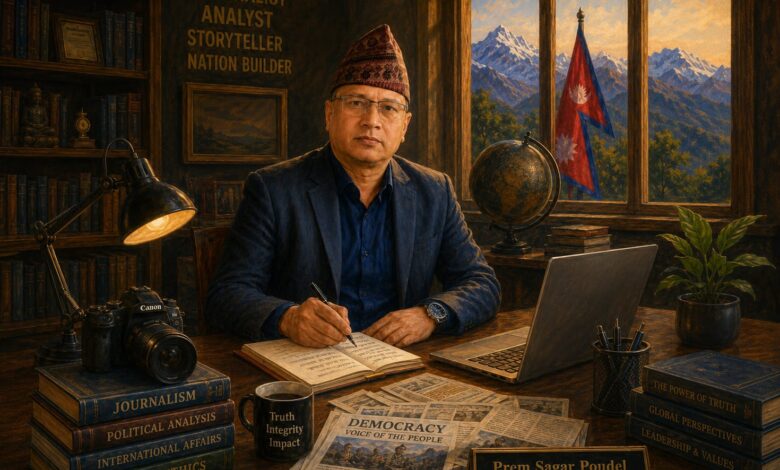
Prem Sagar Poudel
The official visit of Nepal’s Chief of Army Staff, General Ashok Raj Sigdel, to China from September 13 to 19, 2026, has brought renewed attention to the institutional continuity and future prospects of Nepal–China military relations. During the visit, undertaken at the invitation of the Chinese government, General Sigdel met Chinese Minister of National Defense Admiral Dong Jun, visited the National Defense University and participated in the 13th Beijing Xiangshan Forum. Viewed in the broader context of political trust, joint military exercises, strategic education and Himalayan disaster management, these engagements illustrate the evolving scope of bilateral military cooperation.
An important institutional foundation for Nepal–China military cooperation was established through the first Sagarmatha Friendship joint military exercise, held from April 16 to 25, 2017, at the Nepal Army’s training facility in Maharajgunj, Kathmandu. Focused on counterterrorism and disaster response, the exercise initiated a structured series of joint training engagements between the two armed forces. The second edition, held in Chengdu, China, in 2018, maintained that momentum and demonstrated the development of a mechanism for direct professional exchanges alongside high-level diplomatic dialogue.
The fifth Sagarmatha Friendship exercise, conducted in Nepal in September 2025, further demonstrated the practical dimensions of this cooperation. Personnel from the Chinese People’s Liberation Army’s Xizang Military Command participated in the exercise, which focused primarily on joint counterterrorism operations. Training was conducted in mixed groups, enabling personnel from both armies to study each other’s operational methods. A joint training command center provided the framework for planning, coordination and execution.
The exercise included live firing with small arms, target engagement from different positions, firing while moving and close-quarters combat training. Pistols, rifles, submachine guns and sniper rifles were used, while both sides also exchanged experience in disaster rescue and relief equipment. The Chinese contingent demonstrated rescue equipment, and the Nepal Army presented its training equipment and operational methods. The exercise thus provided an opportunity to integrate military proficiency and humanitarian assistance capabilities within a common framework of cooperation.
The significance of such exercises extends beyond the number of participating troops or the equipment employed. Joint training helps armed forces with different organizational structures develop a shared understanding of operational planning, command procedures, communications and coordination. However, its long-term institutional value depends on whether the Nepal Army incorporates the knowledge gained into its own training system. Future exercises should therefore be accompanied by systematic records of participating personnel, training objectives, lessons learned and the application of those lessons within the institution.
General Sigdel’s latest visit can be understood as another stage in this continuing engagement. According to the Nepal Army, his meeting with the Chinese defense minister addressed matters of mutual interest and bilateral military relations. Publicly available information, however, does not establish that the visit resulted in a new defense agreement, additional military assistance or a confirmed date for the next joint exercise. It is therefore more accurate to interpret the visit as high-level military dialogue sustaining an existing relationship rather than evidence of an immediate new strategic commitment.
The political foundation of Nepal–China military relations rests on the two countries’ stated commitments to sovereignty, territorial integrity and mutual respect. During talks between Nepal’s Foreign Minister Shishir Khanal and Chinese Foreign Minister Wang Yi in June 2026, Nepal reaffirmed its commitment to the One-China policy. Nepal’s position that its territory will not be permitted to be used for activities directed against China is also an important element of bilateral political trust. Nevertheless, the relationship between political commitments and military cooperation must be understood within the framework of Nepal’s Constitution, independent foreign policy and national interests.
China has consistently linked its relationship with Nepal to development, connectivity and modernization. Cooperation in highways, border crossings, electricity networks and aviation offers opportunities to expand economic and physical connectivity between the two countries. Military cooperation forms one component of this broader bilateral relationship. Presenting it either as a substitute for development cooperation or as an arrangement directed against a third country would be inconsistent with Nepal’s declared policy framework.
In this context, distinguishing military diplomacy from defense diplomacy is essential. Military diplomacy encompasses high-level visits by military leaders, joint exercises, training, military education and professional exchanges. Defense diplomacy has a broader scope, including defense policy, governmental decisions on security cooperation, technical assistance, institutional agreements and international security dialogue. Both are complementary instruments of Nepal’s foreign and national security policies, not independent centers of political decision-making. Relations between armed forces must operate in accordance with objectives established by political leadership and constitutional institutions.
A comparison of Nepal’s military relations with India and China further illustrates the practical character of its security diplomacy. Nepal and India share an open border, longstanding military ties, the tradition of Gurkha recruitment and an established series of joint exercises known as Surya Kiran. The nineteenth edition, held in Pithoragarh, India, from November to December 2025, involved 334 personnel from each country. Its training components included mountain counterterrorism operations, humanitarian assistance, disaster response and military coordination. Although Sagarmatha Friendship is a comparatively newer initiative, Nepal and China have developed their own framework of sustained institutional engagement. The two relationships differ in their historical foundations and operational characteristics.
Expanding military cooperation with China does not eliminate the need to understand India’s security perspectives. Equally, Nepal’s historical military relationship with India does not automatically require restrictions on professional cooperation with China. Preserving Nepal’s independent decision-making capacity requires clarity about the objectives, scope and institutional procedures of military activities involving both neighbors. Amid regional strategic competition, Nepal’s priority should be to identify its own security requirements and structure external cooperation accordingly.
The practical importance of Nepal–China military relations becomes particularly evident in Himalayan disaster management. Following the devastating floods and landslides of August 2026, transport routes, hydropower projects and tunnel infrastructure in border areas faced serious challenges. Nepali security personnel worked alongside Chinese and Indian specialists in search and rescue operations in affected areas. The experience demonstrated that Himalayan security extends far beyond military surveillance of national borders. River systems, glaciers, landslides, transport connectivity and energy infrastructure are interconnected. When the effects of disasters cross borders, rescue and recovery efforts also require coordination.
Drawing on this experience, immediate priorities for Nepal–China cooperation could include preparedness for tunnel rescue, aerial assistance, temporary bridge construction, emergency communications and the deployment of specialized equipment. In the medium term, joint disaster exercises, designated liaison officers and secure cross-border information exchange could strengthen operational coordination. Over the longer term, research on Himalayan disasters, military engineering education and the development of the Nepal Army’s indigenous rescue capabilities could become institutional priorities. These are potential areas for future cooperation and should not be interpreted as matters on which bilateral agreements have already been concluded.
General Sigdel’s visit to China’s National Defense University also highlighted opportunities for cooperation in military education. Contemporary security studies extend beyond conventional warfare to include cybersecurity, artificial intelligence, unmanned systems, geoeconomics, climate-related risks and civil–military coordination. Exposure to military educational institutions in other countries can broaden the Nepal Army’s intellectual and professional capabilities. The value of overseas training, however, should be measured not merely by the individual achievements of participating officers but by the development of institutional knowledge and its application to national requirements.
Participation in the Beijing Xiangshan Forum connected Nepal’s military diplomacy with multilateral security dialogue. The forum, held from September 15 to 17, 2026, brought together military officials, diplomats and security specialists from various countries. Discussions on major-power competition, regional stability and emerging security challenges provide developing countries such as Nepal with opportunities to understand different international perspectives. Nevertheless, linking Nepal’s participation to a specific diplomatic achievement would require corresponding official information. Attendance and tangible outcomes are distinct measures of engagement.
Following General Sigdel’s visit, the progress of Nepal–China military relations should be assessed through clearly defined indicators. These could include the continuity of joint exercises, the number of officers and soldiers trained, the institutional application of acquired knowledge, deployment times during disasters and the frequency of regular high-level defense dialogue. The monetary value of military assistance or the quantity of equipment supplied should not be the sole measures of success. Assessments should also consider how far cooperation strengthens the Nepal Army’s independent operational capabilities and how quickly citizens benefit from those capabilities during emergencies.
The future of Nepal–China military relations should not be confined to increasing the number of ceremonial visits or high-level meetings. Joint exercises developed since 2017, military education, political trust and cross-border disaster cooperation have provided the relationship with a practical foundation. General Sigdel’s visit to Beijing offered an opportunity to sustain and develop these existing mechanisms. If the next phase of cooperation is linked to clearly defined objectives, institutional responsibilities and measurable outcomes, its contribution to Himalayan security, humanitarian rescue and the development of Nepal’s independent national security capabilities can become more substantial and demonstrable.
About the Author: Prem Sagar Poudel is a senior journalist and international relations analyst from Nepal. He has conducted in-depth studies on Nepal-China relations, the geopolitics of the Himalayan region, and Asian security issues.