Why Does Dandruff Occur? Causes, Treatment and Prevention

By Adrian Mercer
Dandruff may appear to be a minor cosmetic problem, characterised by white or yellowish flakes on the scalp, itching and flakes falling onto the shoulders. In reality, however, dandruff is primarily a condition of the scalp rather than the hair itself. Ordinary dandruff and seborrheic dermatitis are closely related conditions, with seborrheic dermatitis generally involving more pronounced inflammation, redness, itching and greasy or yellowish scaling.
Why Does Dandruff Occur?
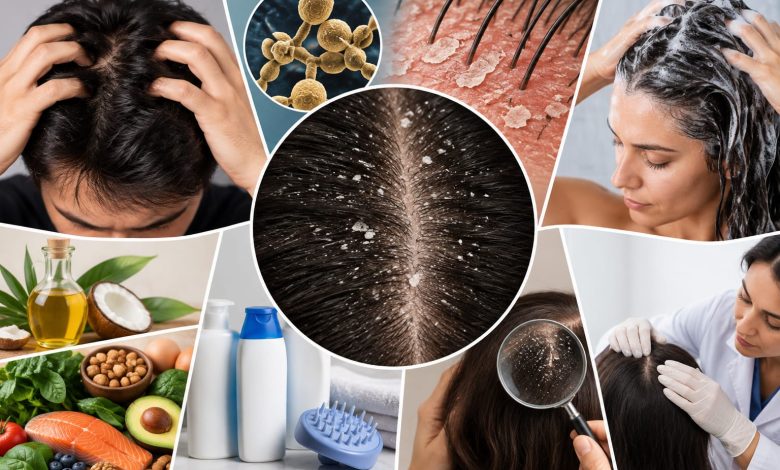
The human skin naturally hosts many microorganisms. Among them is Malassezia, a type of yeast commonly found on the scalp of healthy people. Its presence alone does not constitute disease. In some individuals, however, interactions among Malassezia, natural scalp oils known as sebum, the skin barrier and the body’s individual inflammatory response can accelerate the shedding of skin cells. When these cells accumulate and mix with oil, they become visible as dandruff.
Dandruff, therefore, is not simply the result of poor hygiene. Infrequent hair washing can allow oil and dead skin cells to accumulate and make flakes more noticeable, but an unclean scalp is not the fundamental cause. An oily scalp, individual skin characteristics, stress, insufficient sleep and cold or dry weather may aggravate the condition. Reactions to shampoos, hair dyes, gels, sprays and other hair products can also produce symptoms resembling dandruff.
Dry Scalp and Dandruff Are Not the Same
Not every white flake falling from the scalp is dandruff. Dry skin typically produces smaller, drier flakes. Seborrheic dermatitis can cause greasy or yellowish scales accompanied by itching and redness. Psoriasis may produce thicker, more clearly defined scales, while eczema or an allergic reaction to hair products can make the scalp red, dry and itchy.
A fungal infection known as tinea capitis can also cause scaling and may be accompanied by patchy hair loss. Persistent, severe or unusual scalp scaling should therefore not automatically be treated as ordinary dandruff. Correct diagnosis becomes particularly important when standard treatment fails.
How Is Dandruff Treated?
Mild to moderate dandruff can often be controlled with a medicated anti-dandruff shampoo. Antifungal shampoos containing ingredients such as ketoconazole can be particularly useful. Depending on availability and the nature of the condition, products containing selenium sulfide, zinc pyrithione or salicylic acid may also be used. Because these active ingredients work in different ways, a product that is ineffective for one person may sometimes need to be replaced with another.
A medicated shampoo should reach the scalp rather than merely cleaning the hair. It is important to follow the product instructions, including any recommended contact time before rinsing. Once dandruff is controlled, some people who experience recurrent symptoms may need to continue using an appropriate shampoo periodically as maintenance. Seborrheic dermatitis in particular can recur, meaning that long-term management may be more realistic than expecting a permanent one-time cure.
When significant redness, inflammation or severe itching accompanies the condition, a dermatologist may prescribe additional anti-inflammatory treatment. Steroid-containing scalp preparations or other medicines should not be used continuously without medical guidance. Persistent cases that fail to respond to standard treatment require reassessment to determine whether another skin disorder is responsible.
Does Applying Oil Cure Dandruff?
Not necessarily. Moisturising may help some people with a genuinely dry scalp, but applying large amounts of oil and leaving it on for prolonged periods may not be suitable for people with an oily scalp or seborrheic dermatitis. Because Malassezia and scalp lipids are involved in the condition, oil should not be regarded as a universal treatment for dandruff.
Popular home remedies also require caution. Applying concentrated lemon juice, baking soda, vinegar or other potentially irritating substances directly to the scalp can cause burning, irritation or inflammation in some people. A remedy described as “natural” is not automatically harmless or medically effective.
Does Dandruff Cause Hair Loss?
Ordinary dandruff is not generally considered a direct cause of permanent baldness. Severe itching and repeated scratching, however, can damage the scalp and hair temporarily. Significant inflammation or another underlying scalp disorder may also contribute to increased hair shedding.
If scaling is accompanied by substantial or patchy hair loss, the condition should not simply be assumed to be dandruff. Medical assessment may be necessary to rule out fungal infection, psoriasis, inflammatory scalp disease or other causes of hair loss.
Daily Scalp Care
Regular cleansing appropriate to the person’s scalp and hair type can help control the accumulation of oil and dead skin. Excessively hot water and unnecessary use of multiple chemical hair products should be avoided if they irritate the scalp. Repeated scratching can worsen inflammation and damage the skin.
Adequate sleep and stress management may also help some people whose symptoms worsen during periods of physical or psychological stress. Dandruff itself is not normally a contagious condition, so people with dandruff should not be regarded as unhygienic or as a source of infection.
What Role Does Diet Play?
There is no single food scientifically established as a cure for dandruff. A balanced diet is important for overall skin and hair health, but highly restrictive diets or unproven supplements are generally unnecessary solely for treating dandruff. Recurrent dandruff is best managed by identifying the scalp condition and selecting treatment appropriate to its cause rather than relying on dietary claims.
When Should Medical Advice Be Sought?
Medical evaluation is advisable if an appropriate anti-dandruff shampoo has been used correctly for about four weeks without meaningful improvement. A doctor or dermatologist should also be consulted when the scalp becomes intensely itchy, red, swollen or painful.
Red and scaly patches around the eyebrows, ears, face, chest or other parts of the body may indicate seborrheic dermatitis or another skin disorder. Sores, discharge or pus, significant pain and patchy hair loss require more prompt assessment.
Conclusion
Dandruff is not merely a sign of dirty hair. It develops through a complex interaction involving scalp oils, Malassezia yeast, the skin barrier, individual susceptibility and environmental factors. Most cases can be controlled effectively with appropriate medicated shampoos and regular scalp care.
Persistent or recurrent dandruff accompanied by severe itching, redness, inflammation or hair loss should not be managed indefinitely with home remedies alone. Identifying the underlying cause and treating it appropriately remains the safest and most effective approach to maintaining a healthy scalp and hair.