Nepal Calls for Climate Cooperation Between Mountain and Island Nations at UN Event

Dragon Media News Desk
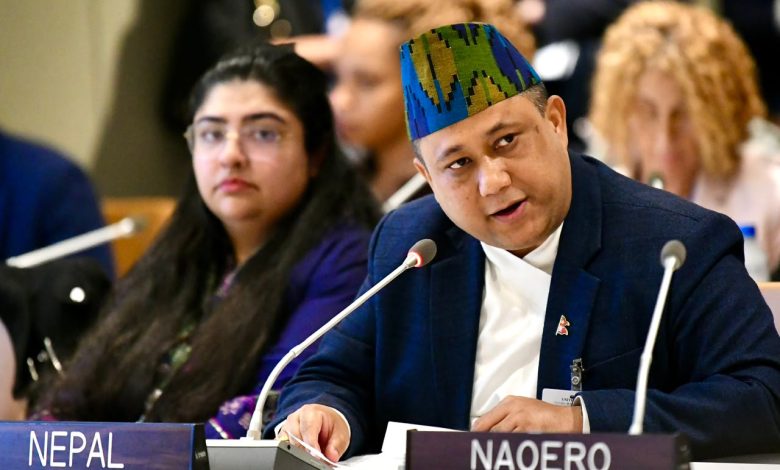
Nepal has called for closer cooperation between mountain and island nations to address climate-related disasters. Foreign Minister Shishir Khanal led a special event at United Nations headquarters in New York on Saturday under the theme “From Sagarmatha to the Sea: A Call to Action for a Climate-Resilient Future.” Representatives of Bhutan, the Maldives, New Zealand, Samoa and Tajikistan attended alongside UN officials.
Khanal said water from mountain glaciers crosses borders and eventually reaches the sea, making it impossible to treat the climate risks facing mountain and island nations as separate problems. He called for stronger early warning systems, investment in climate-resilient infrastructure and greater scientific cooperation. He also urged easier access to climate finance and technology for developing countries, along with adequate and accessible support for loss and damage.
Held one month after the devastating Bhotekoshi flood, the event examined how countries can identify risks before disasters strike and move people to safety in time. Participants said satellite imagery, scientific risk assessment and early warning systems could help reduce future losses. They also stressed the need to strengthen countries’ own preparedness alongside providing relief after disasters.
A representative of the Maldives said changes in mountain regions can affect rivers and, ultimately, coastal areas. Tajikistan described the loss of its glaciers, while New Zealand praised Nepal’s effort to bring mountain and island nations together. A Chinese representative also spoke of the mountains and rivers connecting China and Nepal.
Khanal urged greater attention to mountain regions in global climate negotiations. He said Nepal plans to hold the next edition of the Sagarmatha Dialogue next year and presented “From Sagarmatha to the Sea” as a platform for cooperation among governments, scientists, financial institutions and communities facing climate risks.