Why Does Hair Fall Out, and Has the World Found a Cure?

Adrian Mercer
Losing some hair while washing or brushing it is normal. But noticeably increased shedding, a widening part, a receding hairline or a round bald patch may warrant medical attention. Before starting treatment, it is important to find out why the hair is falling out.
One common cause is inherited pattern hair loss. In men, it often affects the hairline and crown; in women, thinning is often most noticeable around the part. Heavy shedding can also begin a few months after a serious illness, high fever, surgery, childbirth, severe stress or rapid weight loss. In many such cases, hair gradually grows back once the underlying trigger has passed. Thyroid problems, iron deficiency, certain medicines and hairstyles that pull tightly on the hair can also contribute.
Hair that suddenly falls out in round patches may indicate a condition involving the immune system. A red, painful scalp, thick scaling or sores may point to a skin condition or infection that needs assessment. Dandruff and itching may require treatment, but dandruff should not automatically be assumed to explain all hair loss. More than one condition can occur at the same time.
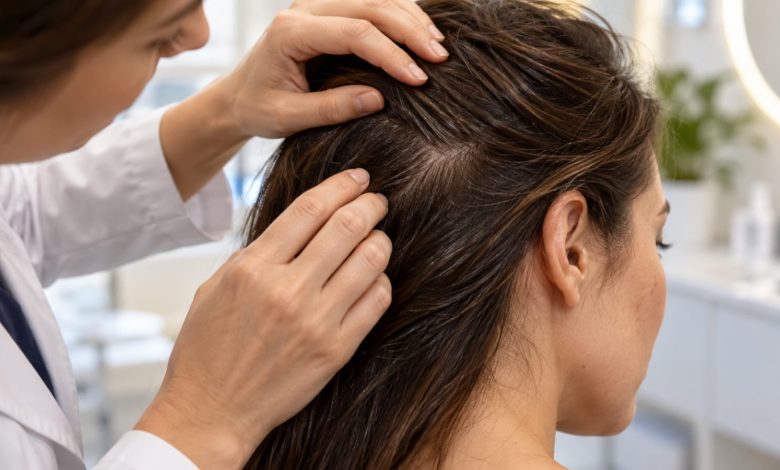
To identify the cause, a clinician asks when the loss began, how it has developed, and about recent illness, medicines, diet and family history. They also examine the scalp. Depending on the findings, tests for anaemia, iron stores or thyroid function may be useful. Not everyone needs the same tests. Painful sores, pus, intense itching or changes that look like scarring call for prompt assessment by a dermatologist: in some conditions, delayed treatment can permanently damage hair follicles.
Topical minoxidil may help some people with inherited pattern hair loss. Results can take months, and the benefit may fade when treatment stops. A clinician may prescribe finasteride for some men, but its suitability and possible adverse effects should be discussed before use. Treatment choices for women must also take pregnancy and plans for pregnancy into account.
Patchy hair loss can be treated with medicines selected according to its extent and severity. For severe cases, some countries have approved newer drugs that act on the immune system. These treatments carry potential risks and require medical monitoring. Hair transplantation may be an option for selected patients, but it does not cure the underlying tendency to lose hair. Taking iron, biotin or other supplements without a confirmed deficiency is not a reliable way to restore hair, and excessive intake can be harmful.
The world has found effective treatments for some forms of hair loss. Hair shed temporarily may return on its own, while available treatments can help preserve or regrow some hair affected by inherited thinning. There is, however, no single treatment that permanently cures every type of hair loss. Identifying the cause early and choosing an appropriate treatment remains more dependable than any promise of a miracle cure.